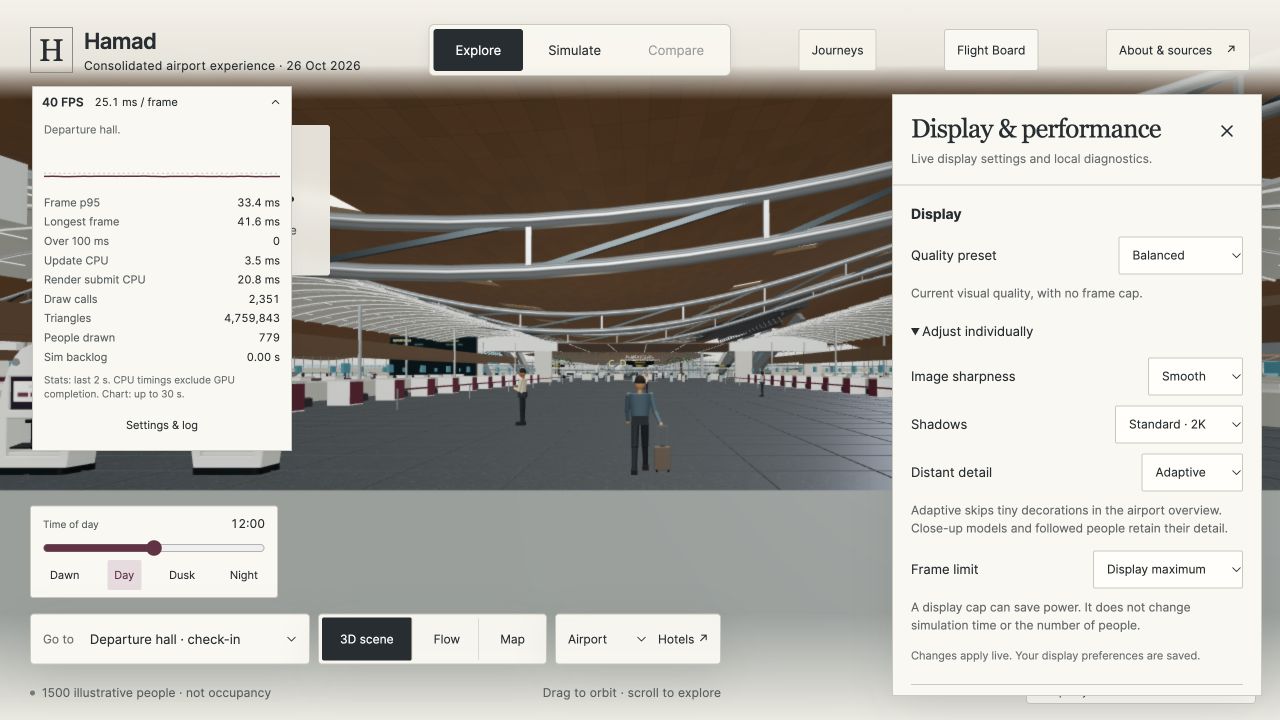
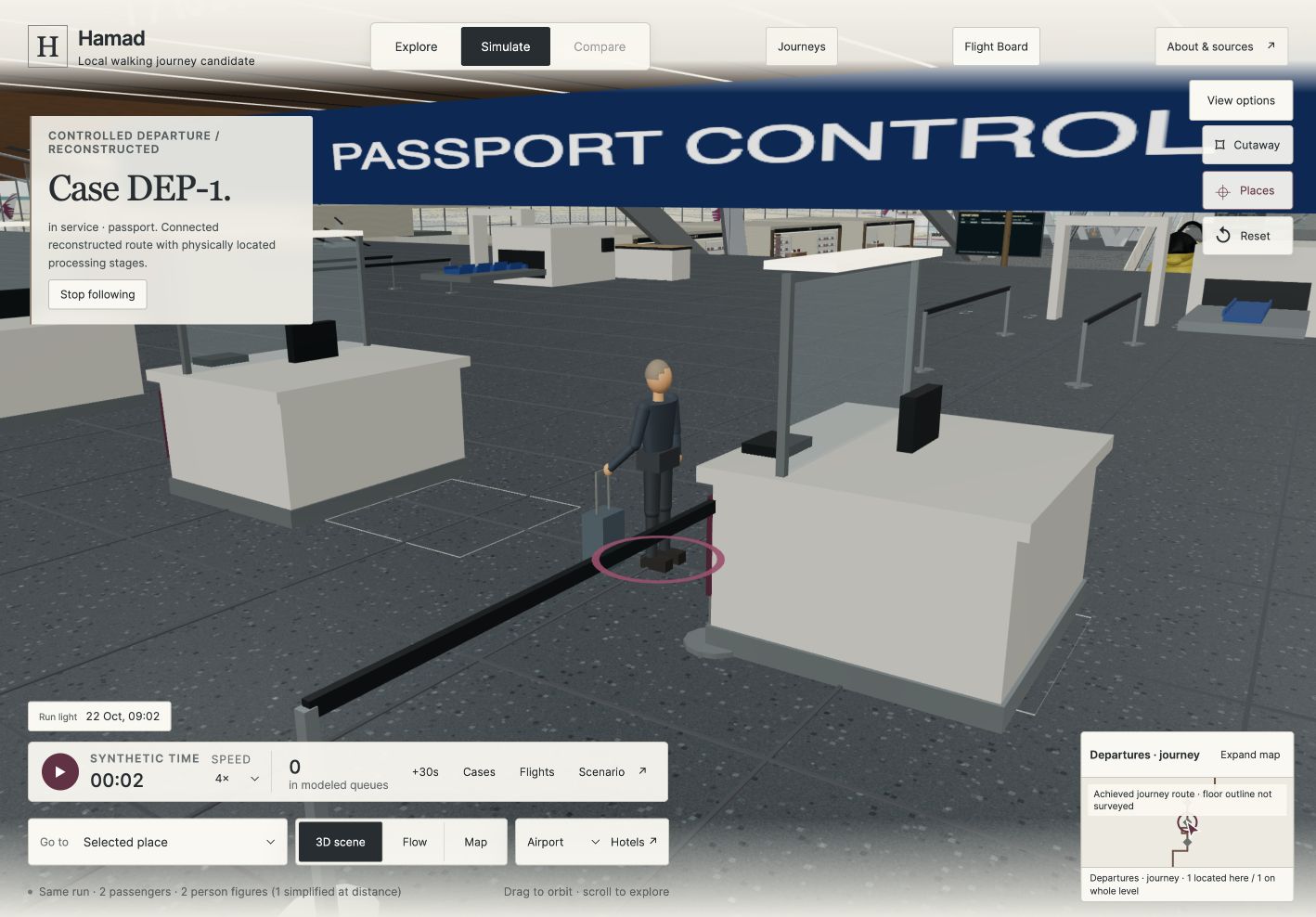
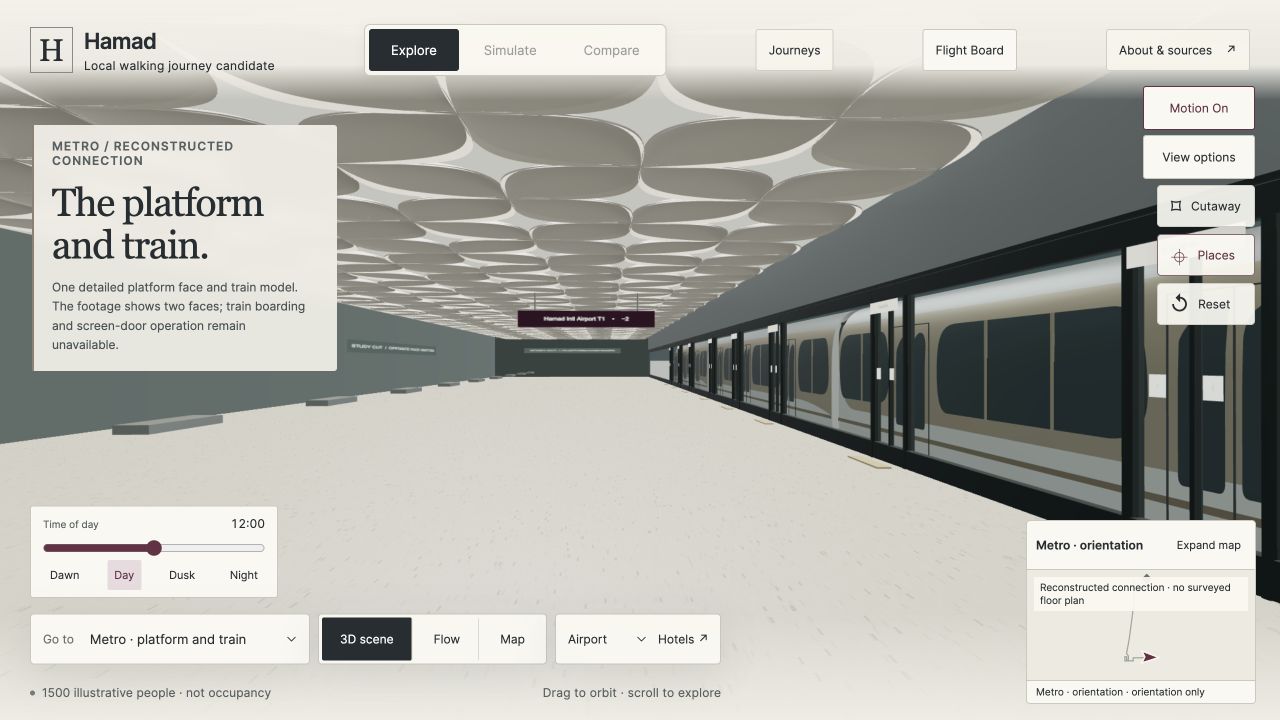
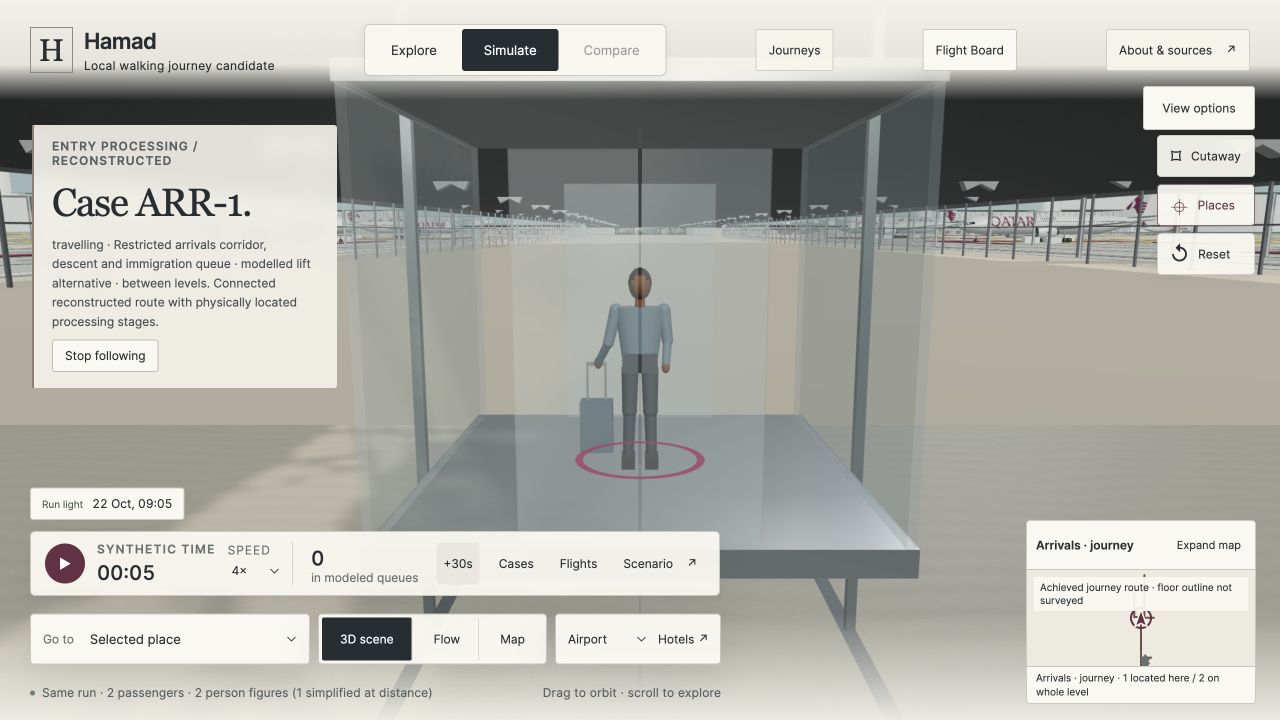
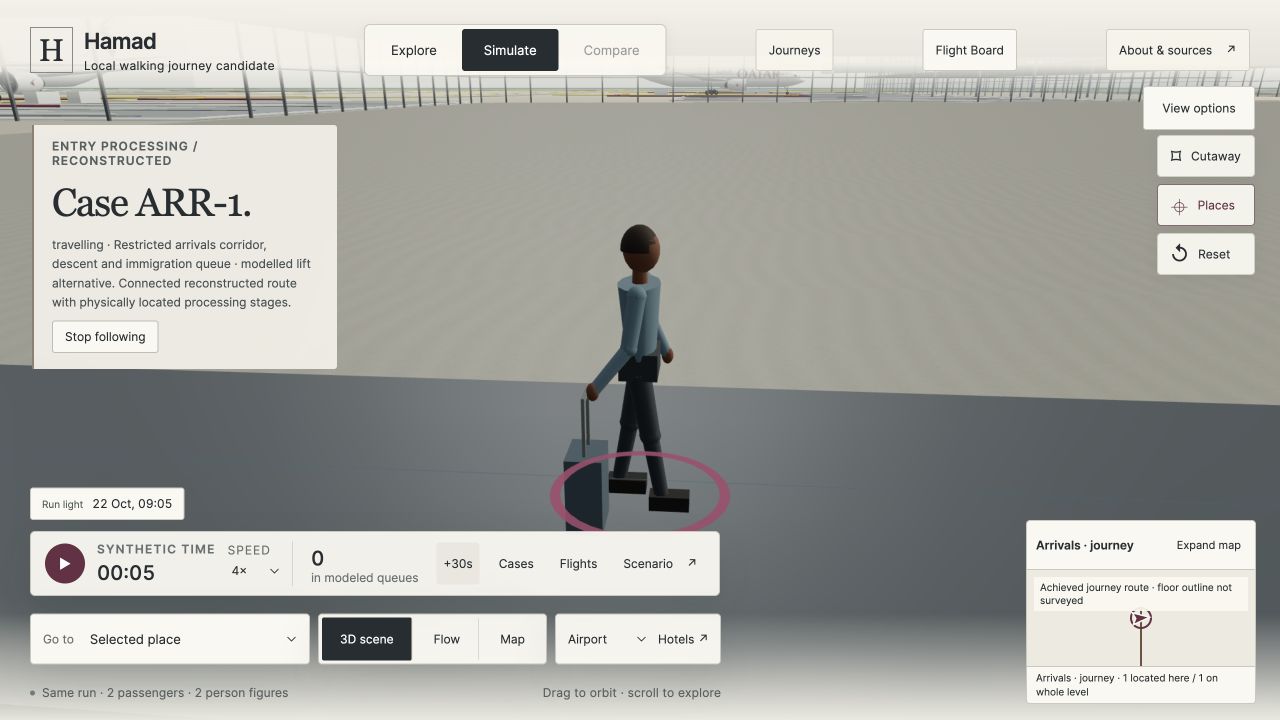
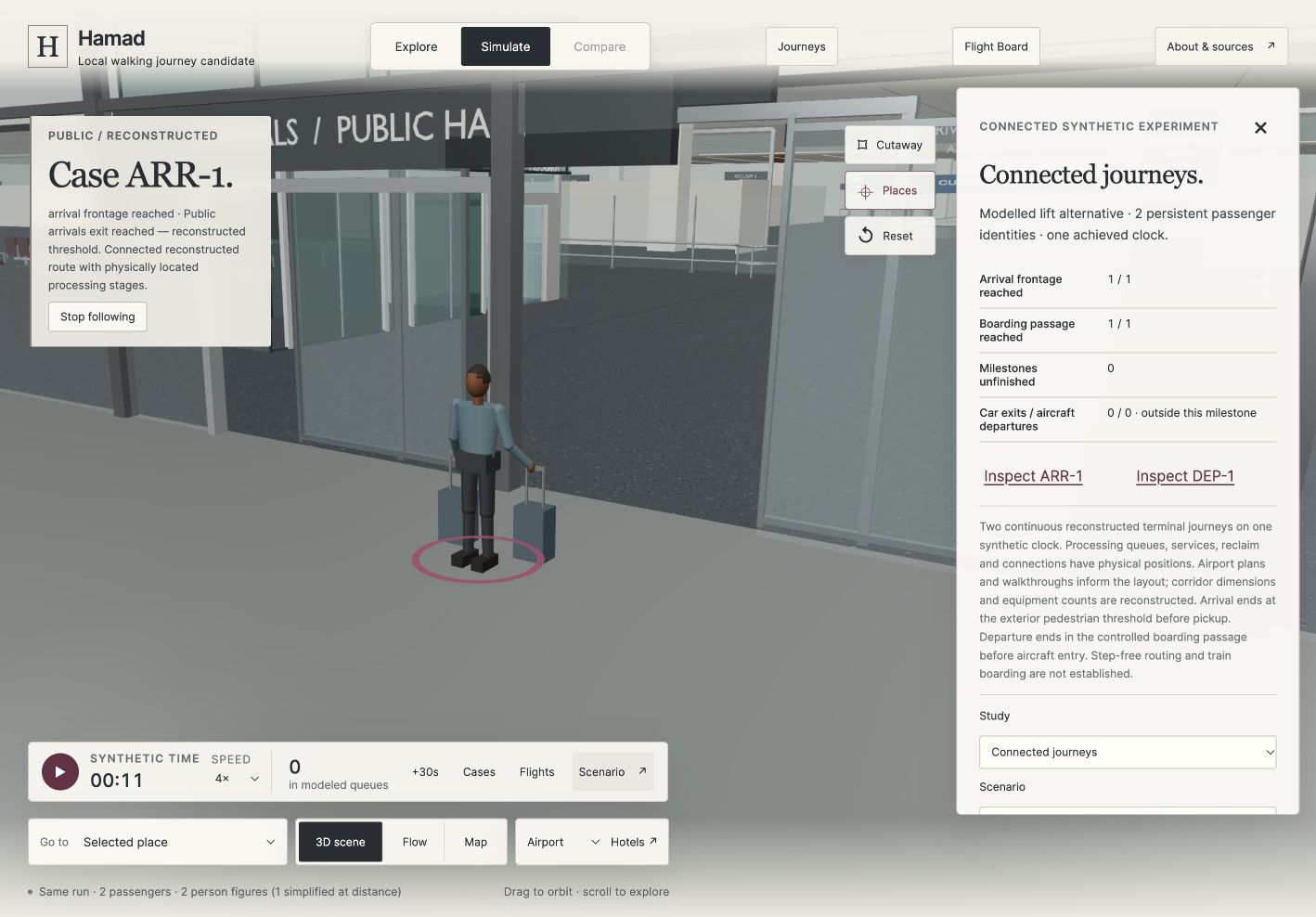
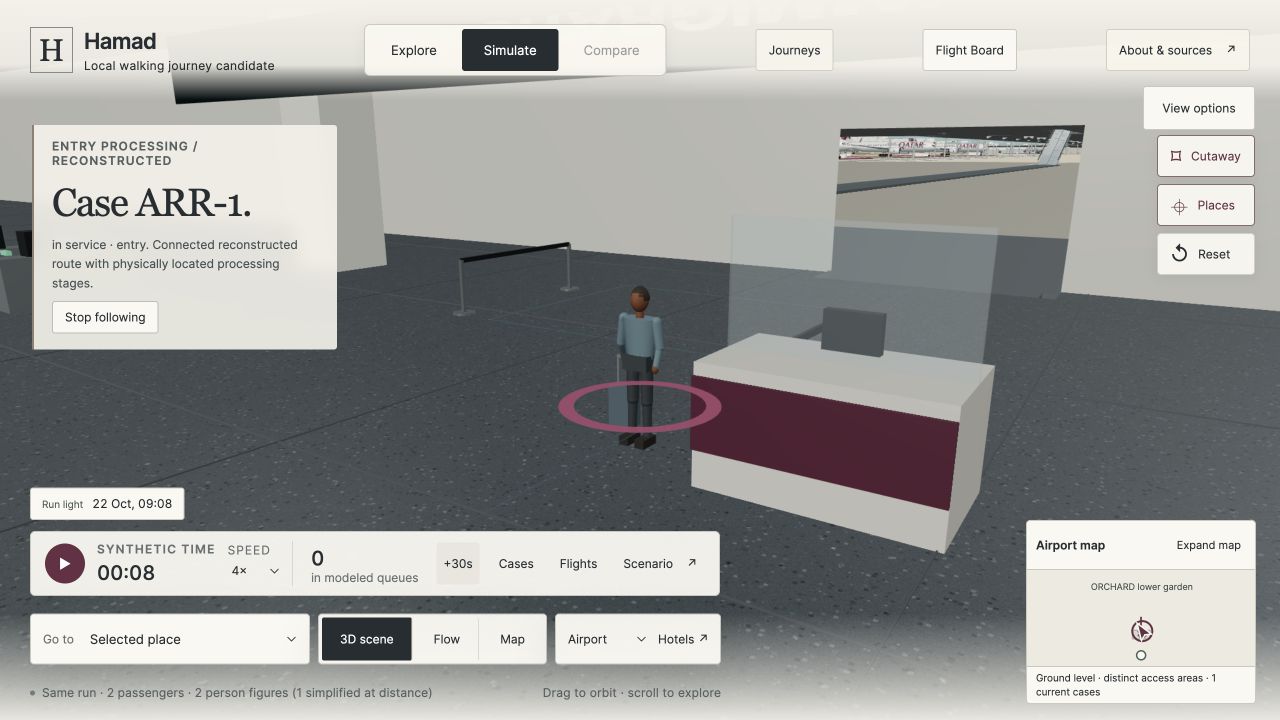
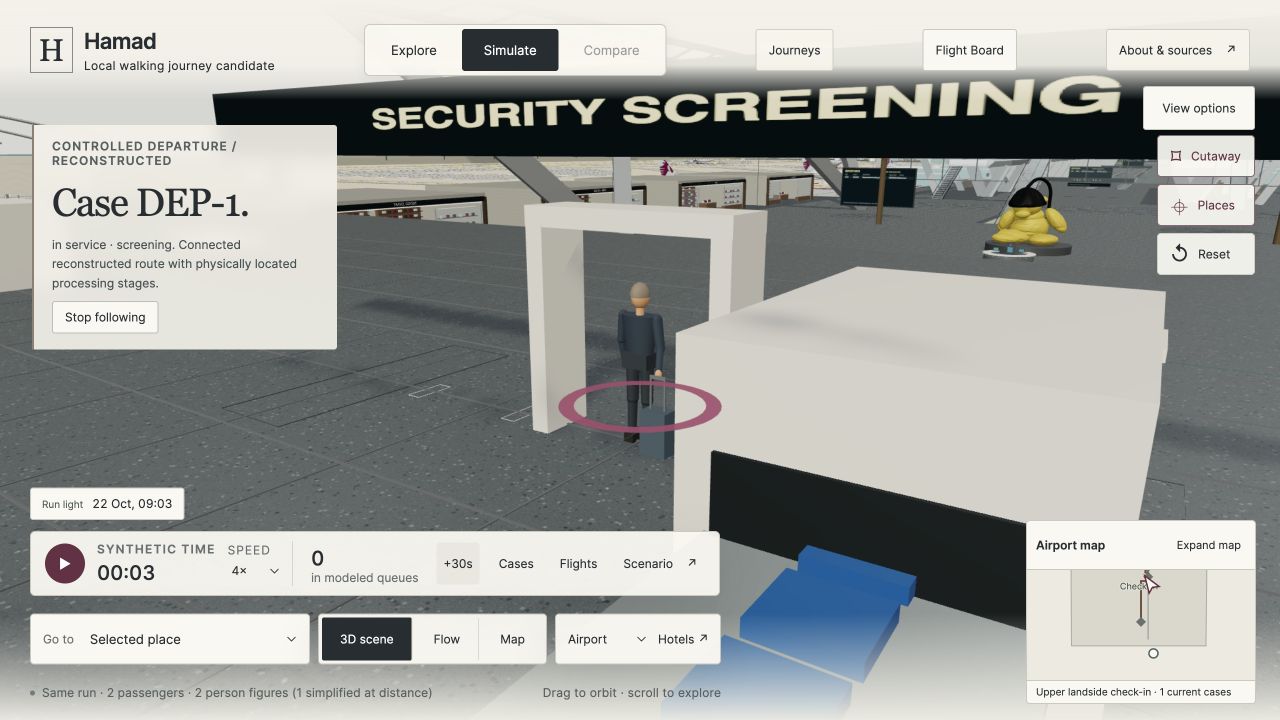
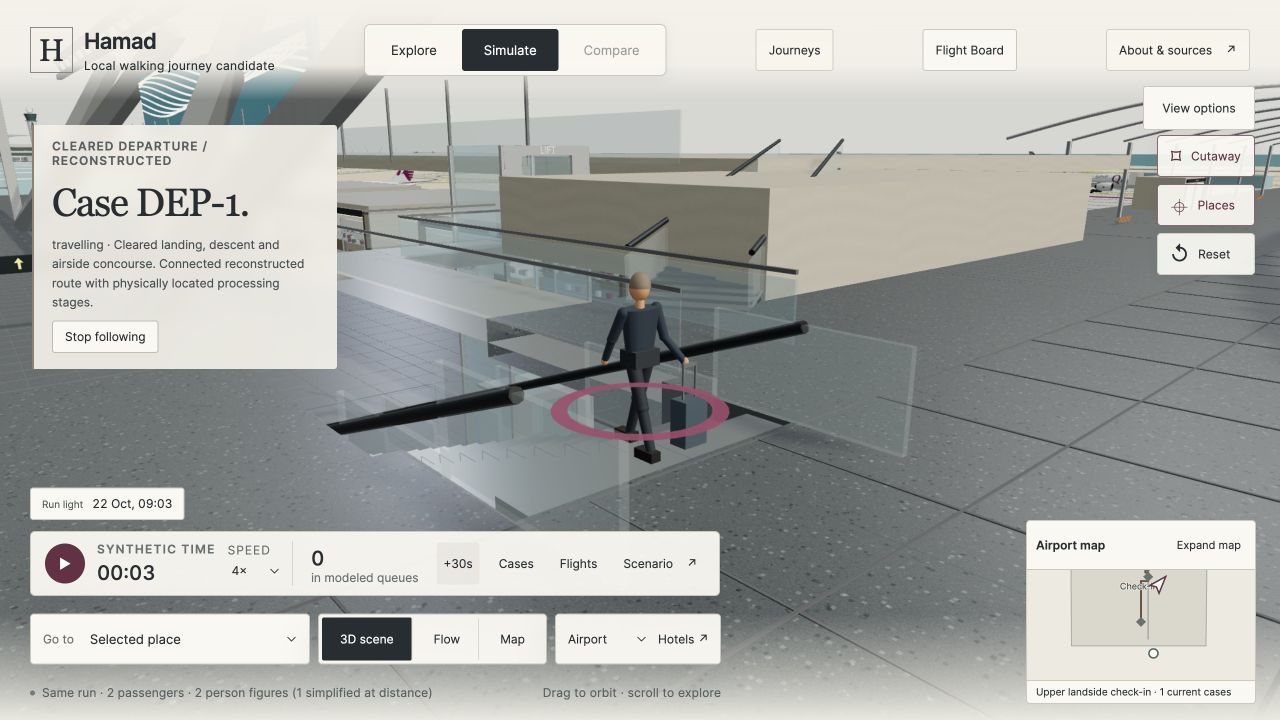
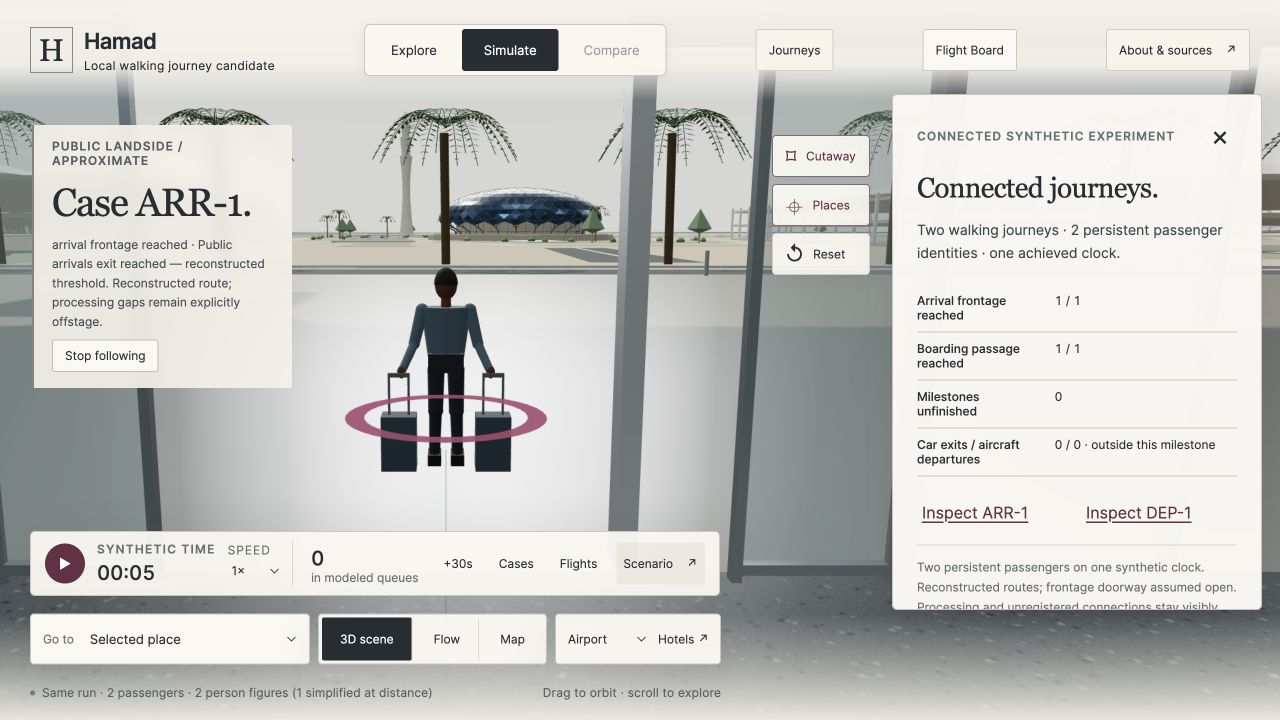
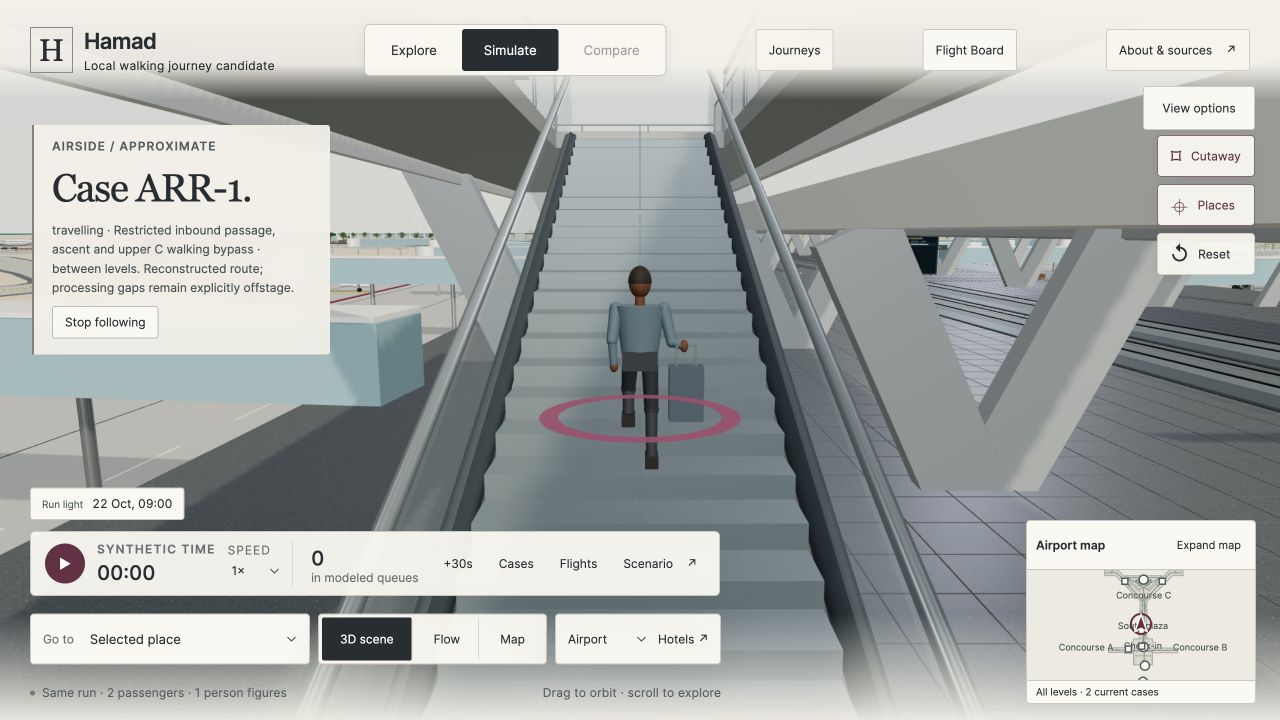
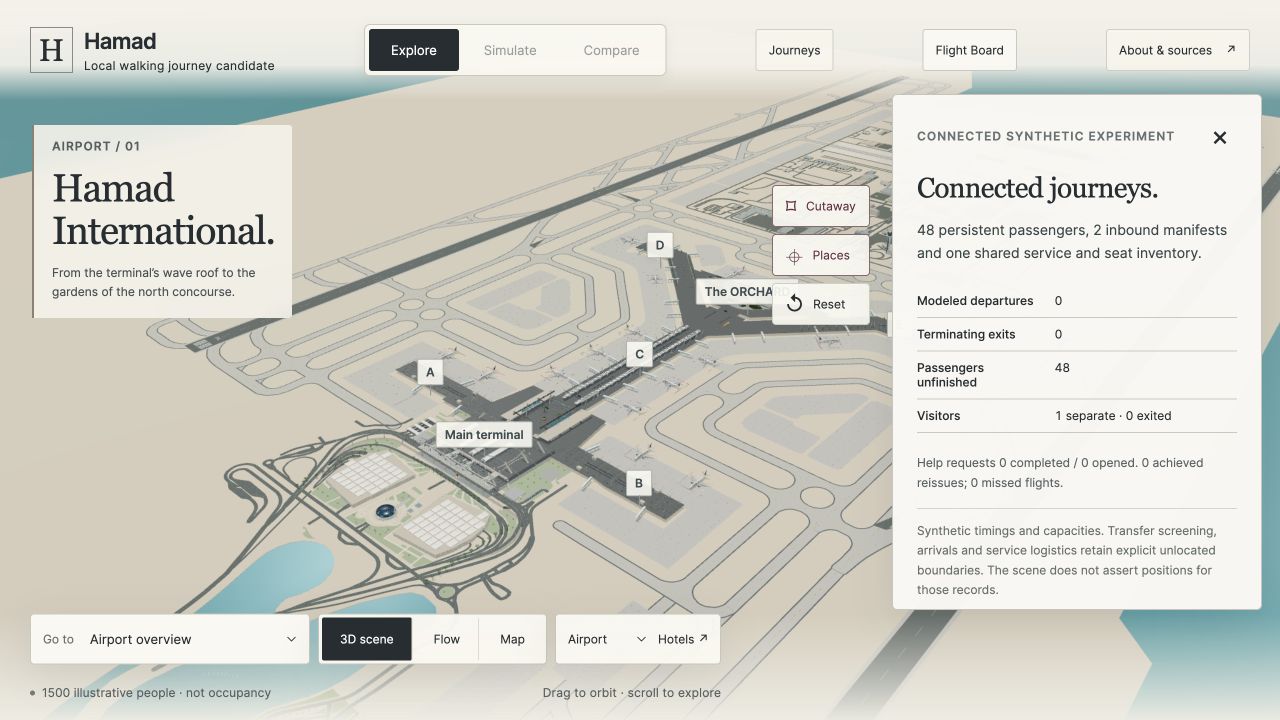
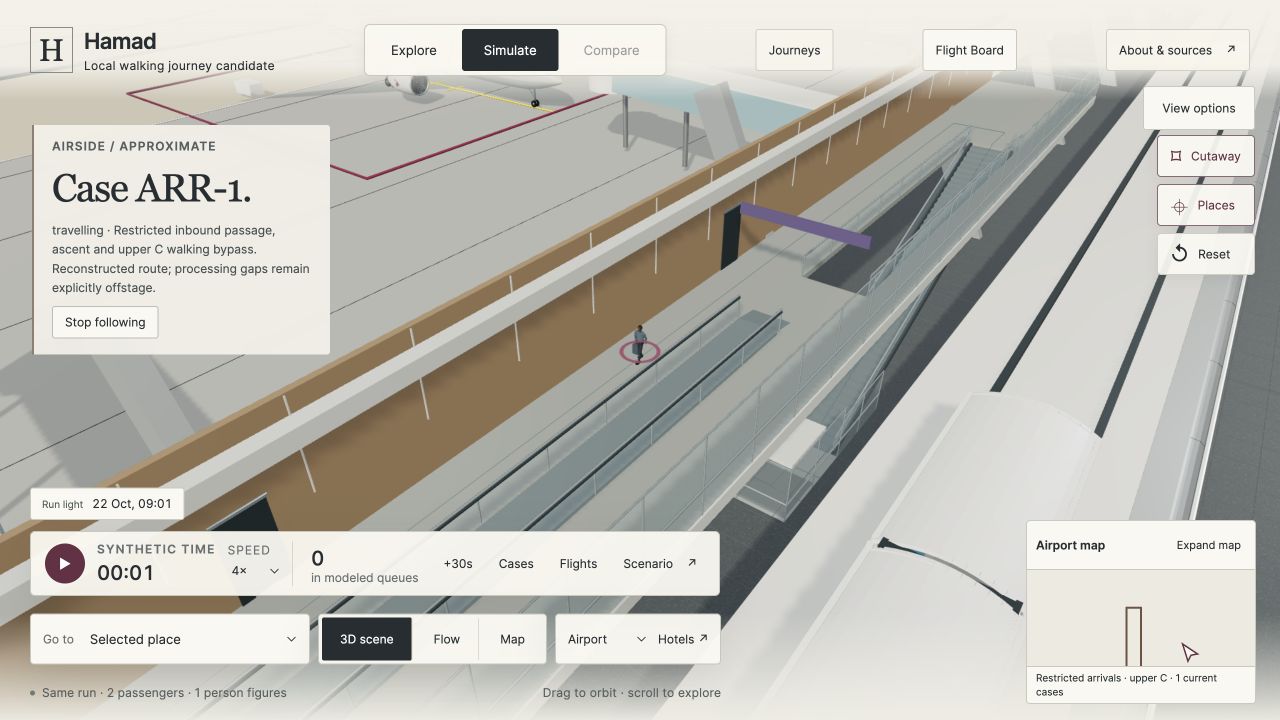
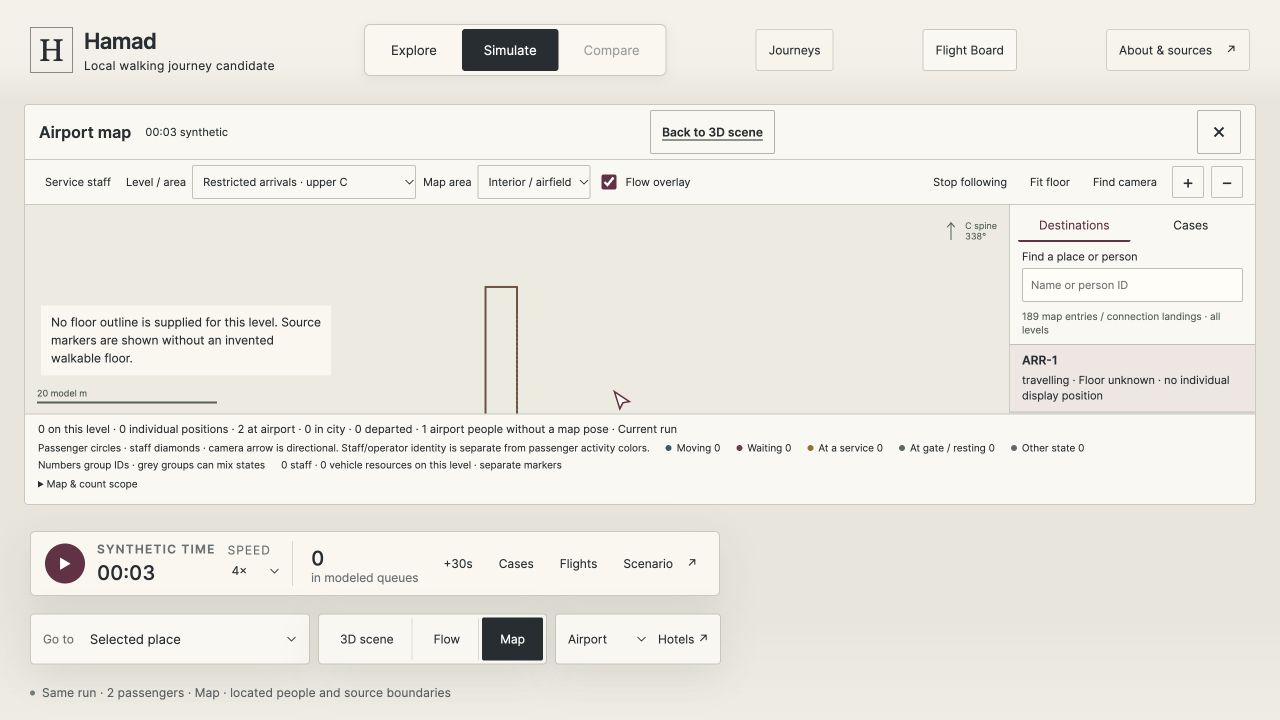
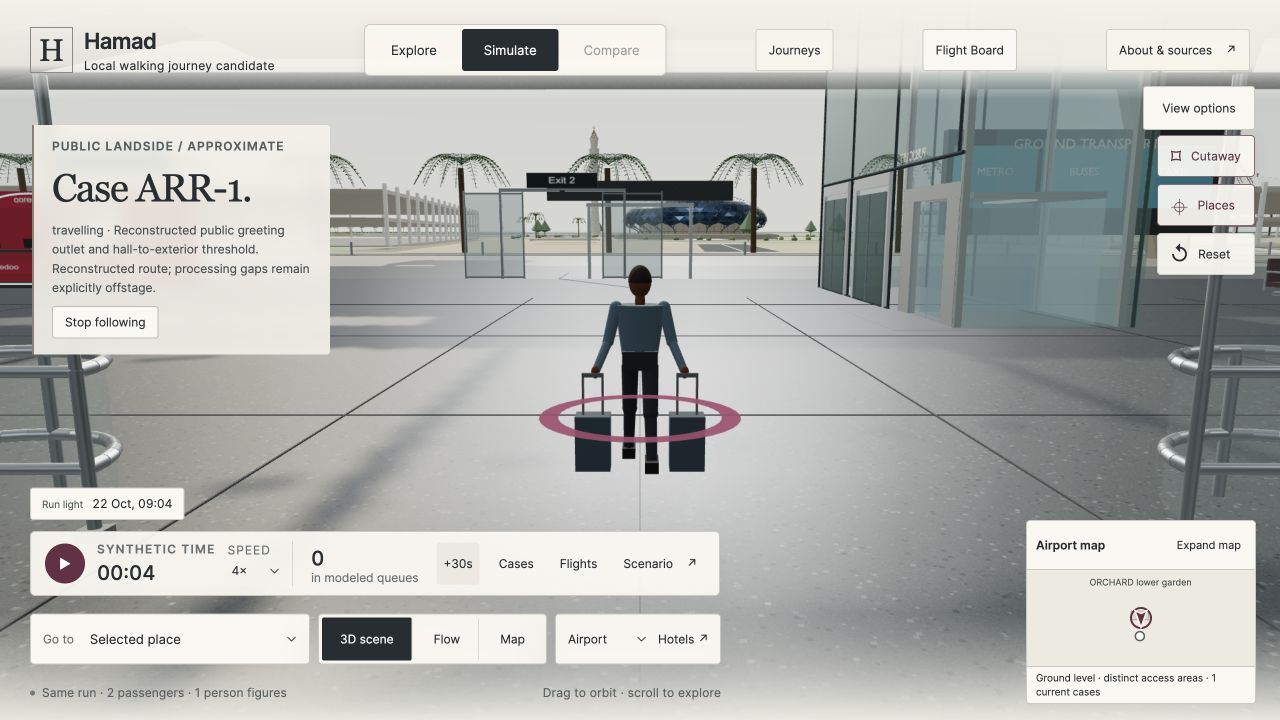
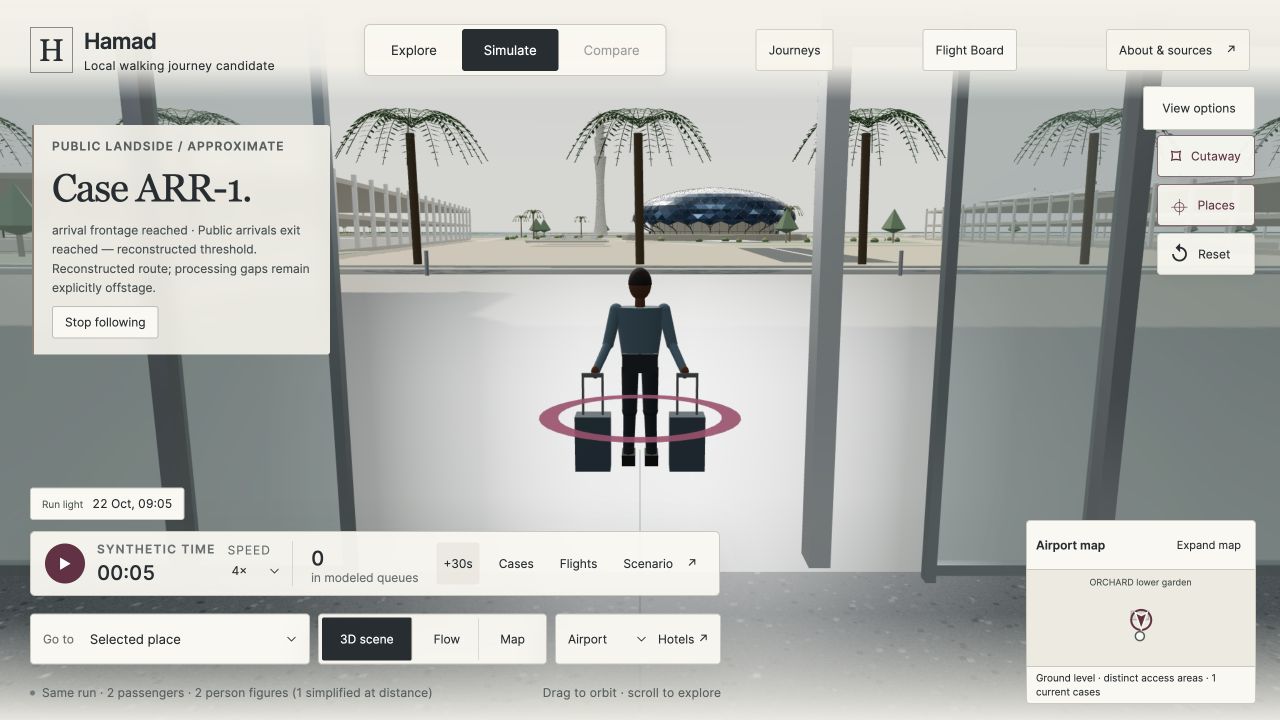
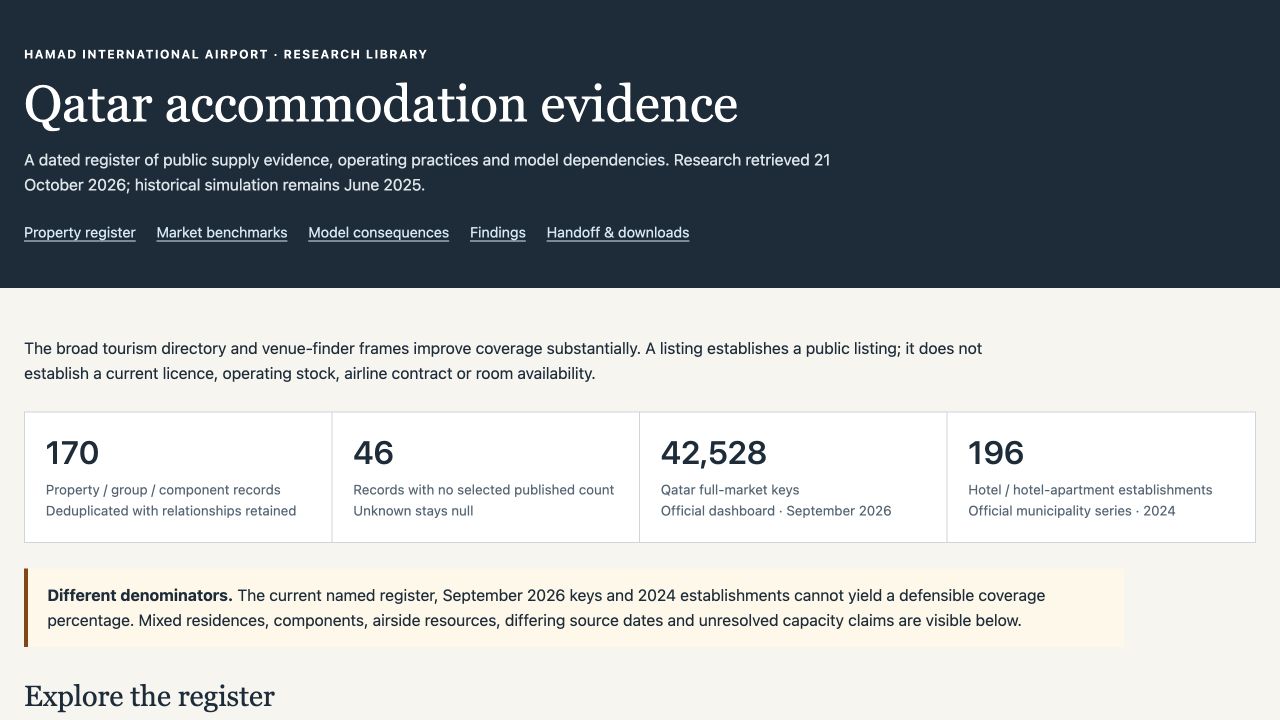
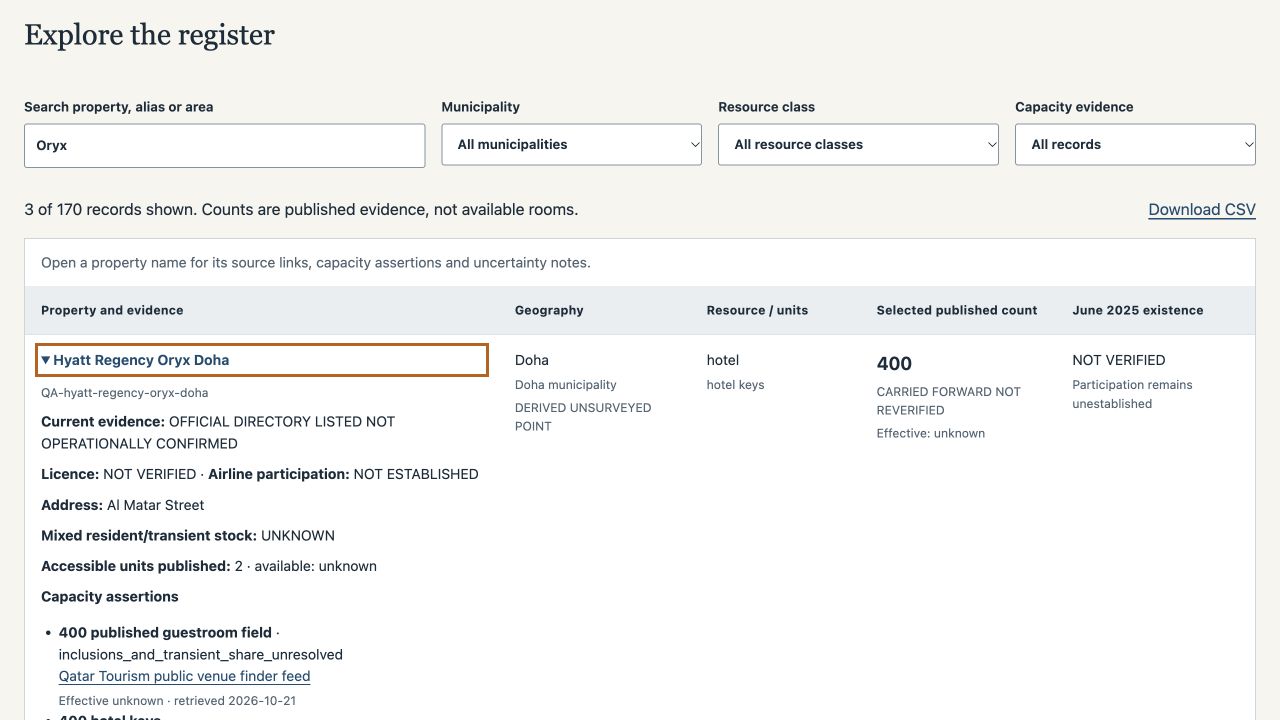
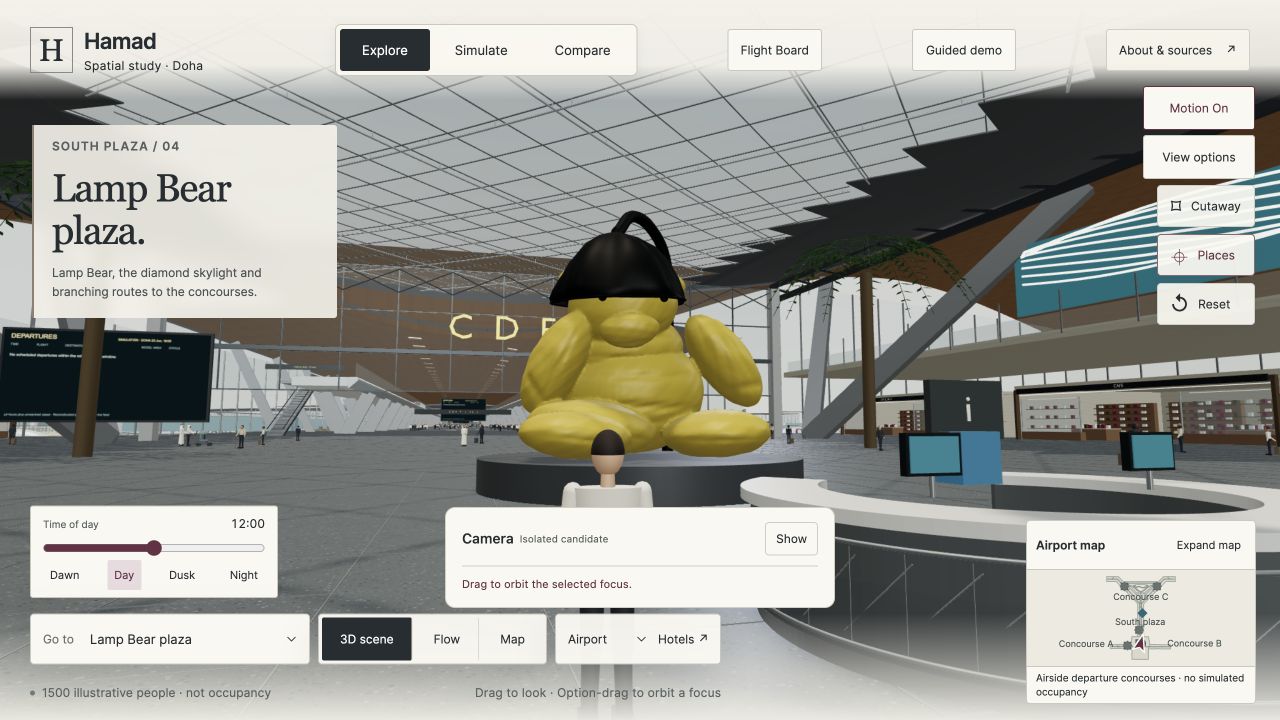
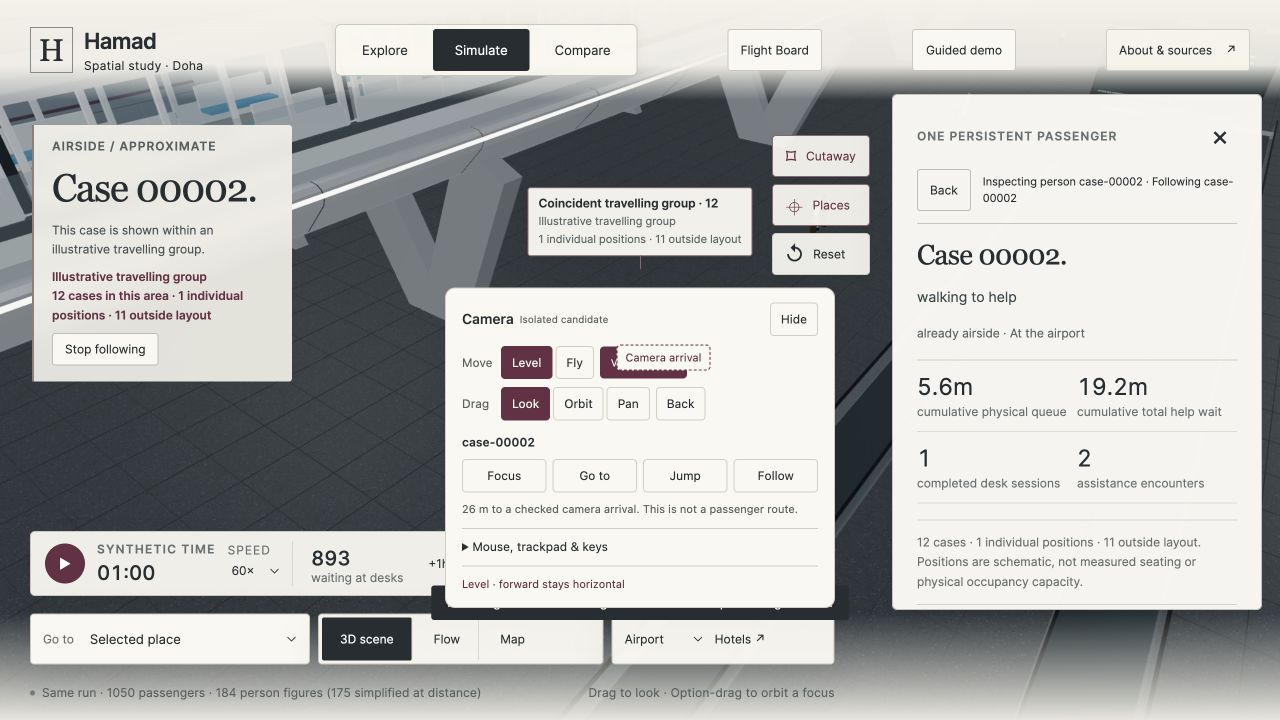
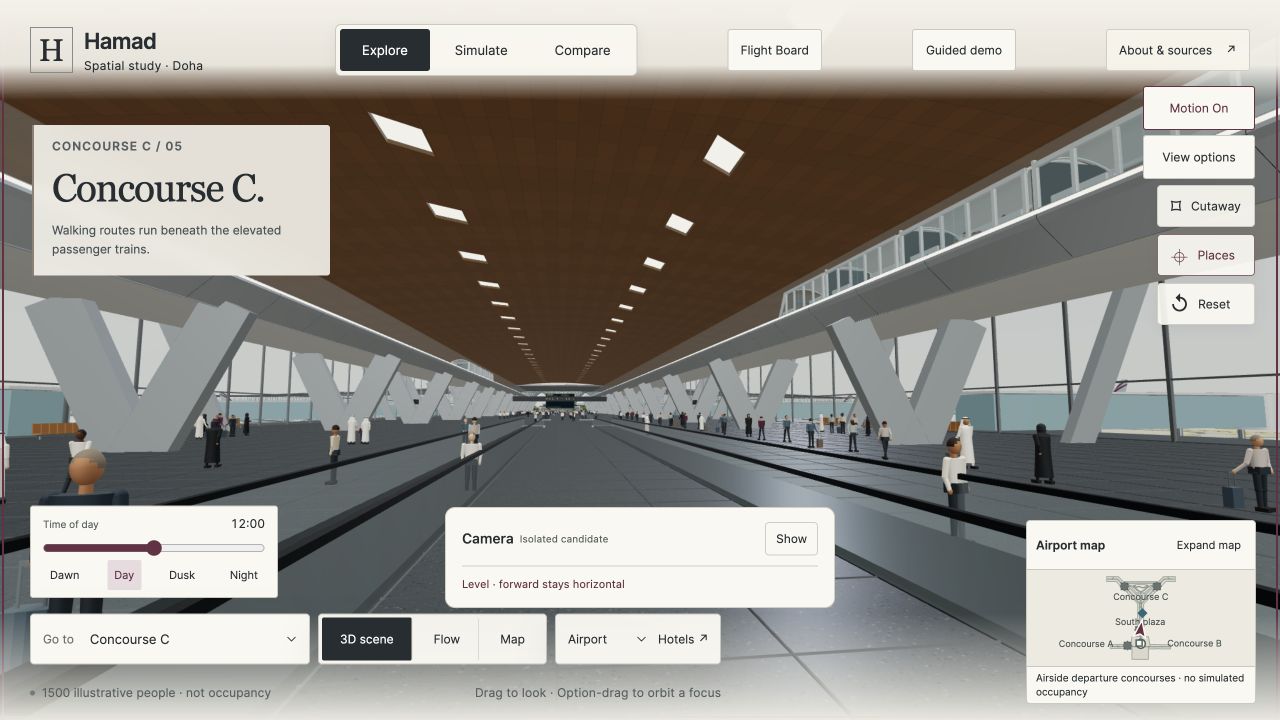
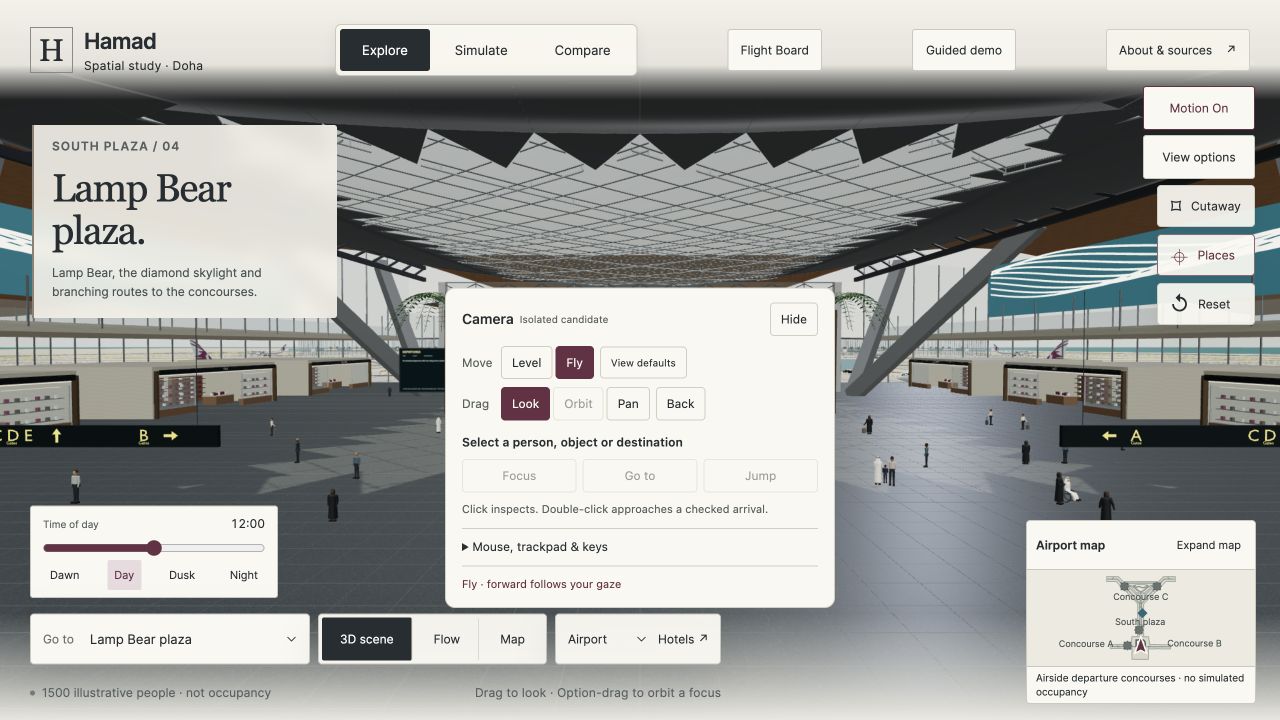
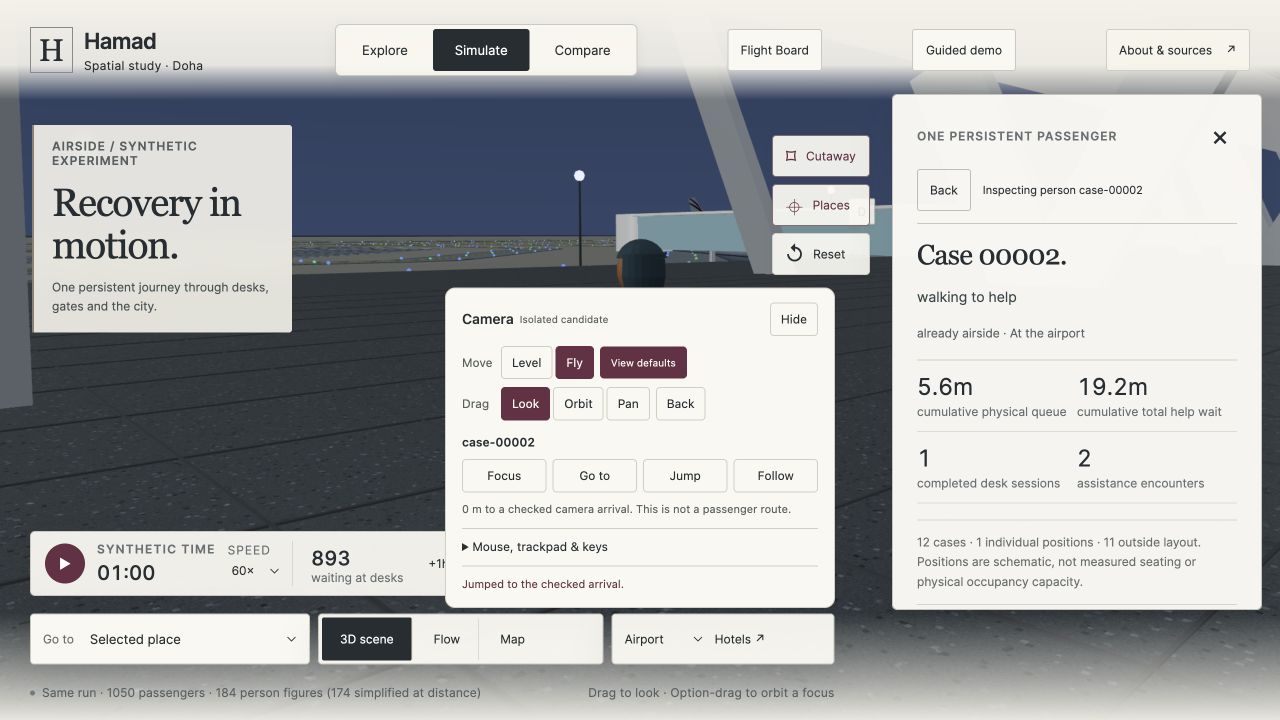
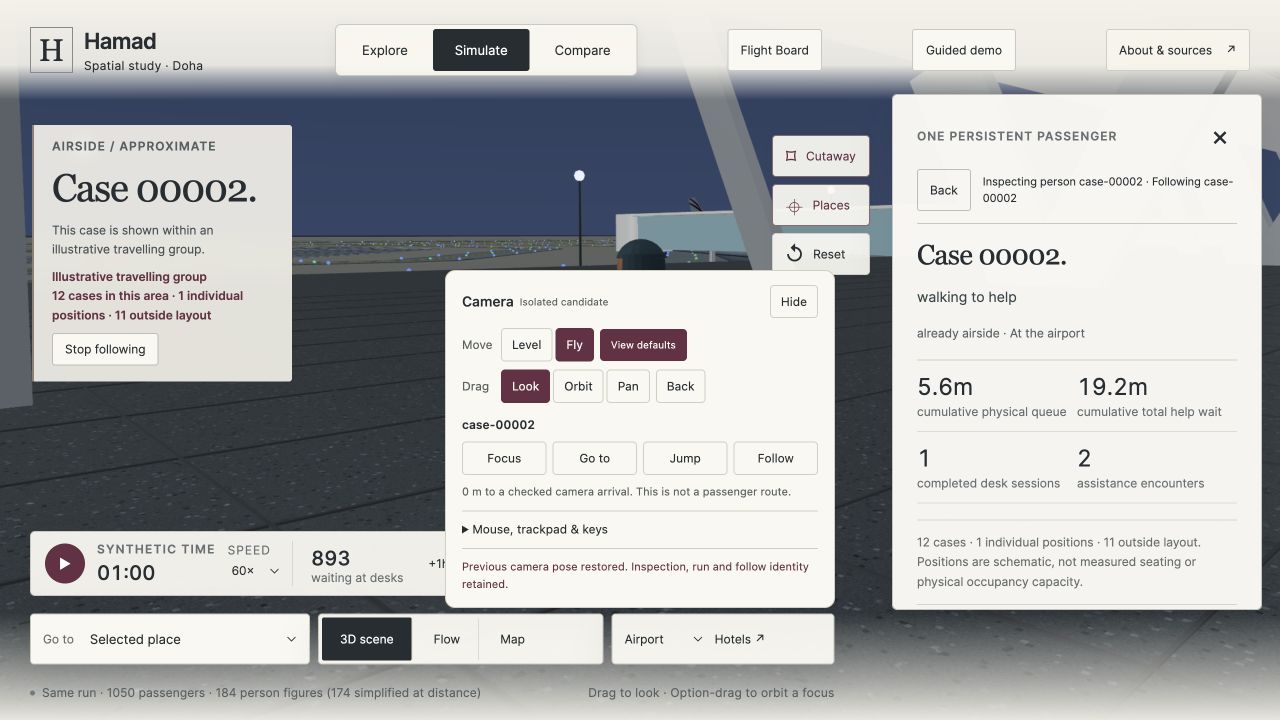
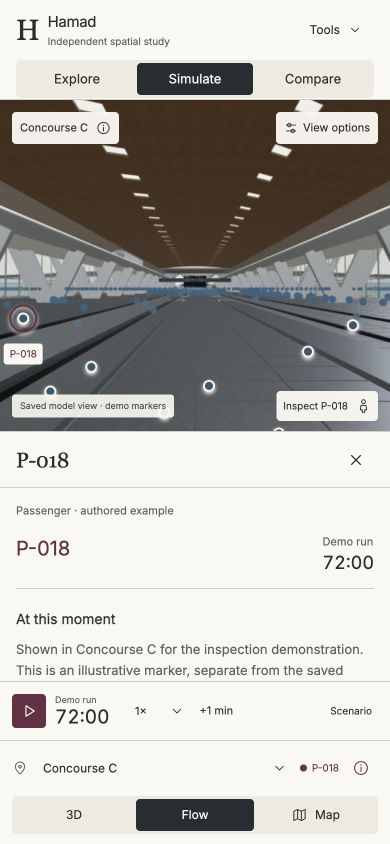
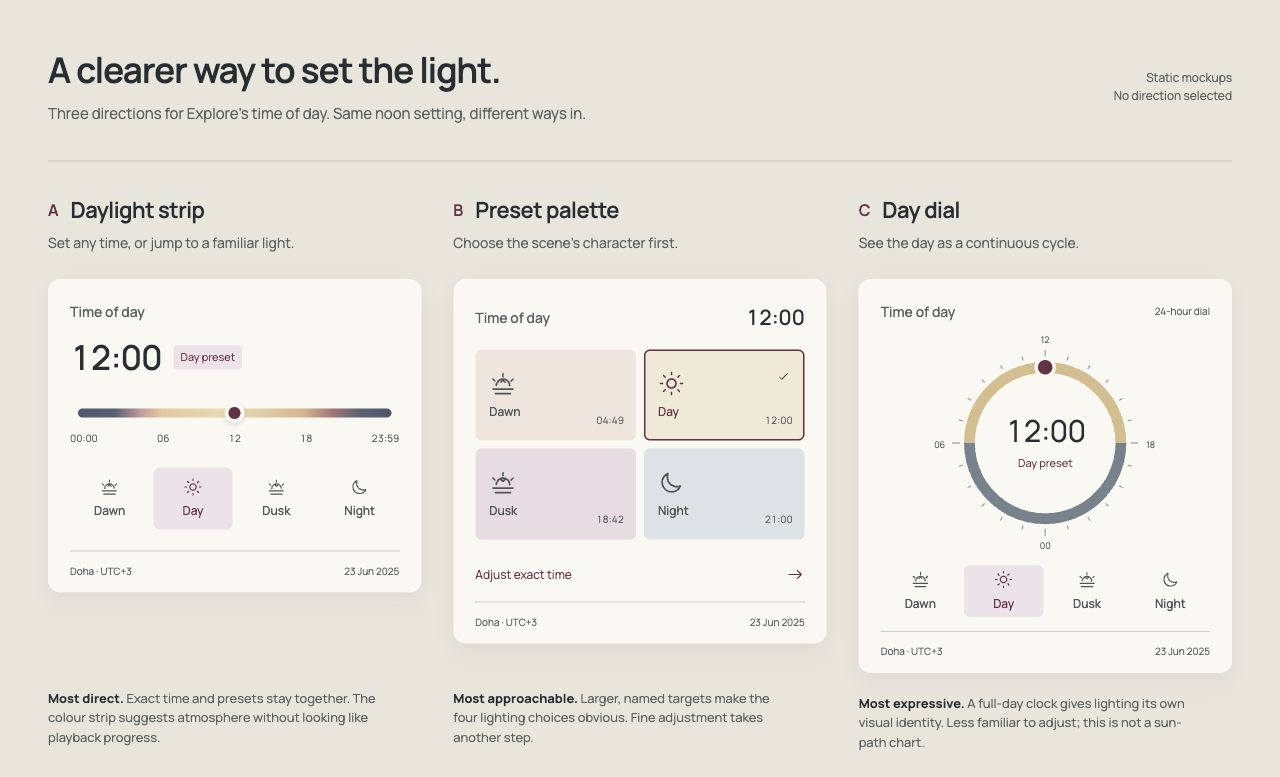
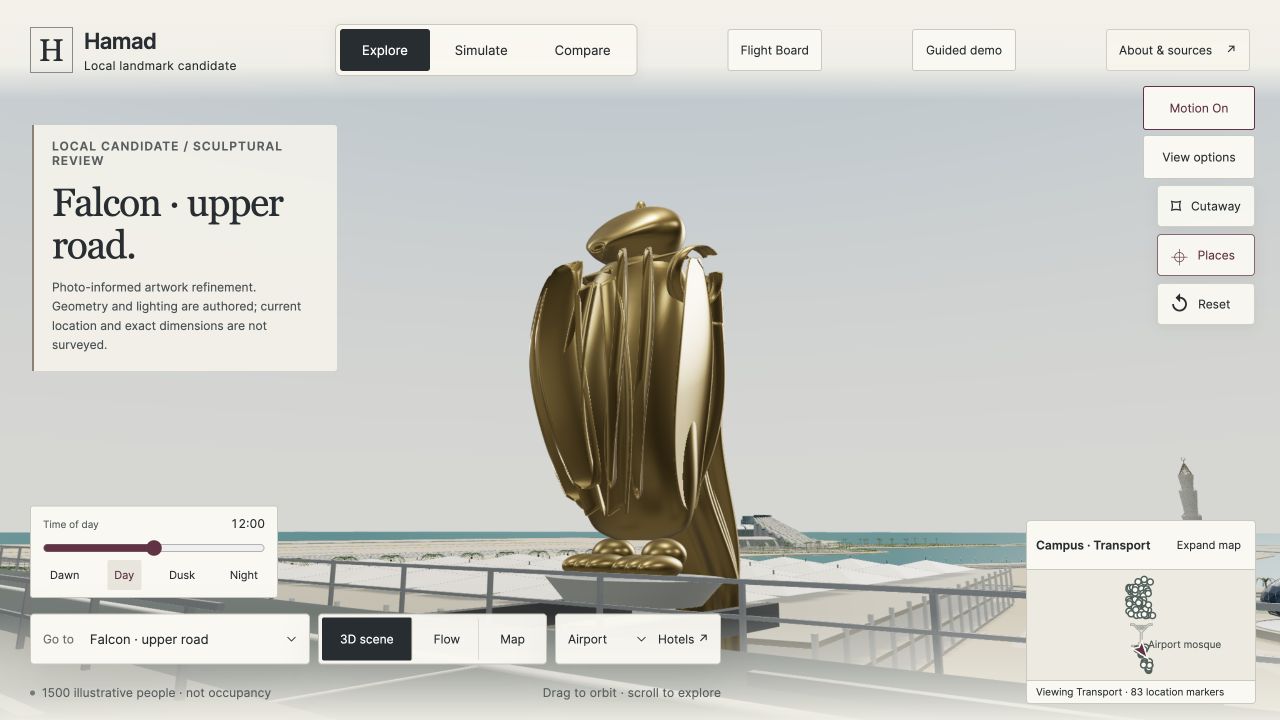
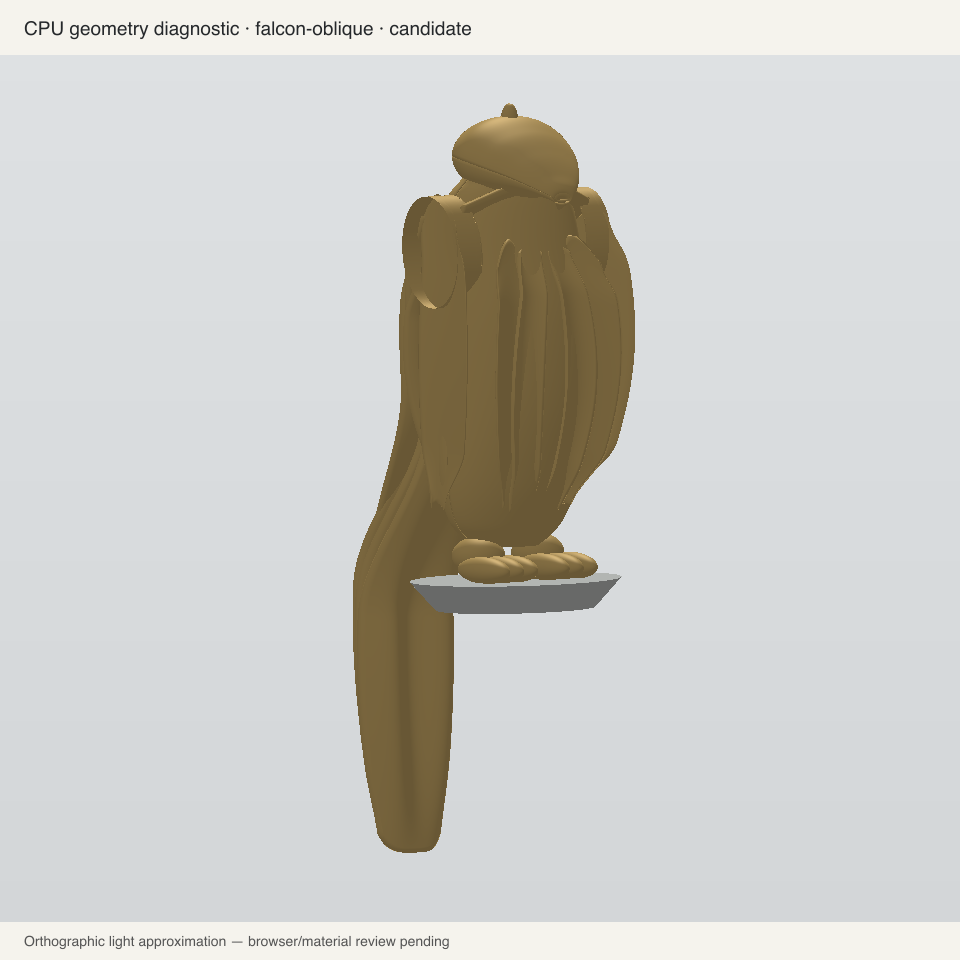
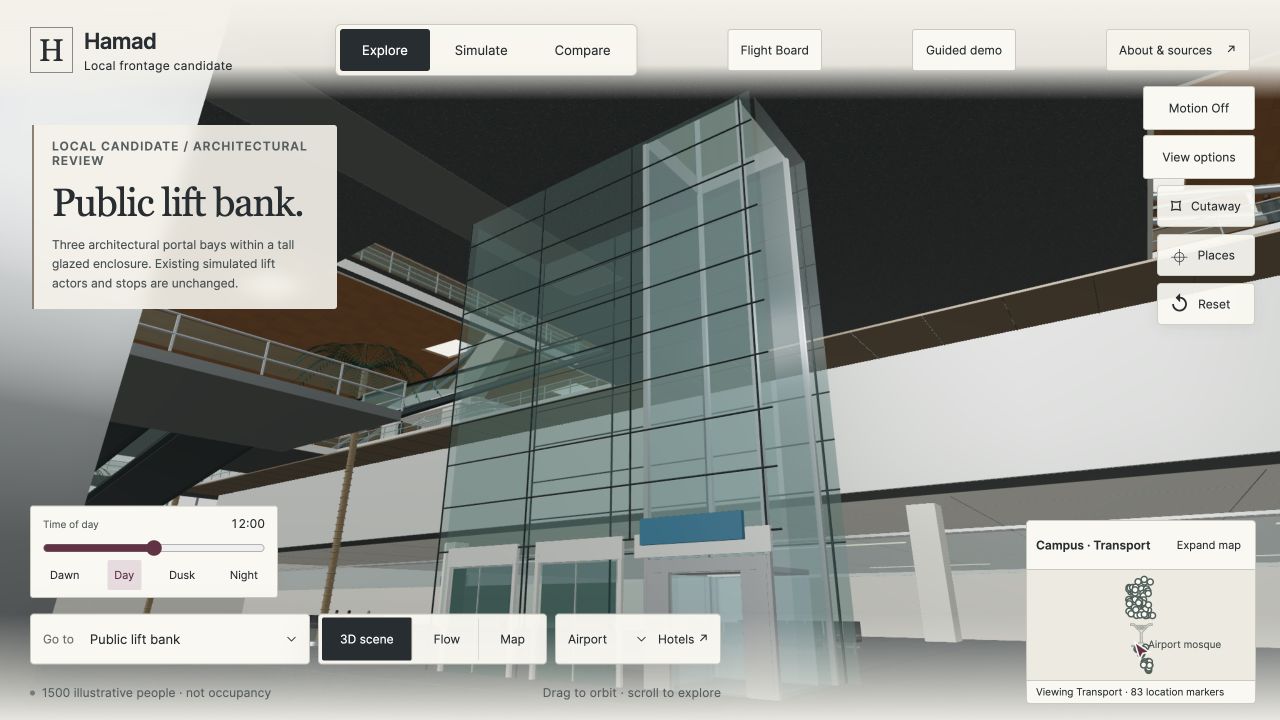
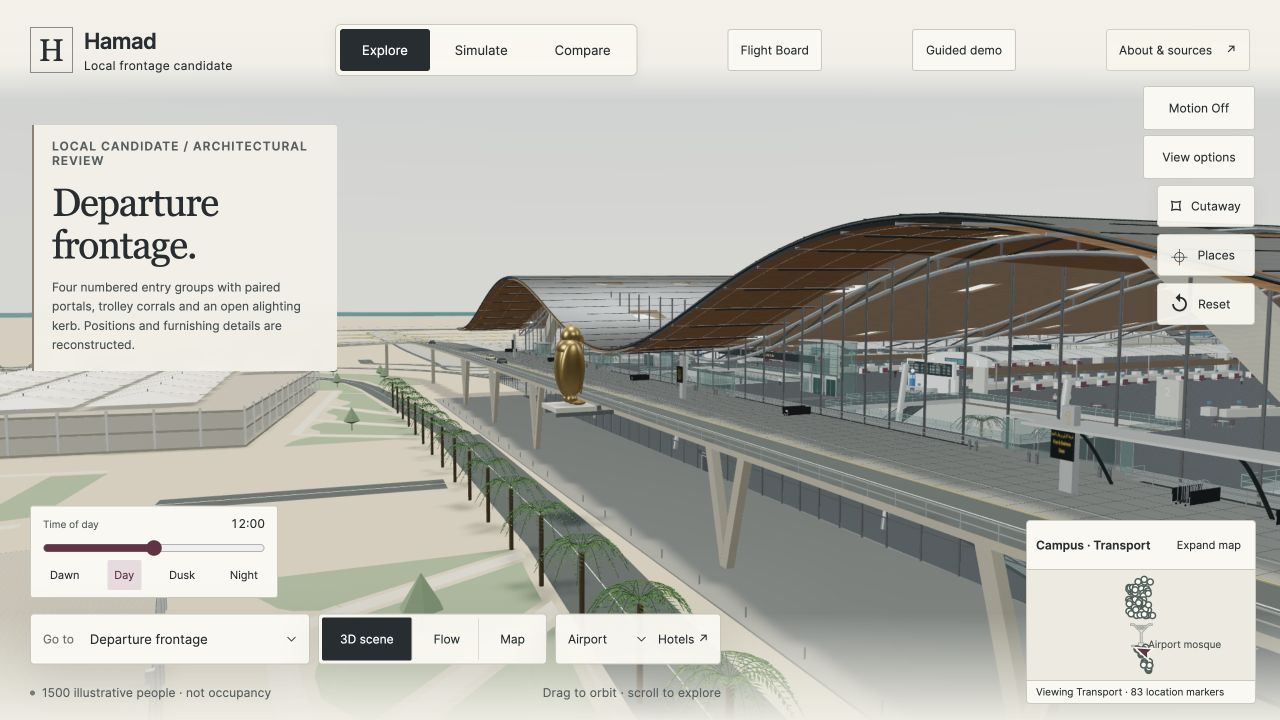
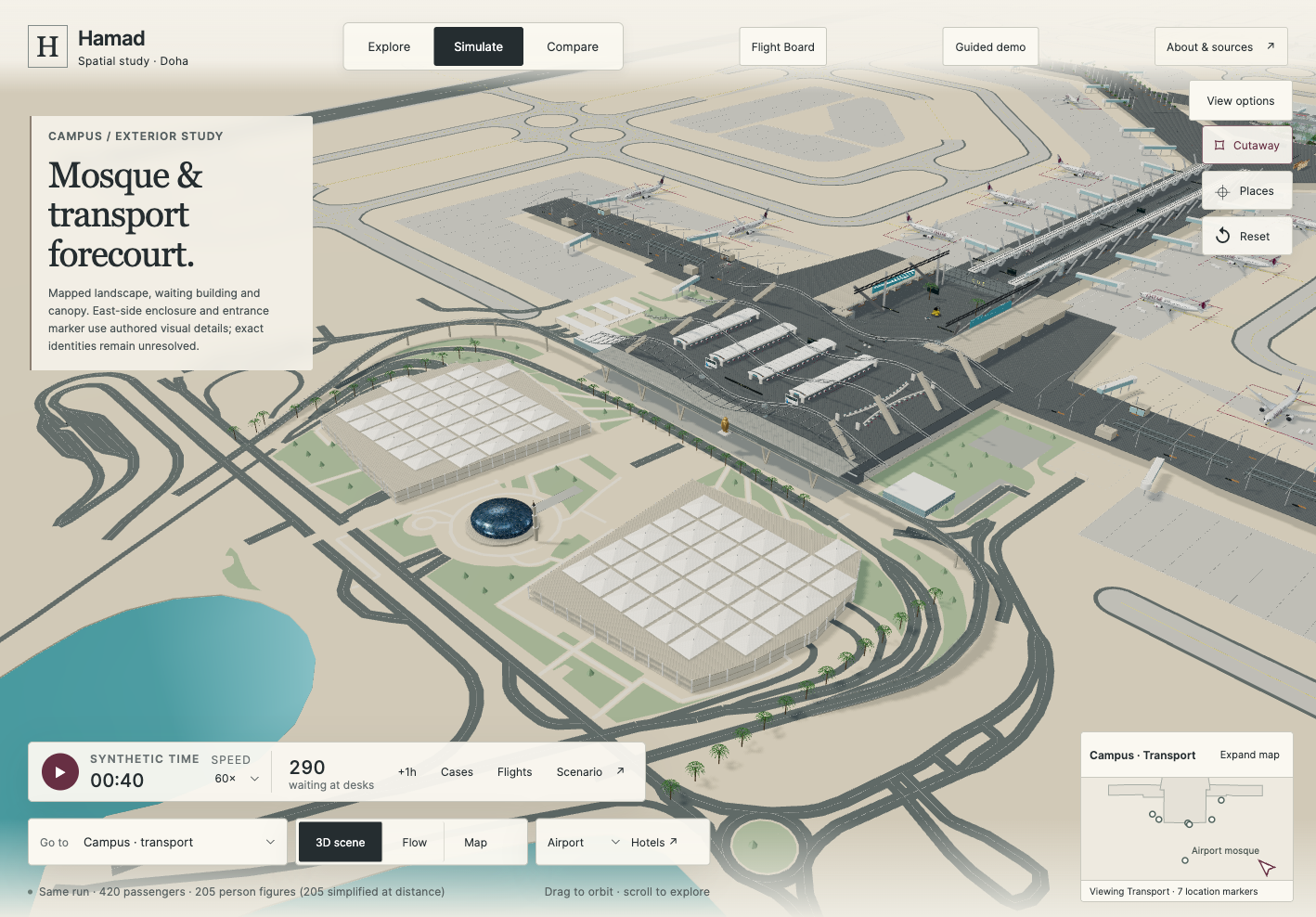
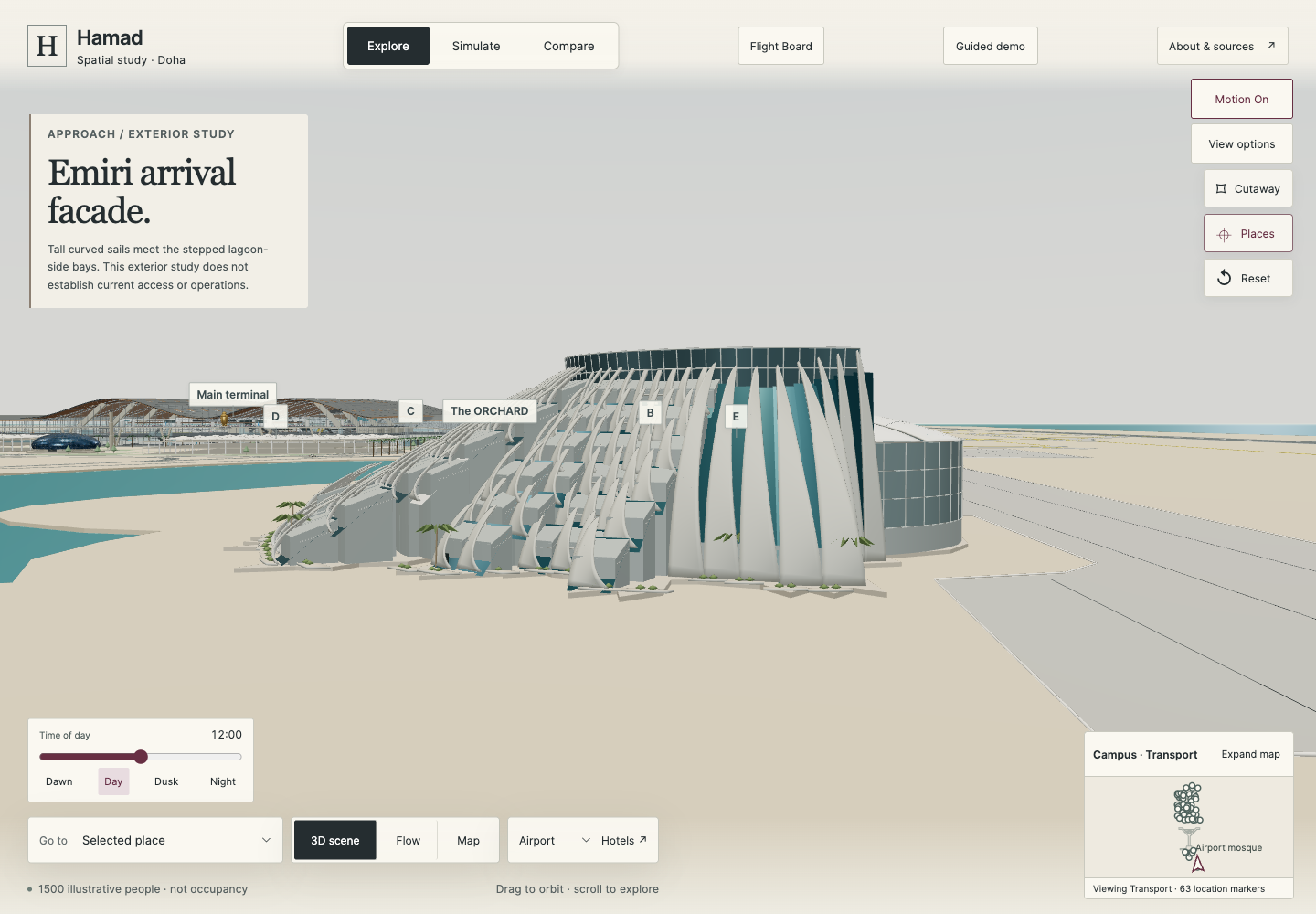
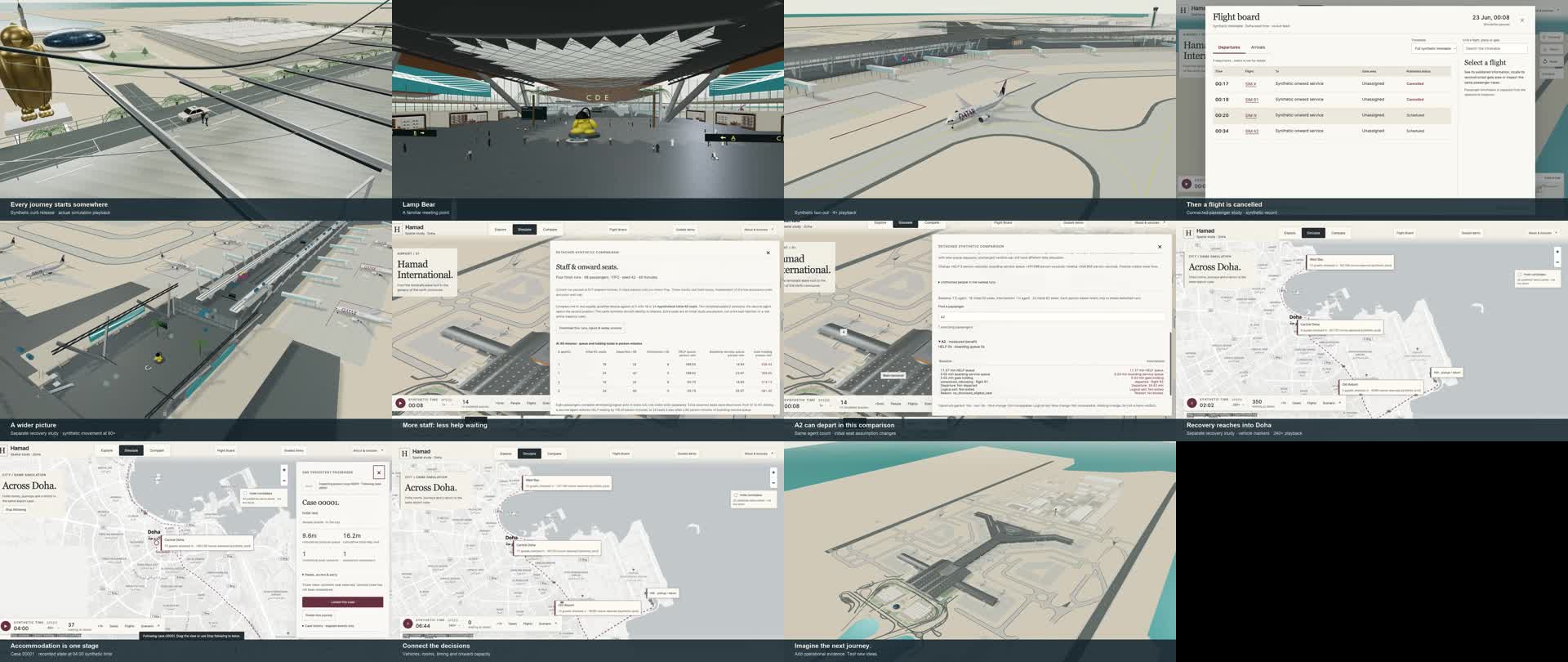
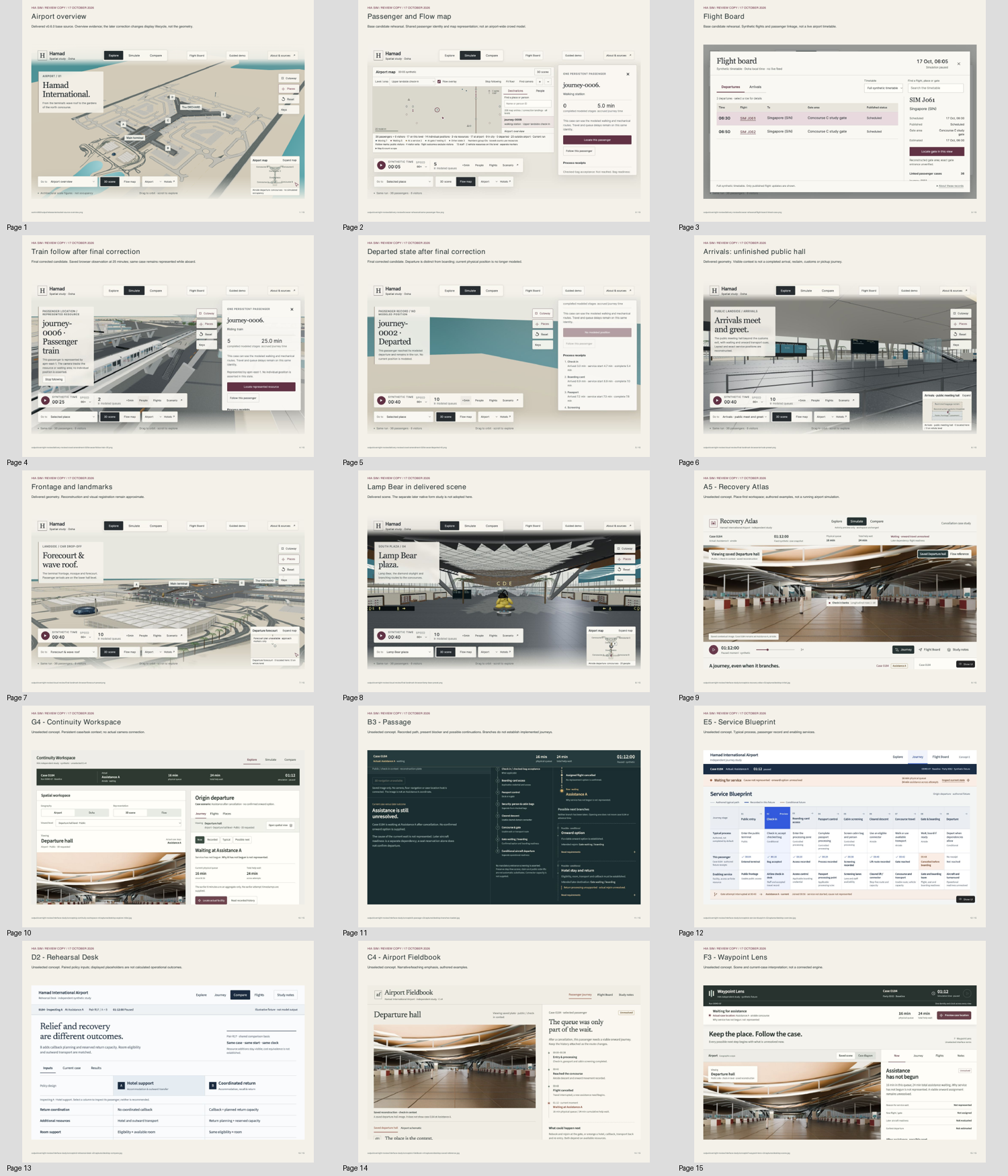
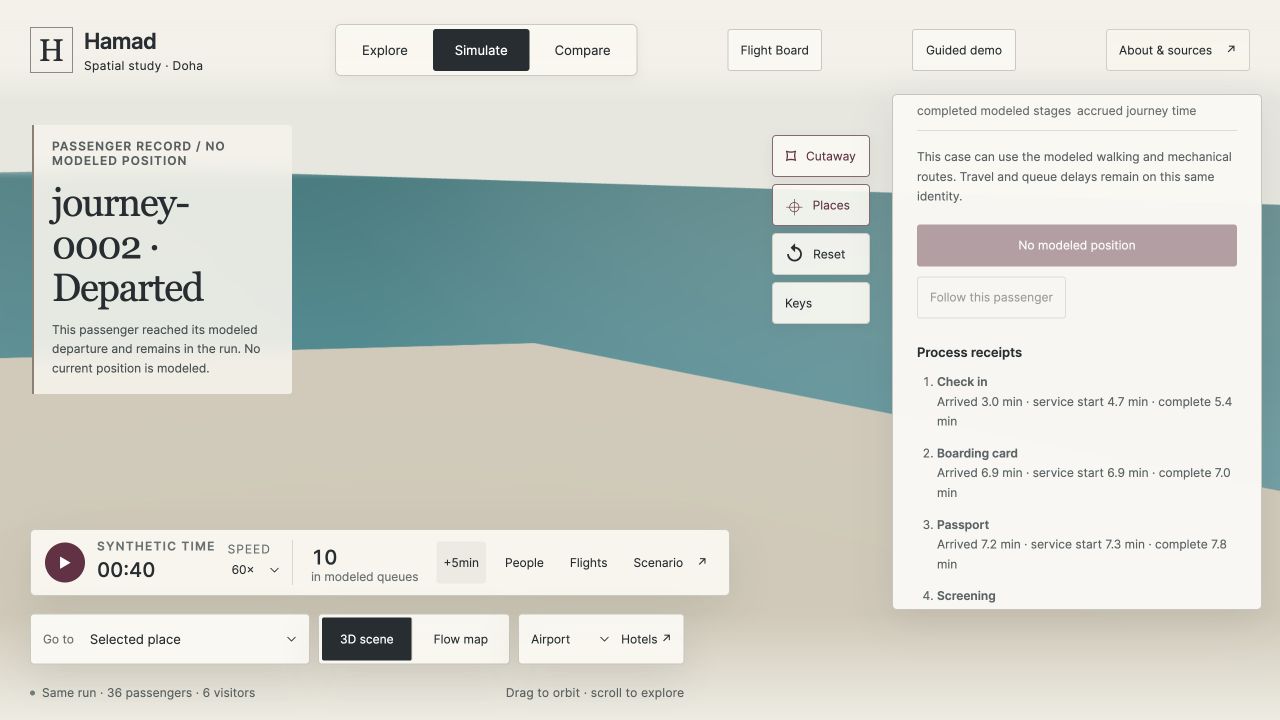
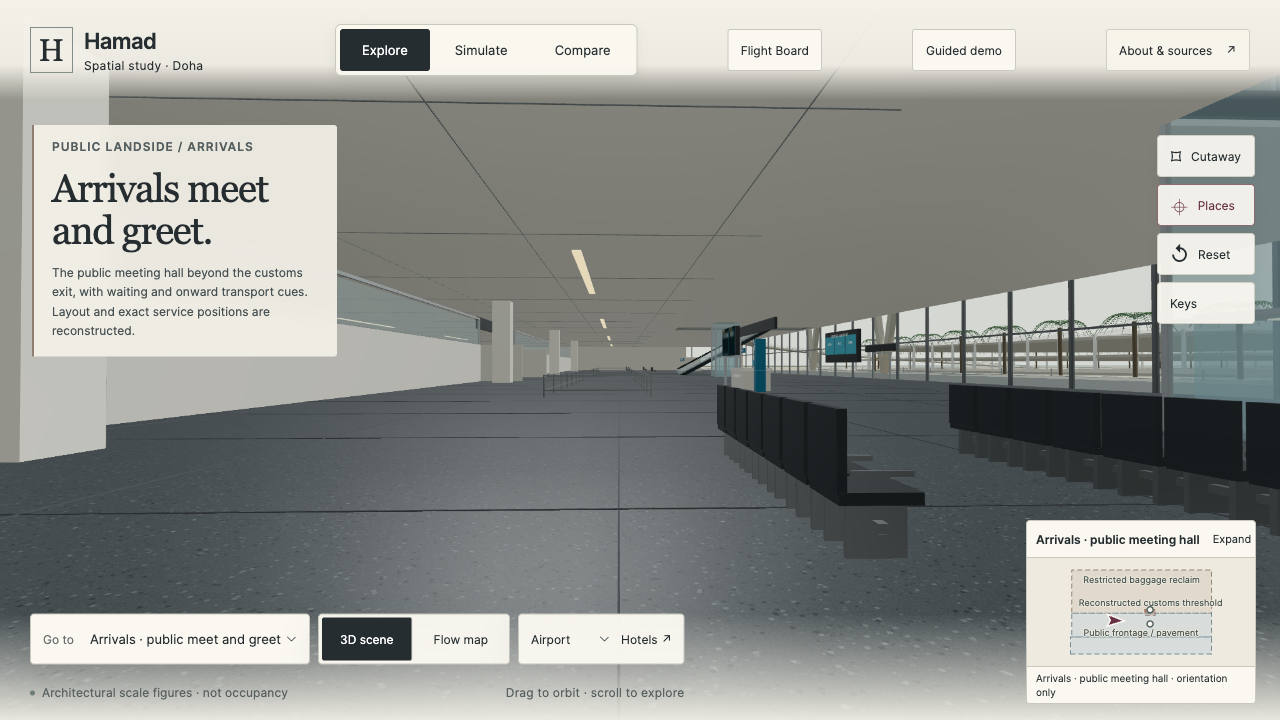
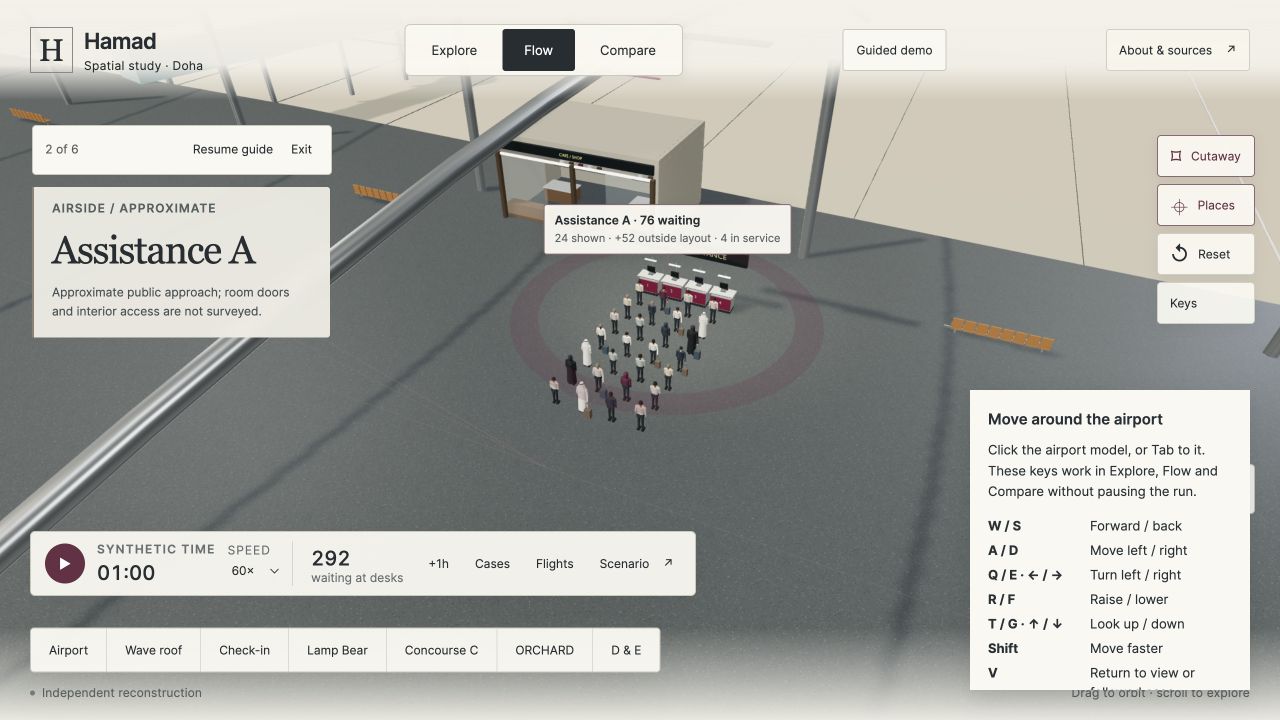
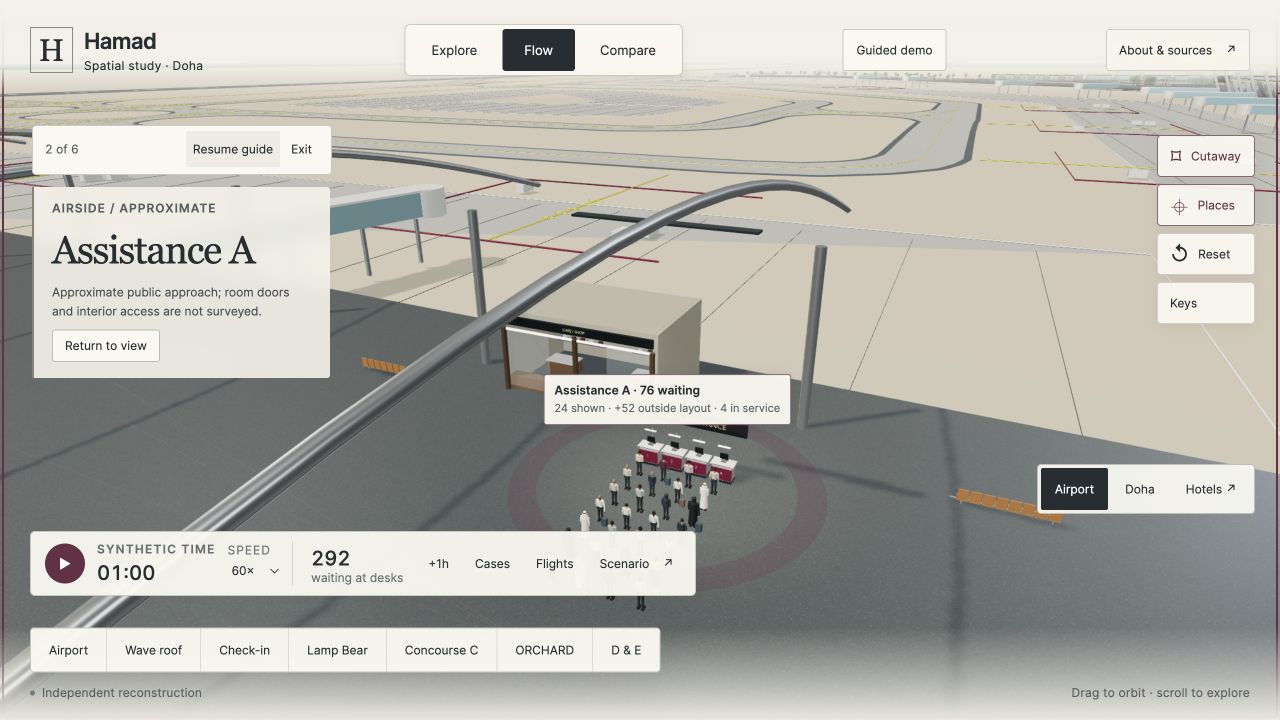
The first evidenced public checkpoint joined the reconstructed airport with inspectable passenger and recovery studies.
Full release notes
Explore the place, then inspect what each synthetic study actually models.
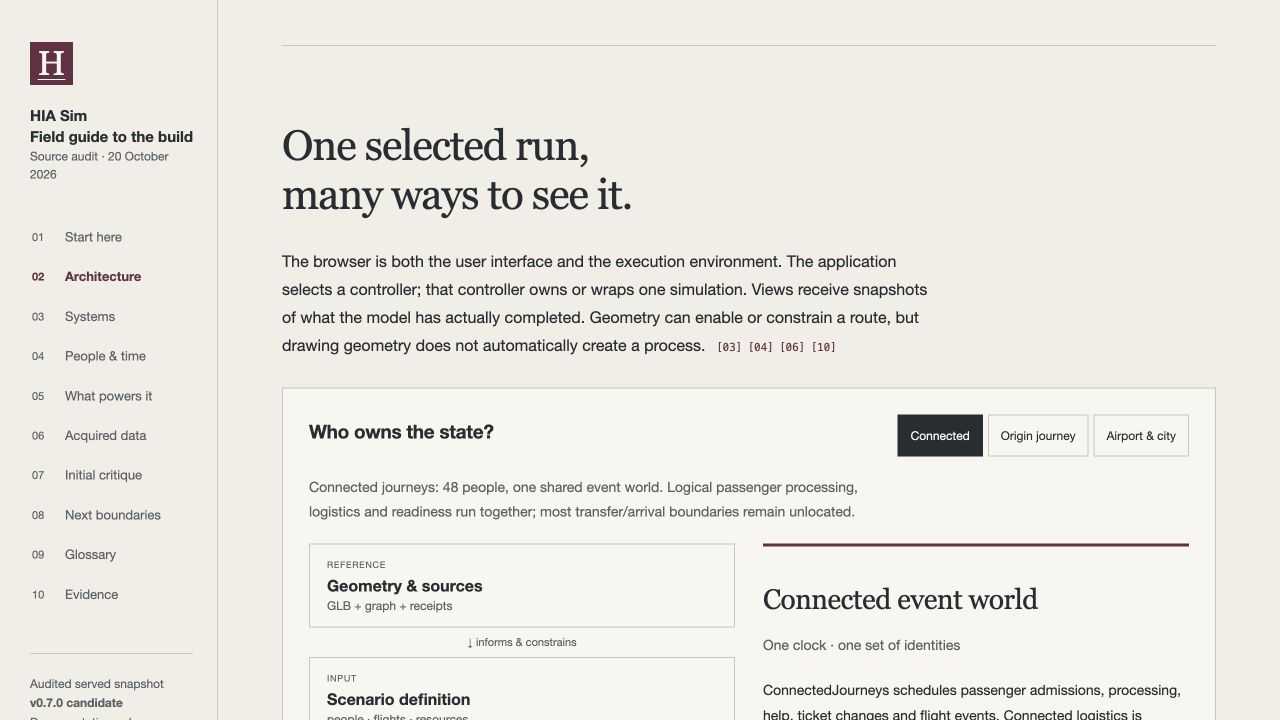
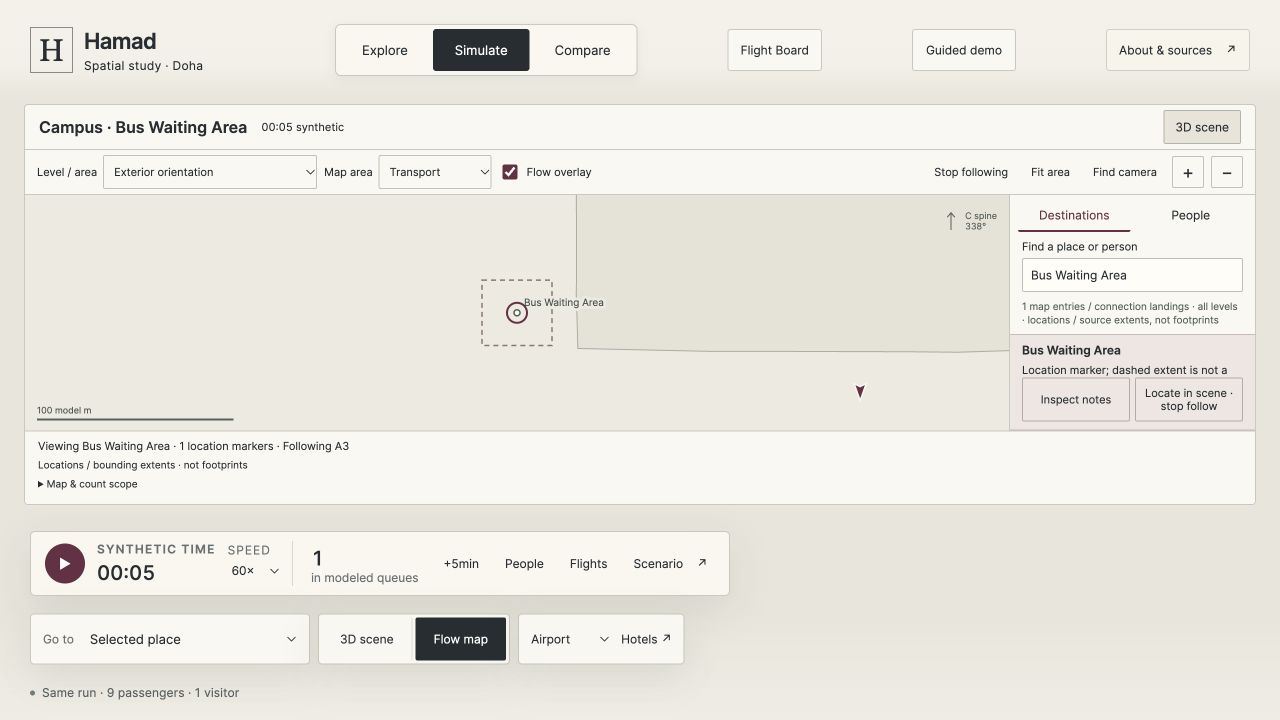
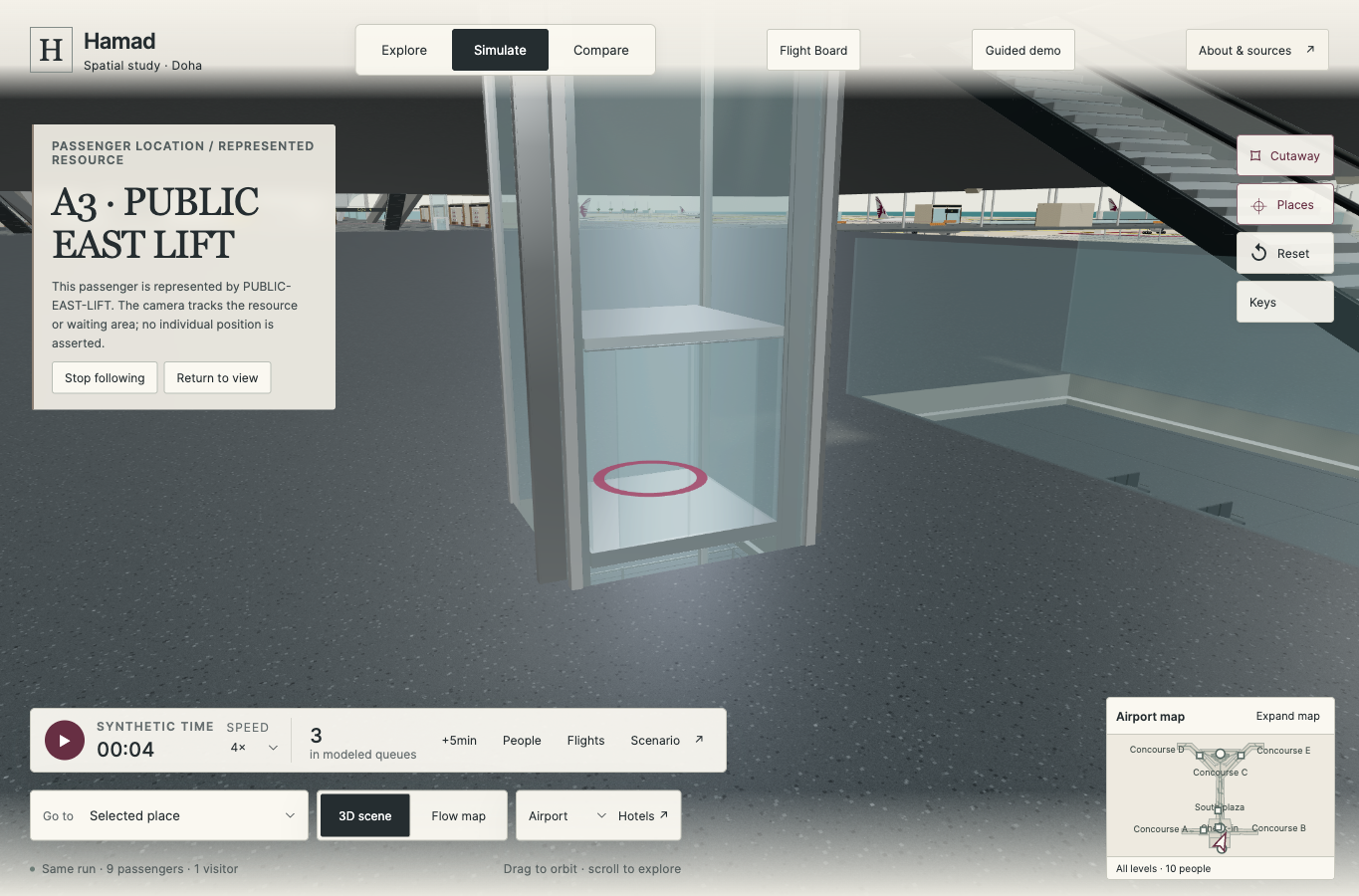
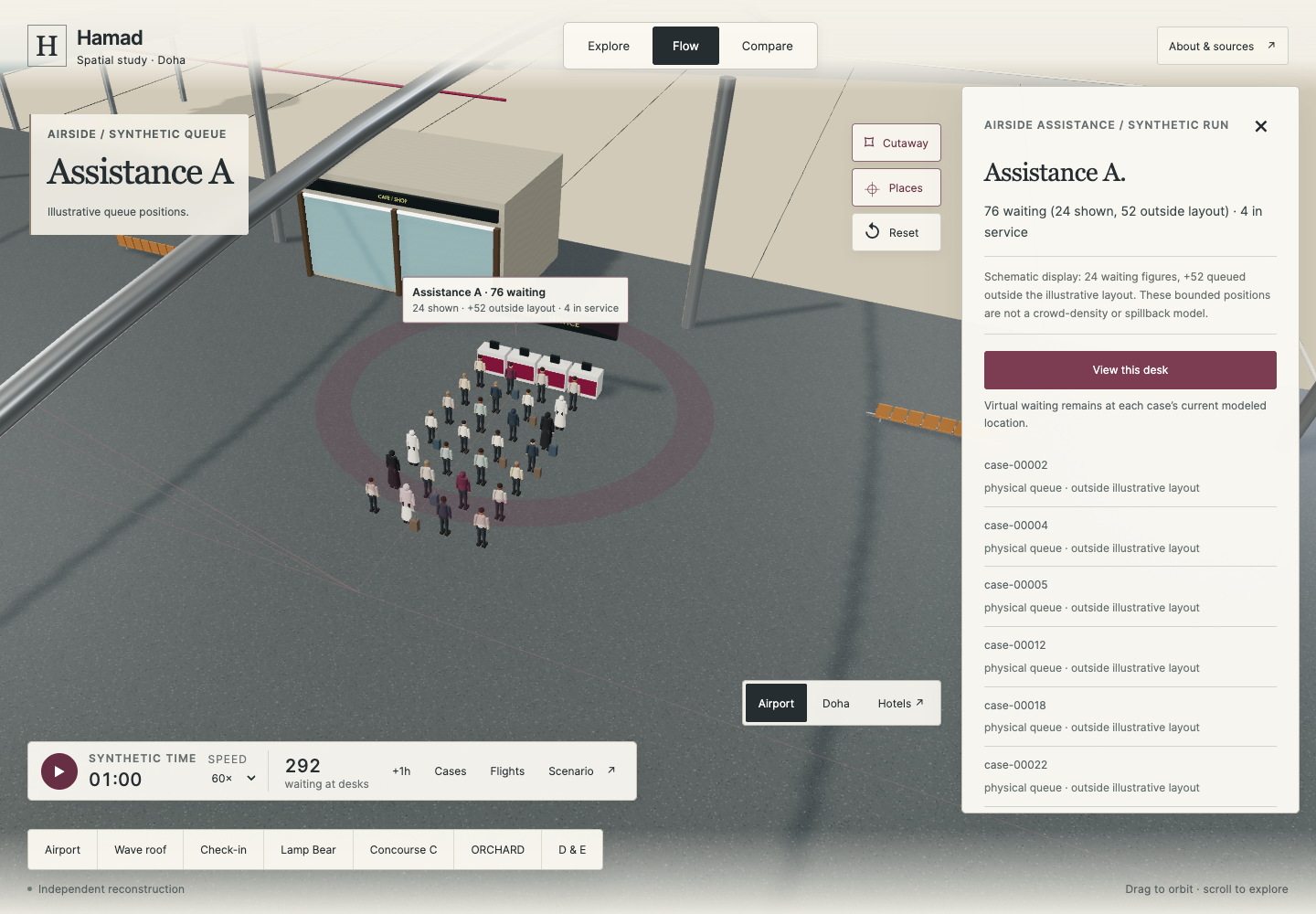
The studies have distinct owners and boundaries. Shared views in parts of the recovery experience do not establish a unified airport-wide model.
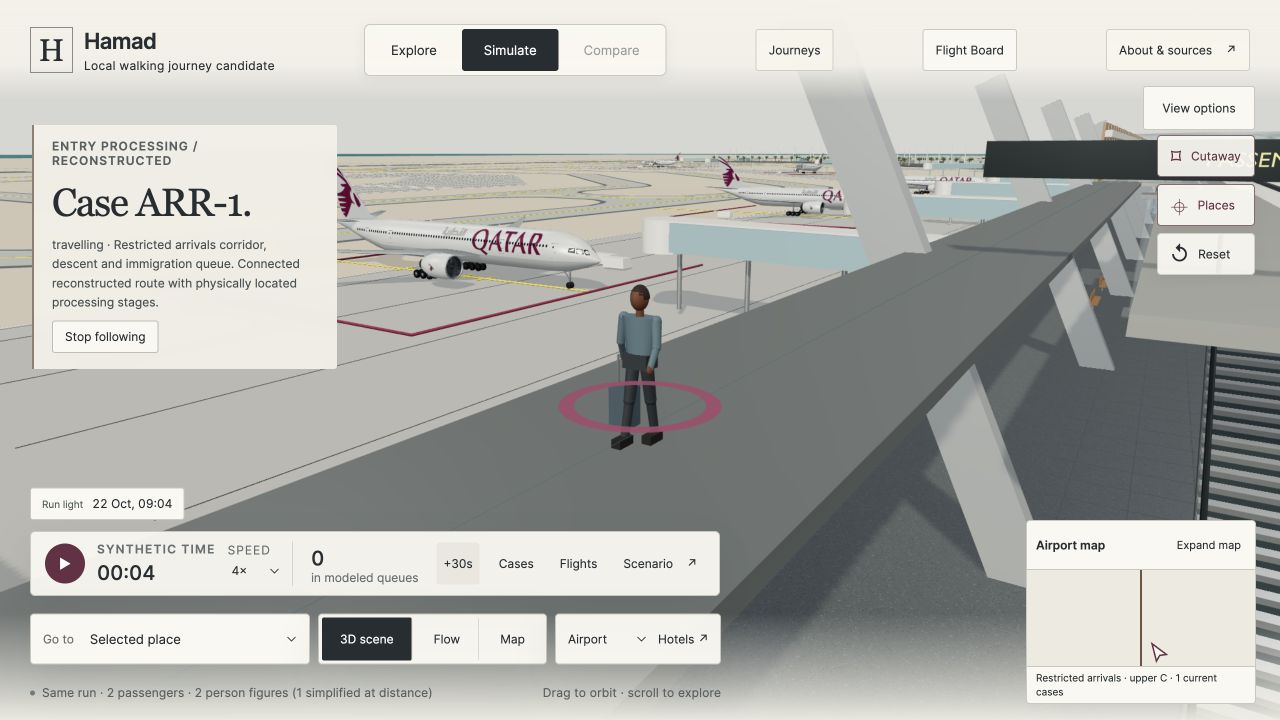
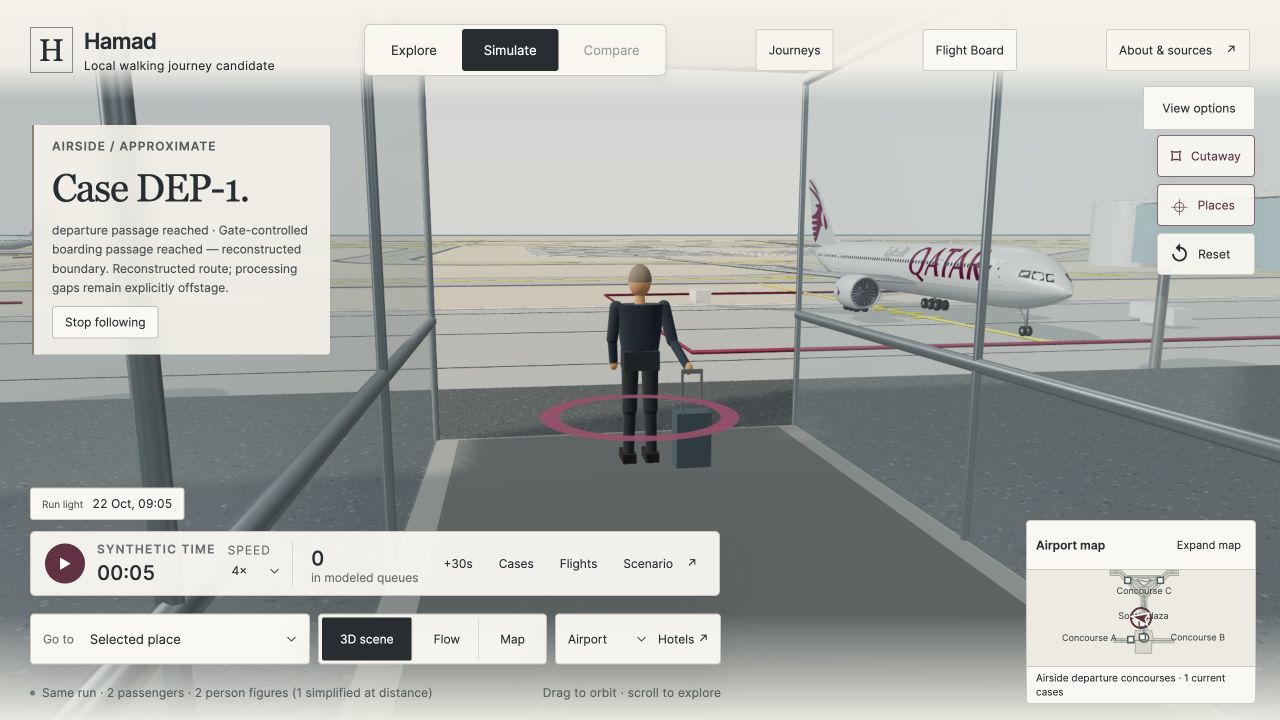
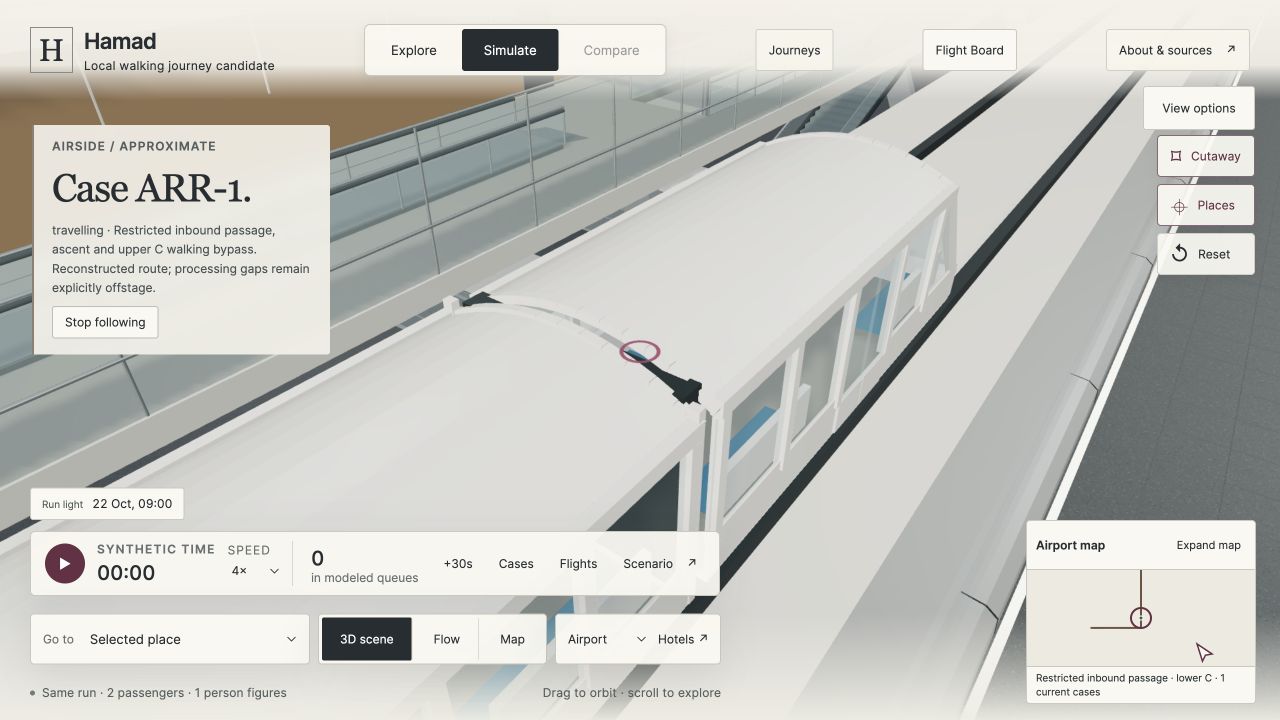
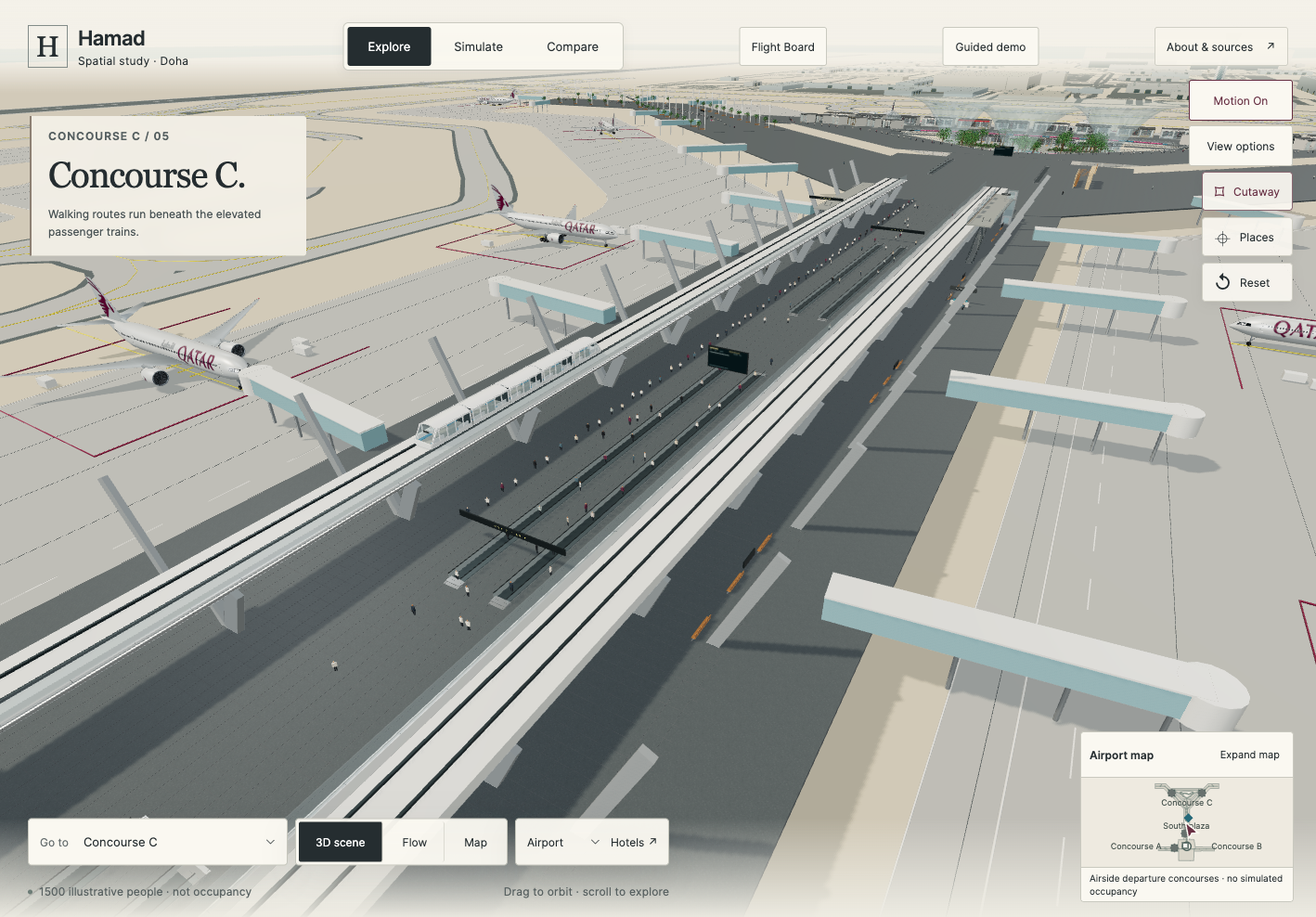
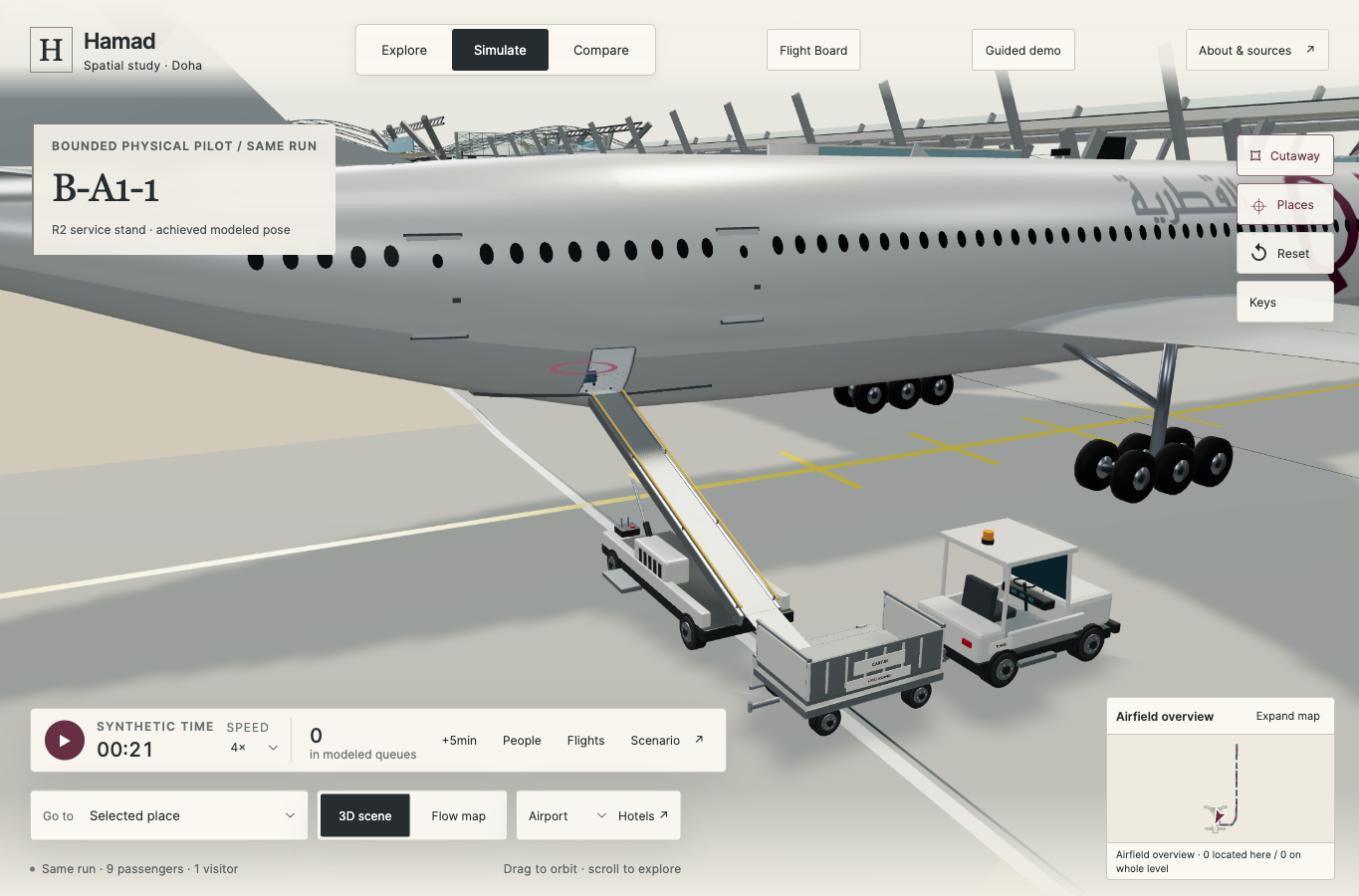
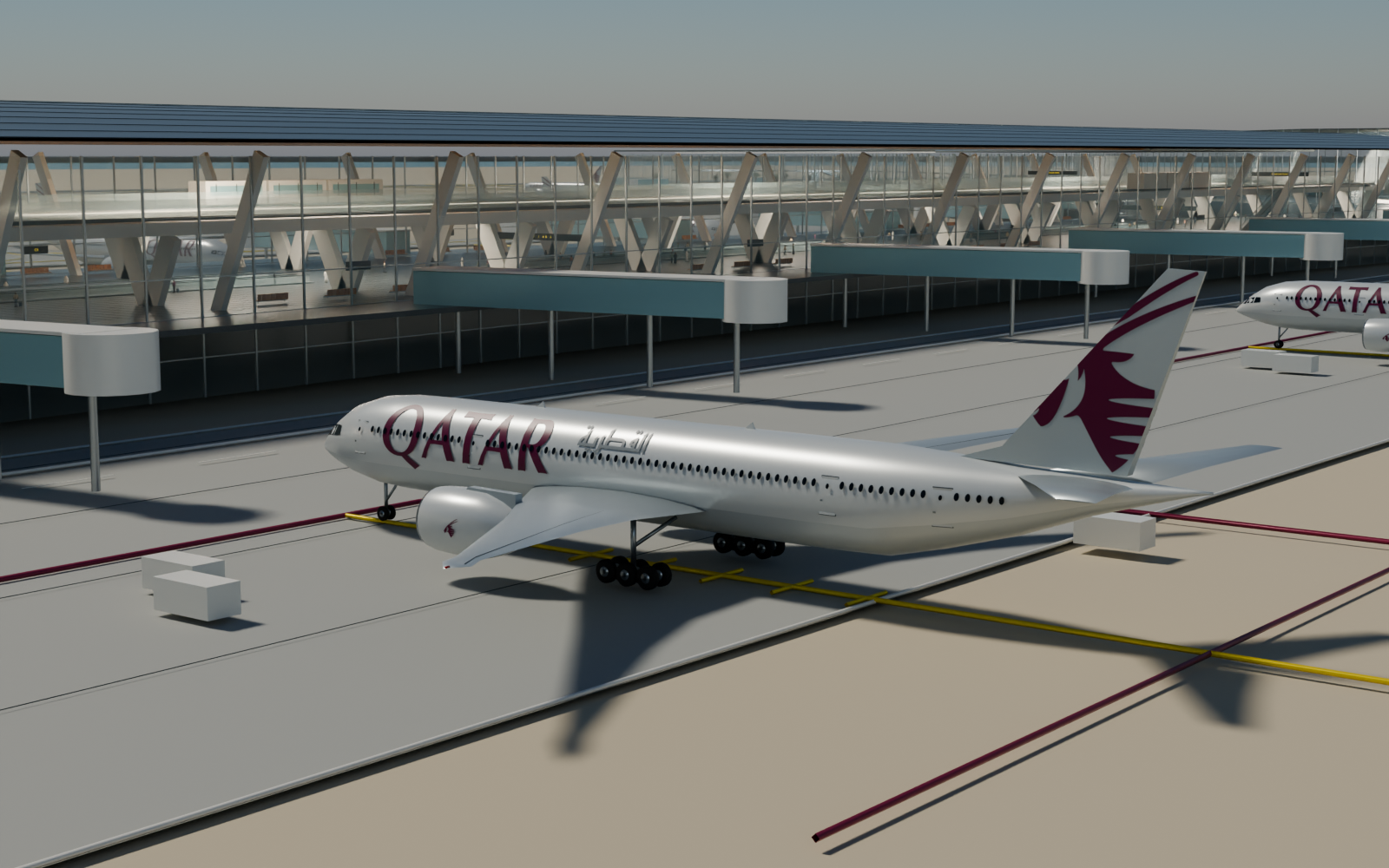
The original editable Qatar Airways 777-200LR uses a manufacturer-bounded 63.73 m length, 64.80 m span and 18.6 m height. Detailed surfaces, stands and livery placement are visual reconstruction; registrations are omitted and parked aircraft are not linked to synthetic flights.
Aircraft artwork retains official and secondary-vector provenance. Source photographs and manufacturer planning material remain research references, while decal derivatives preserve their attribution and trademark limits.
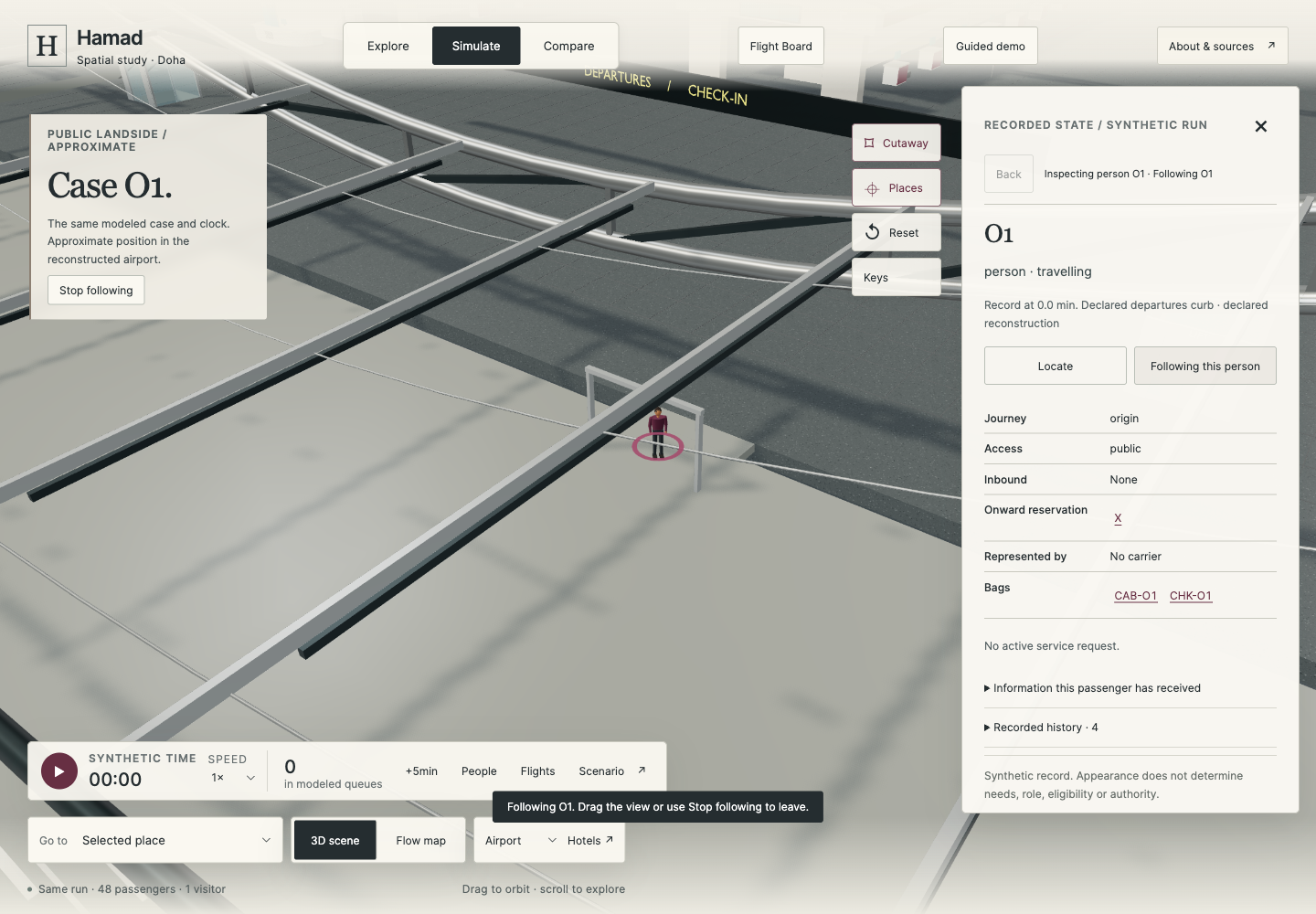
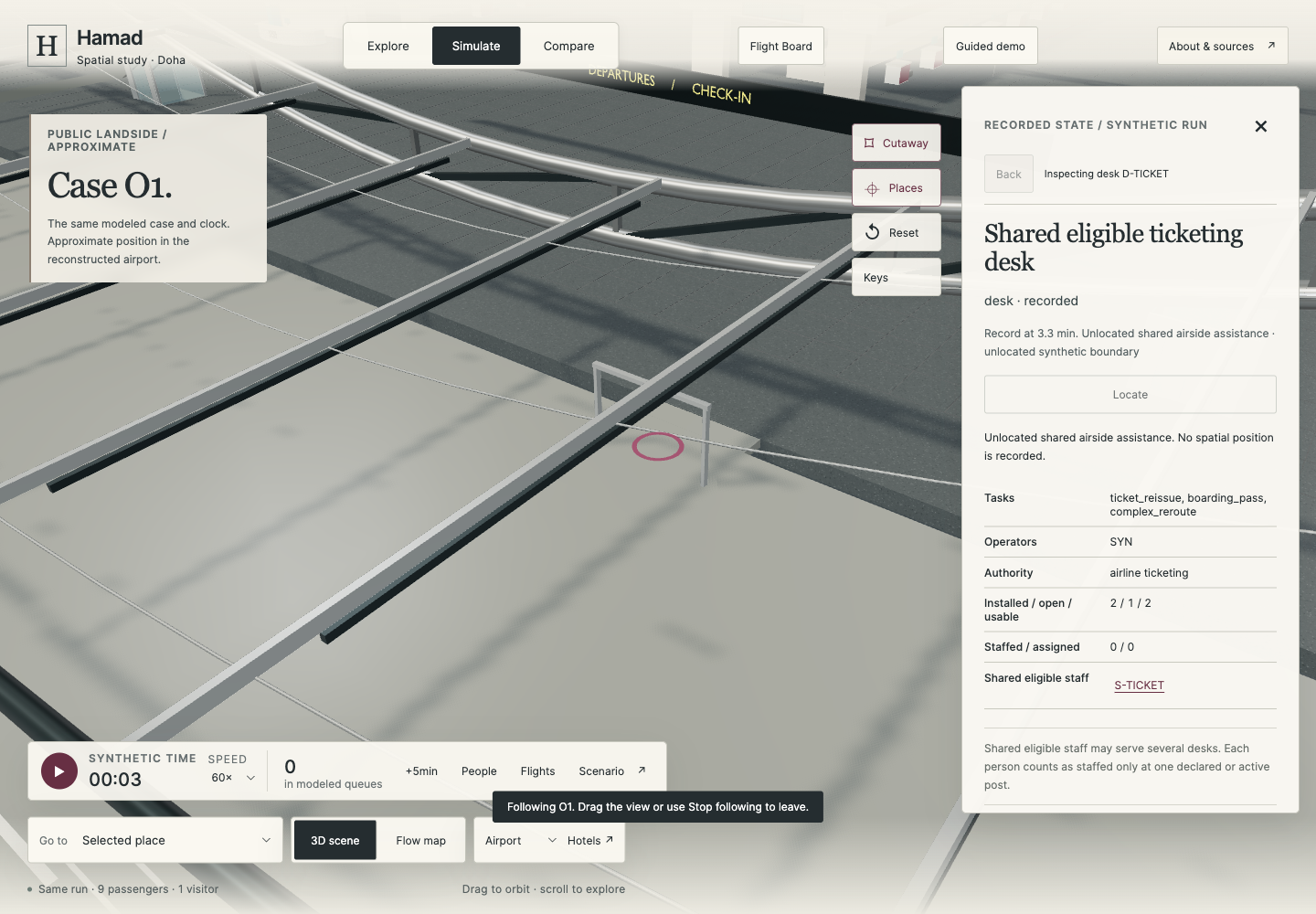
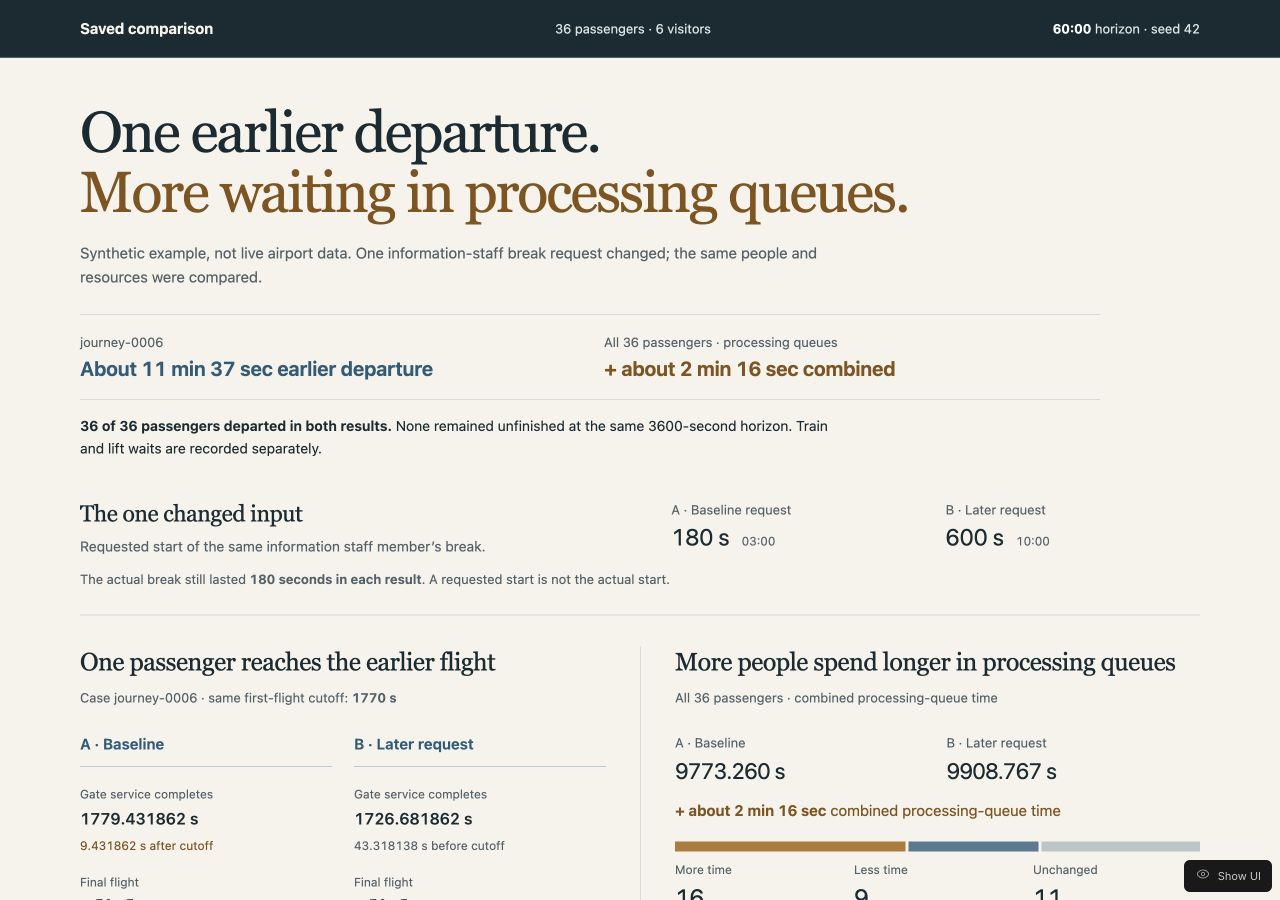
The original checkpoint experiment has 900 synthetic cases and 38 qualified staff across distinct origin/transfer routes. Same-input policies preserve installed, usable, requested, setting-up and active lanes; completion is a modeled check, not permission to travel.
The separate provisioning experiment constrains stock, qualified staff, breaks and abstract requests. It keeps logical positions null and does not infer a kitchen, retailer, meal entitlement or physical route.
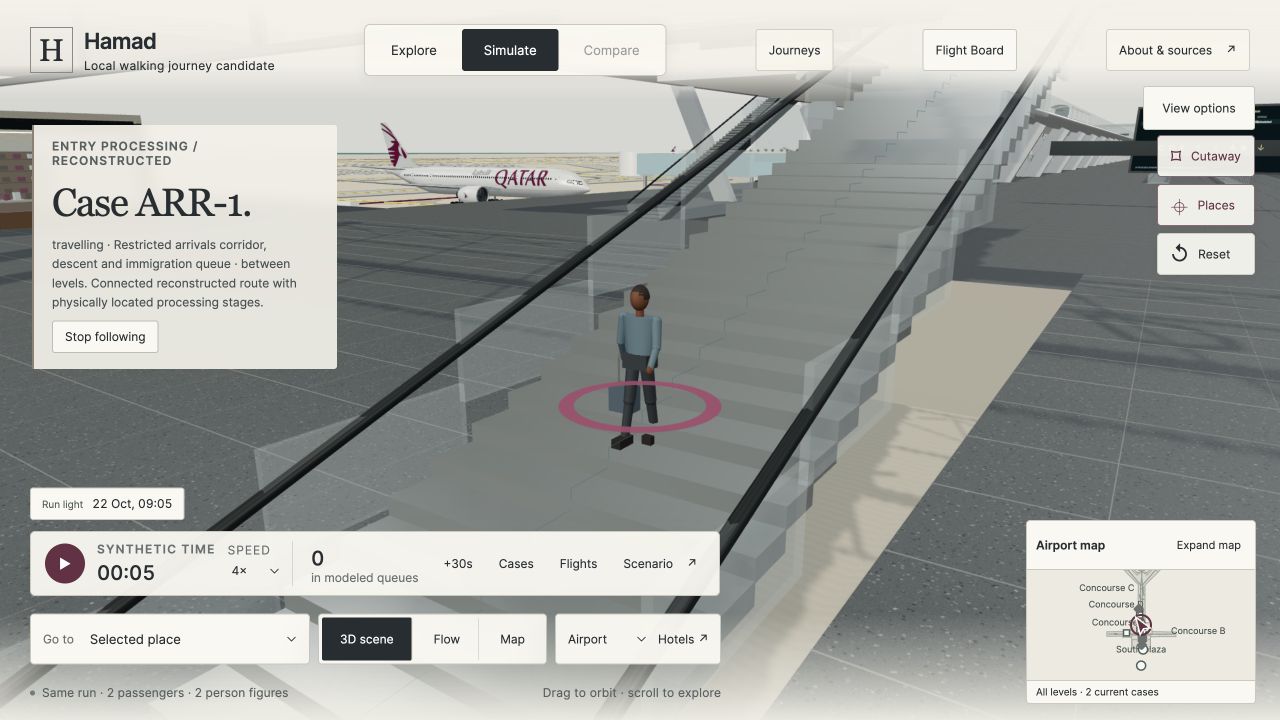
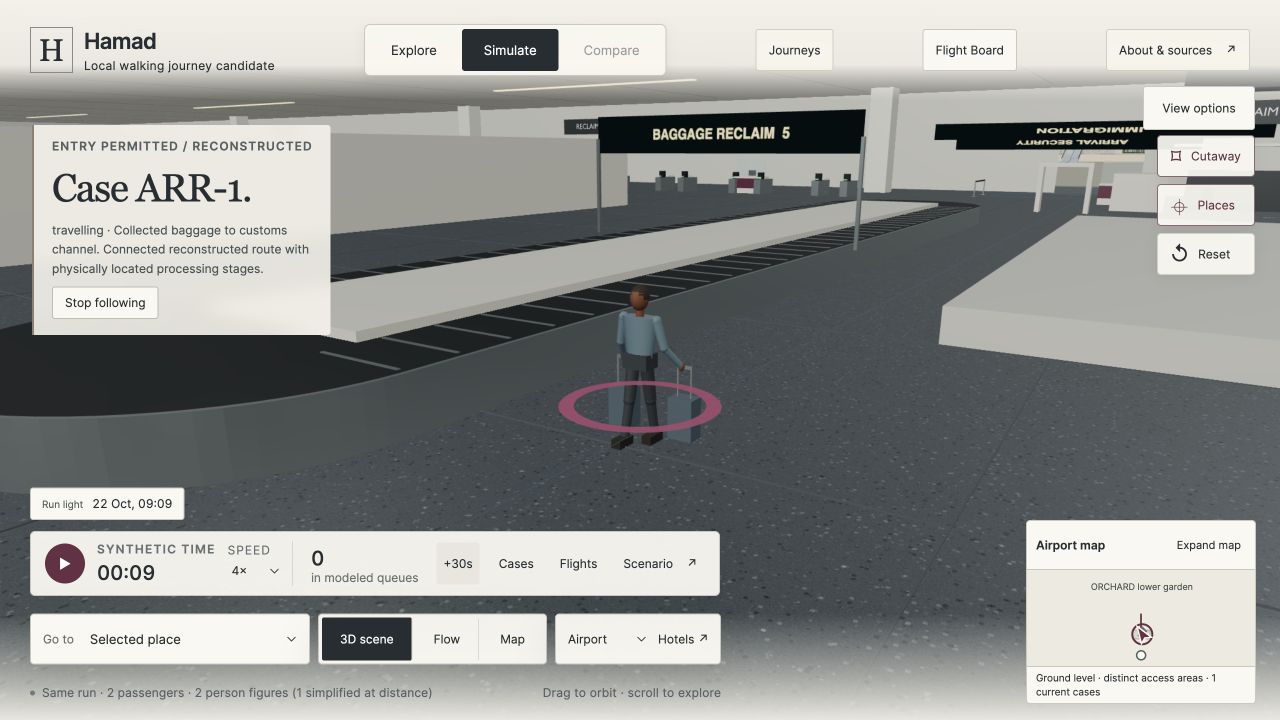
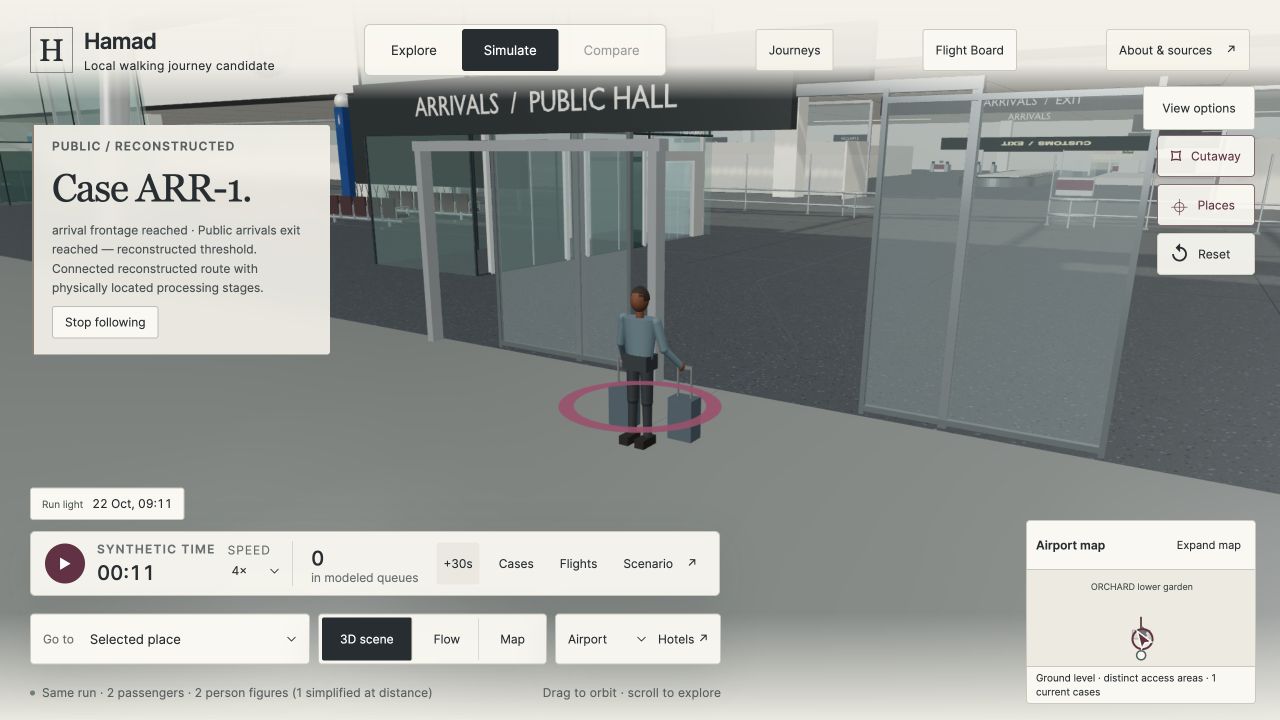
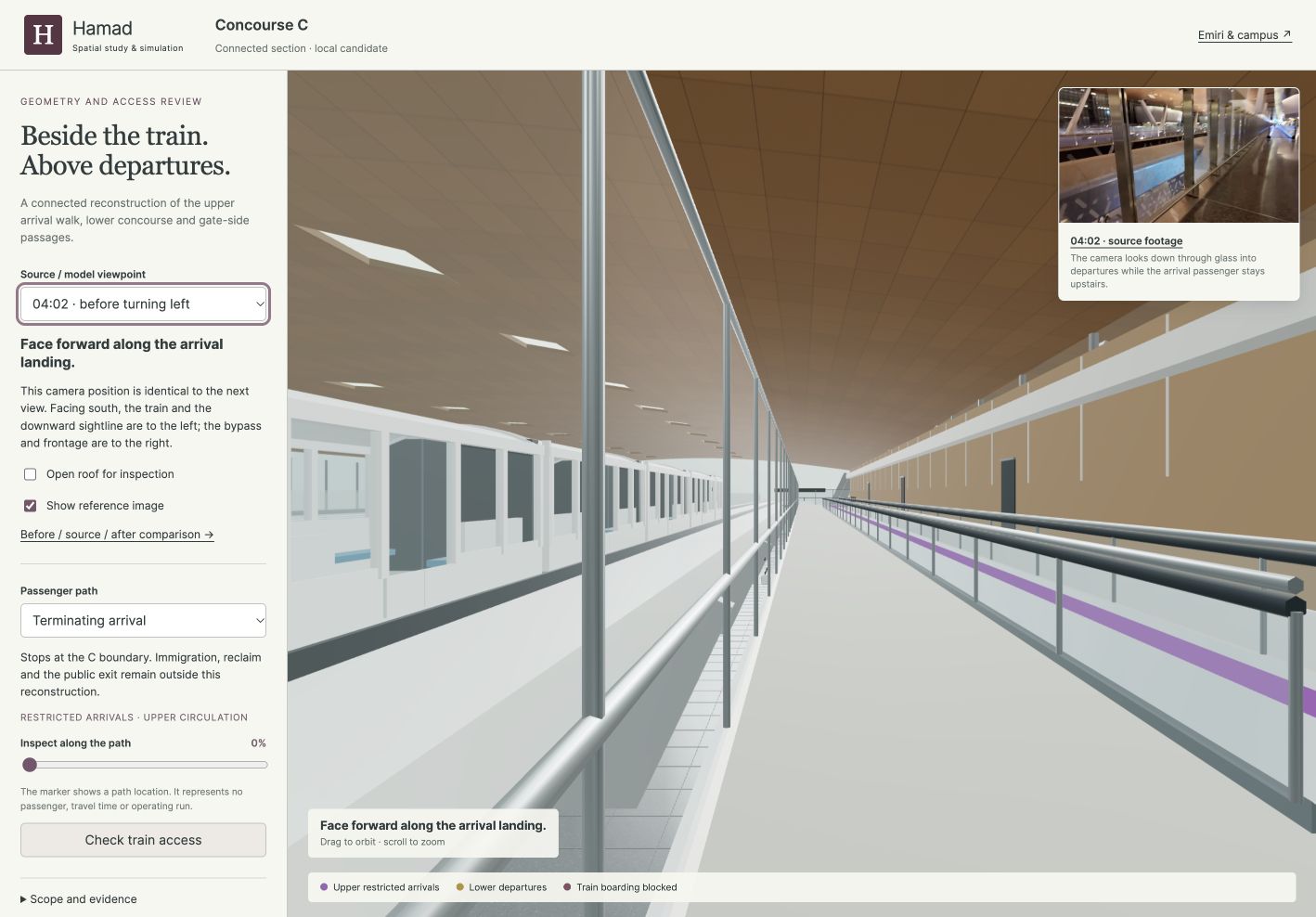
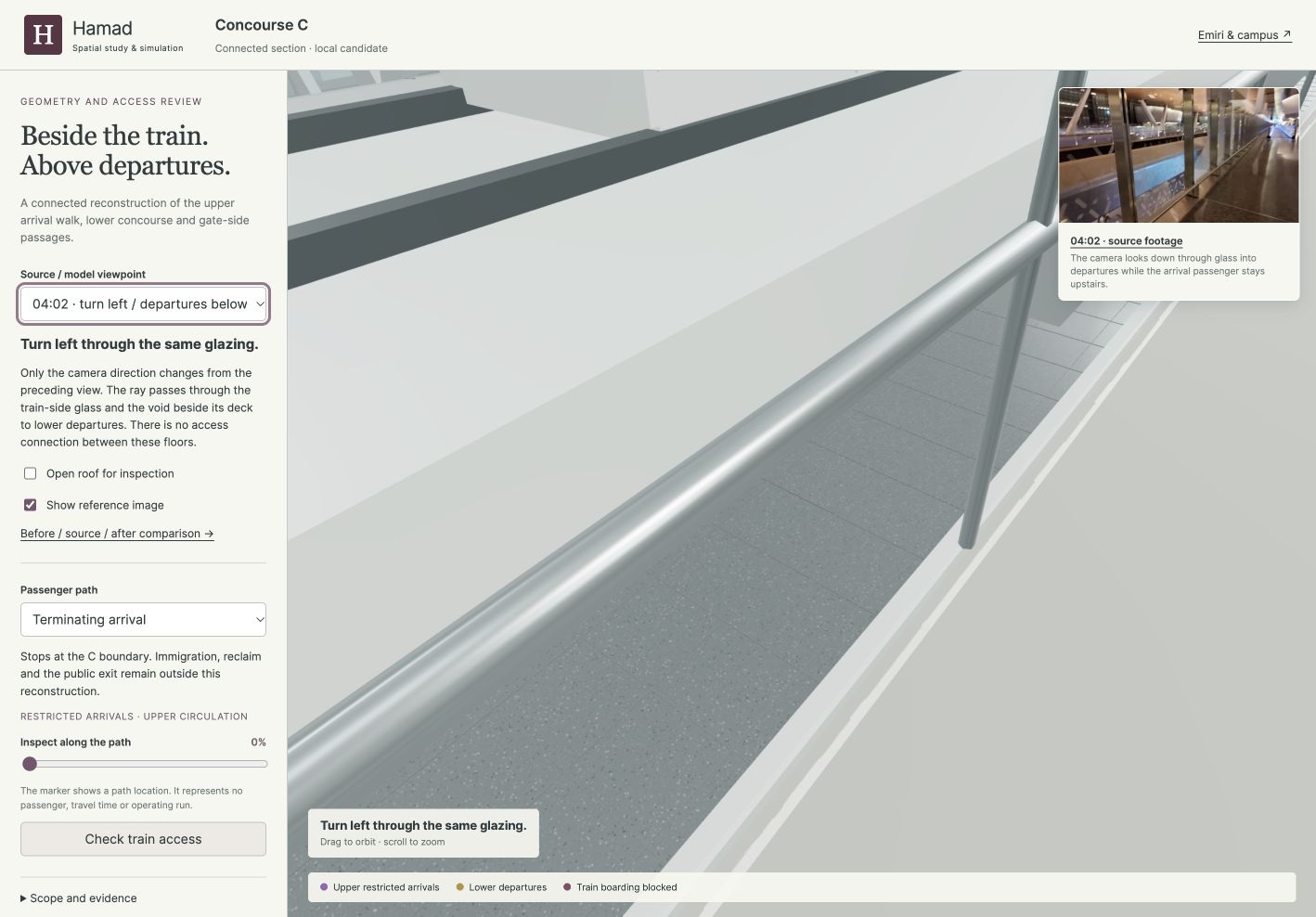
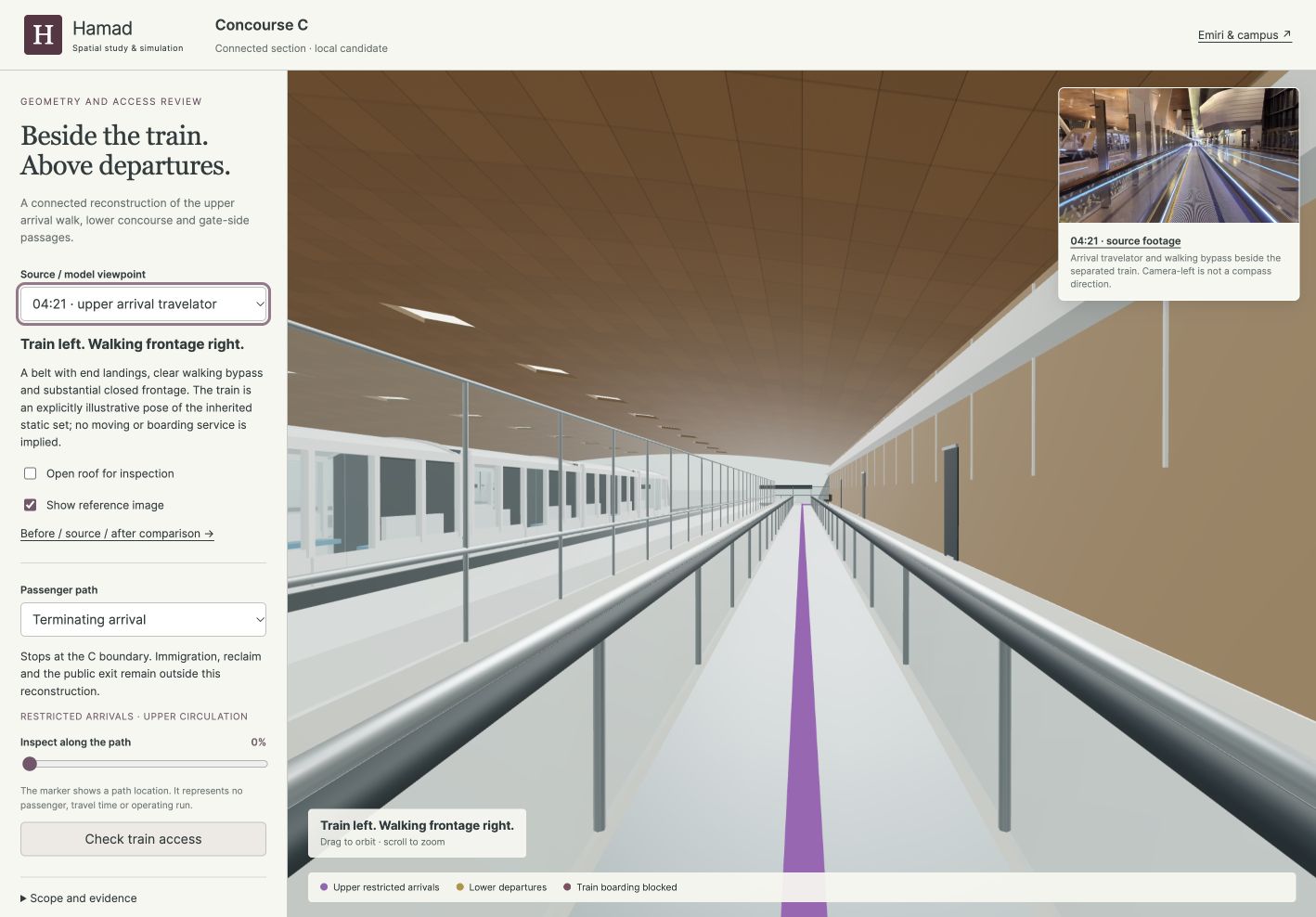
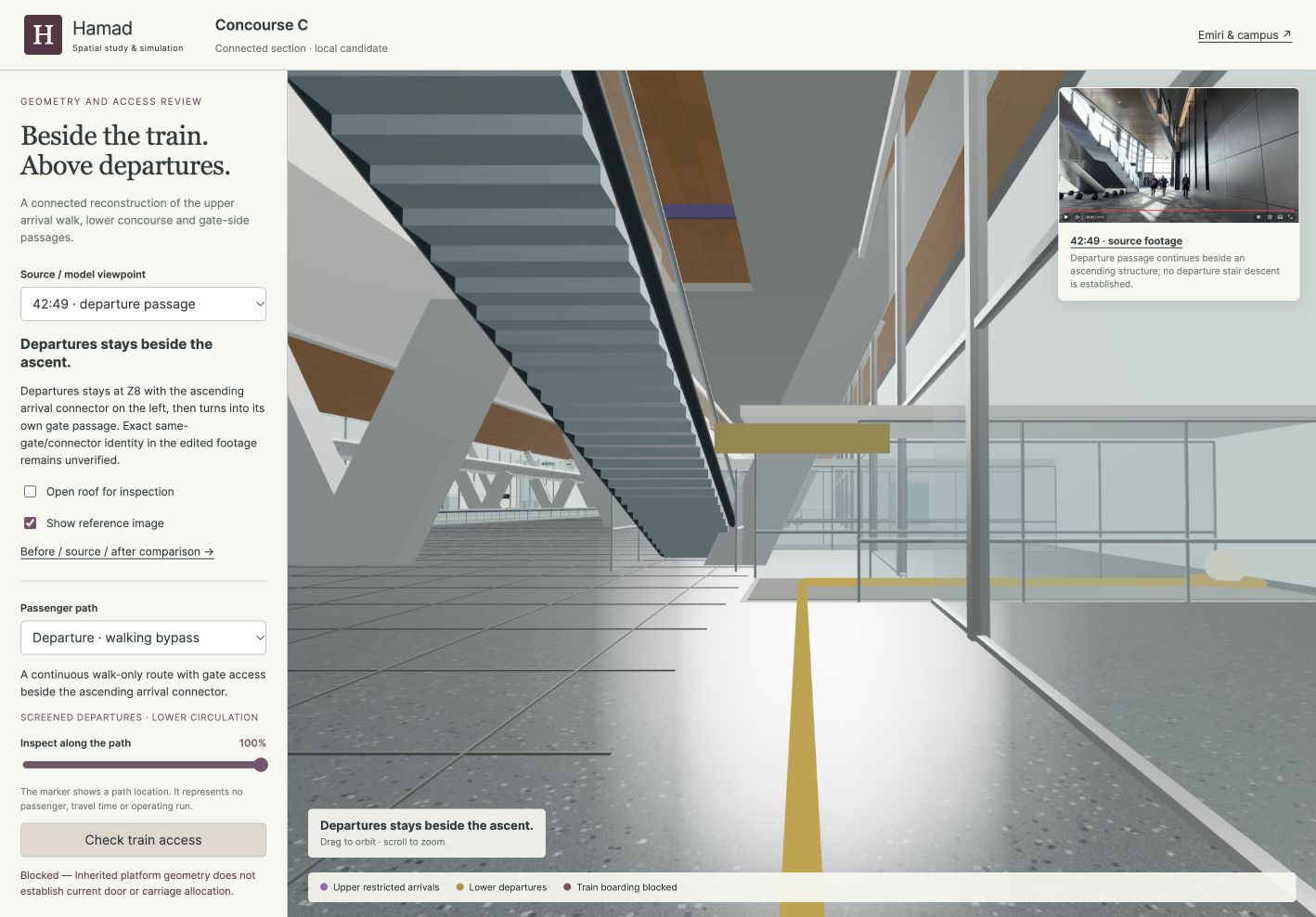
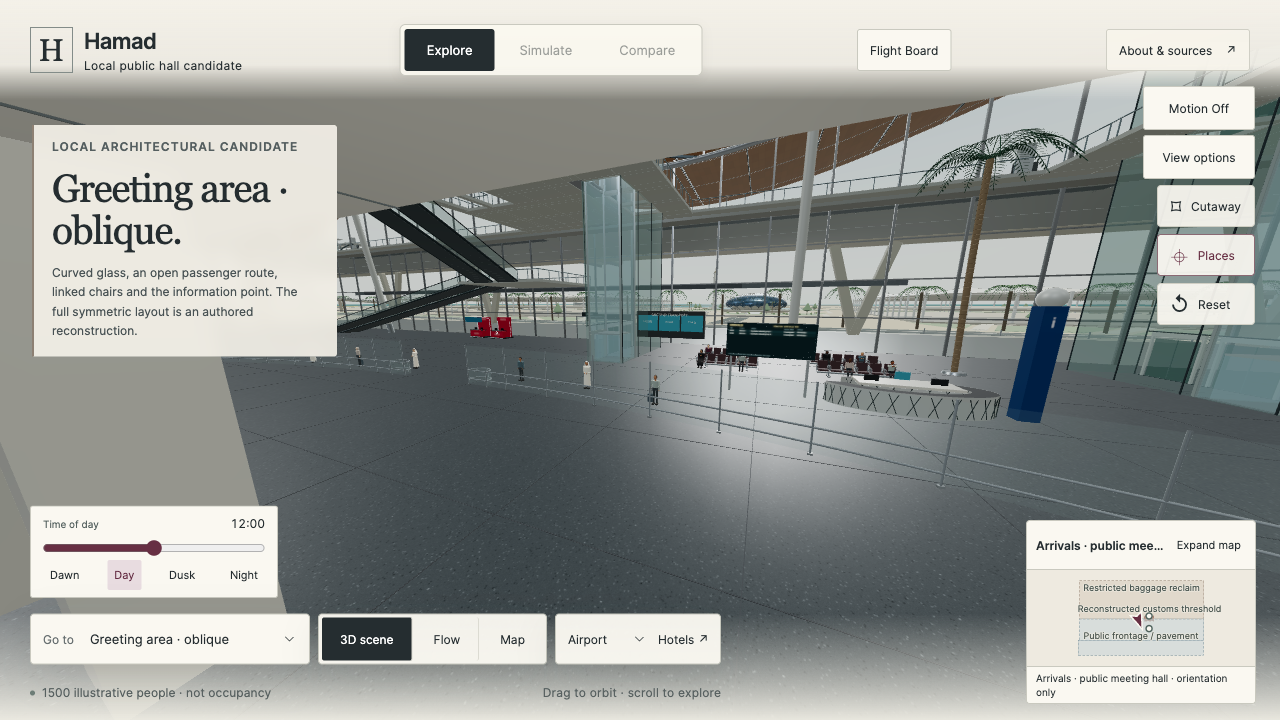
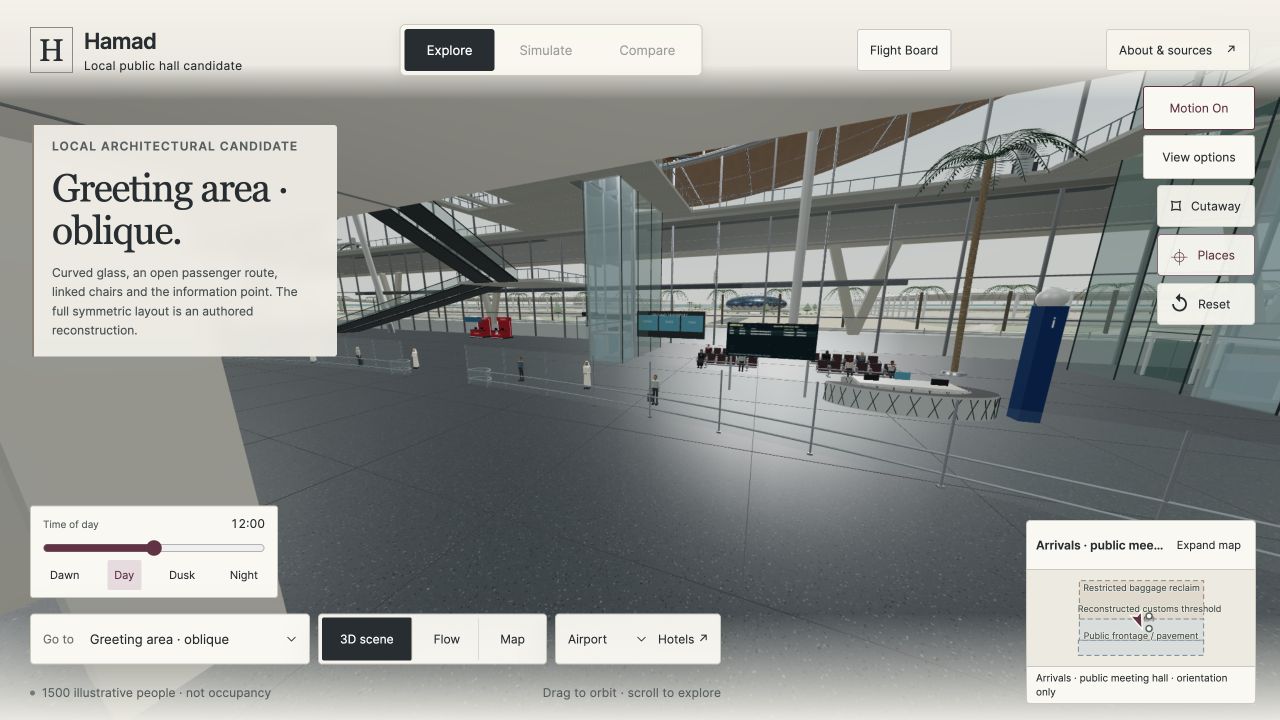
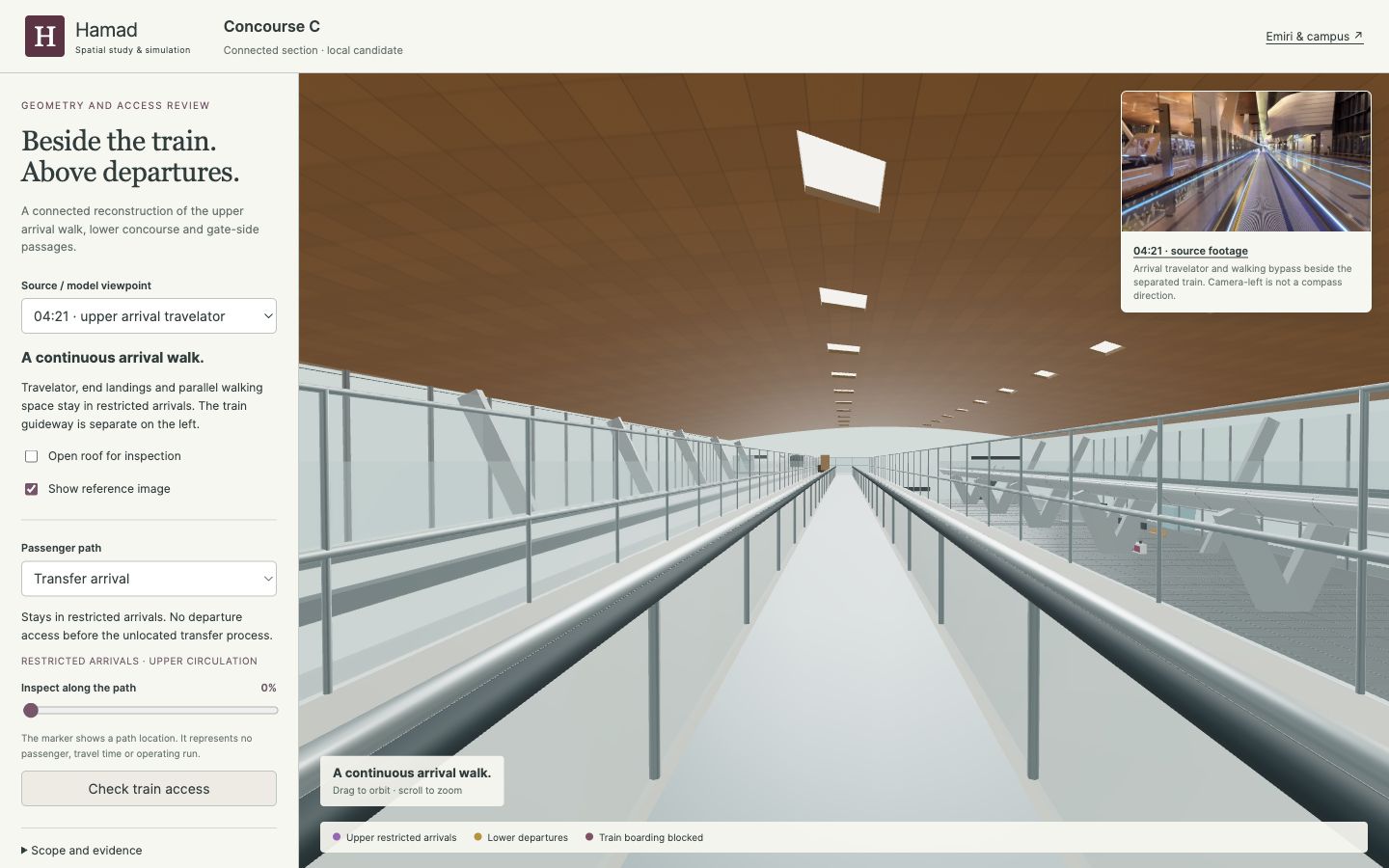
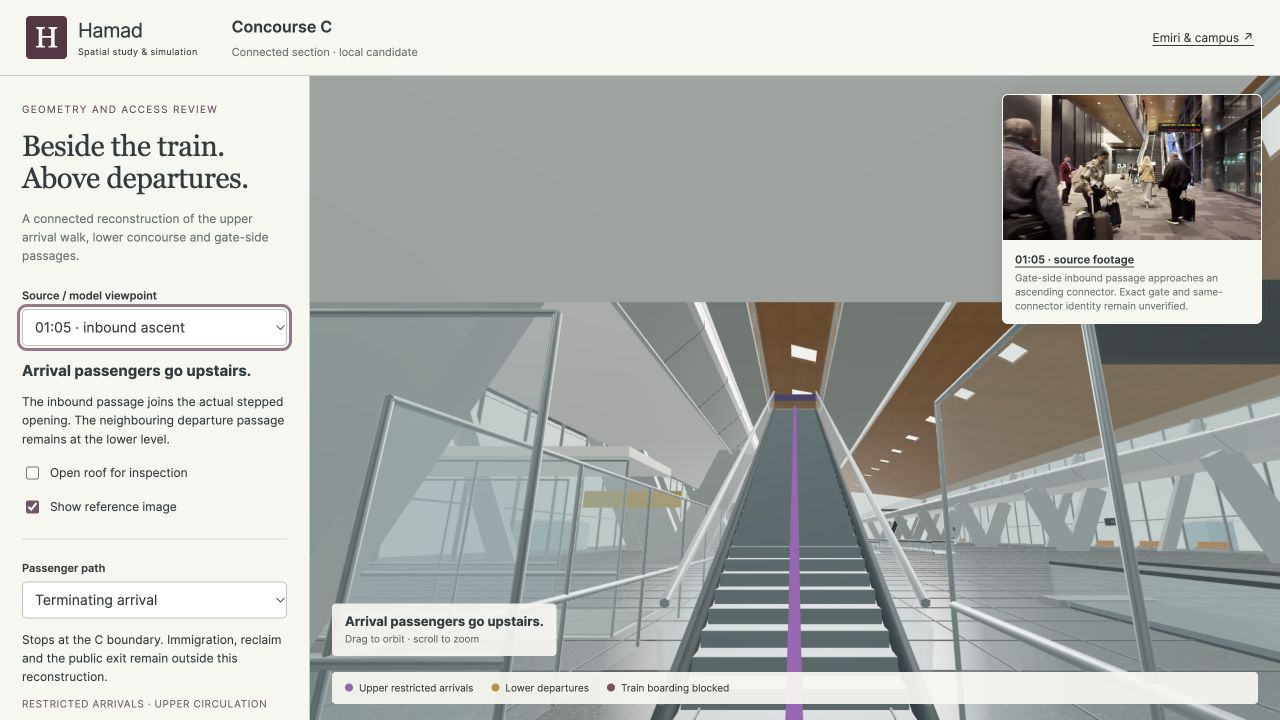
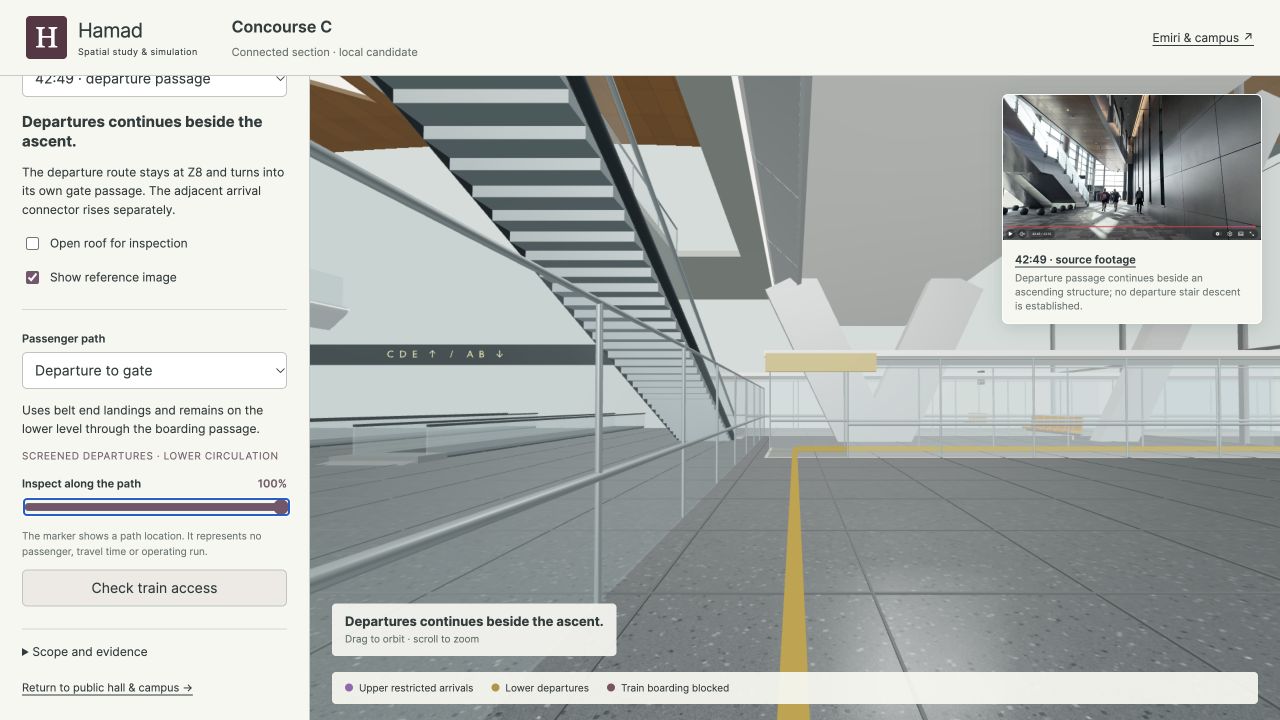
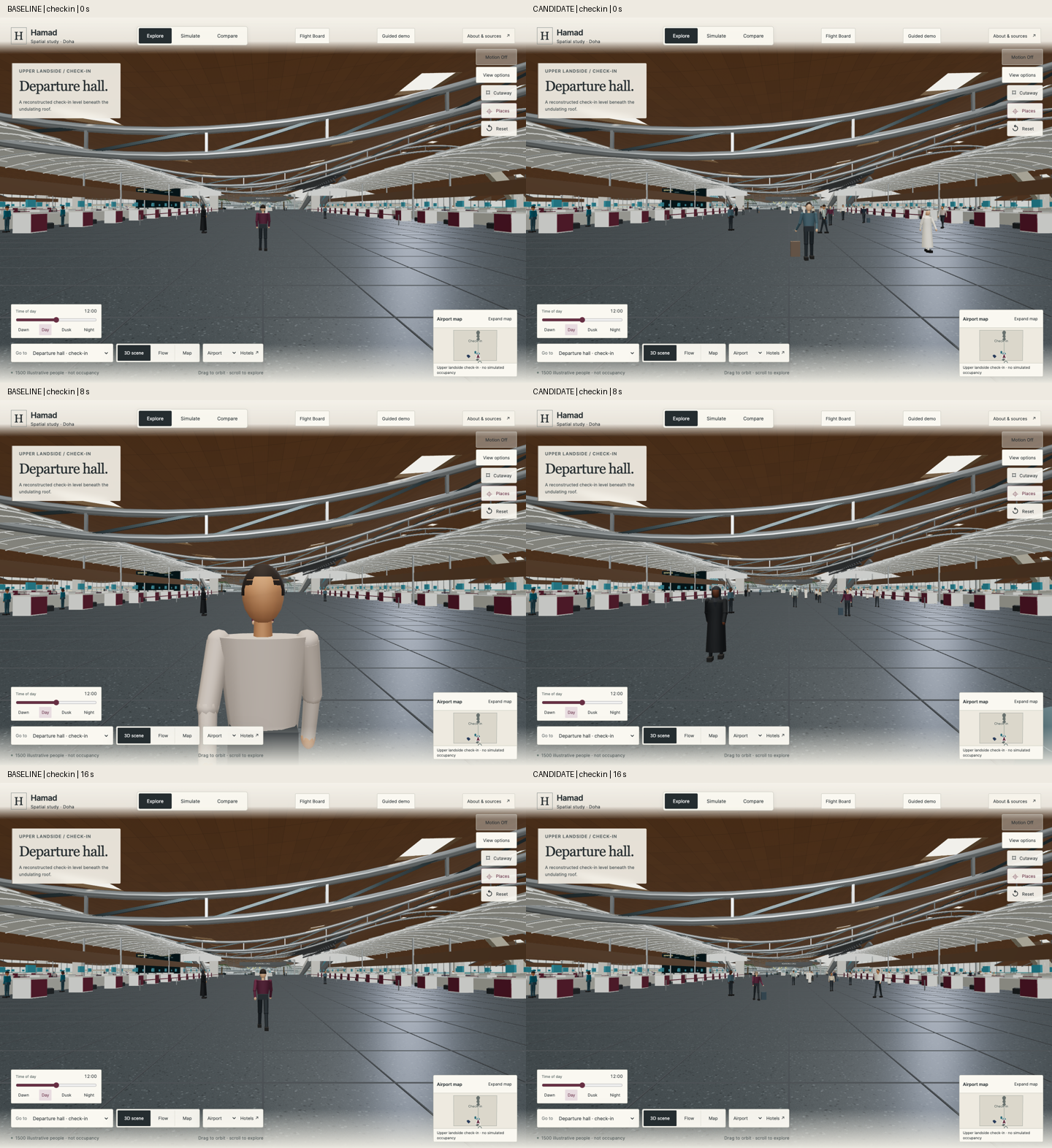
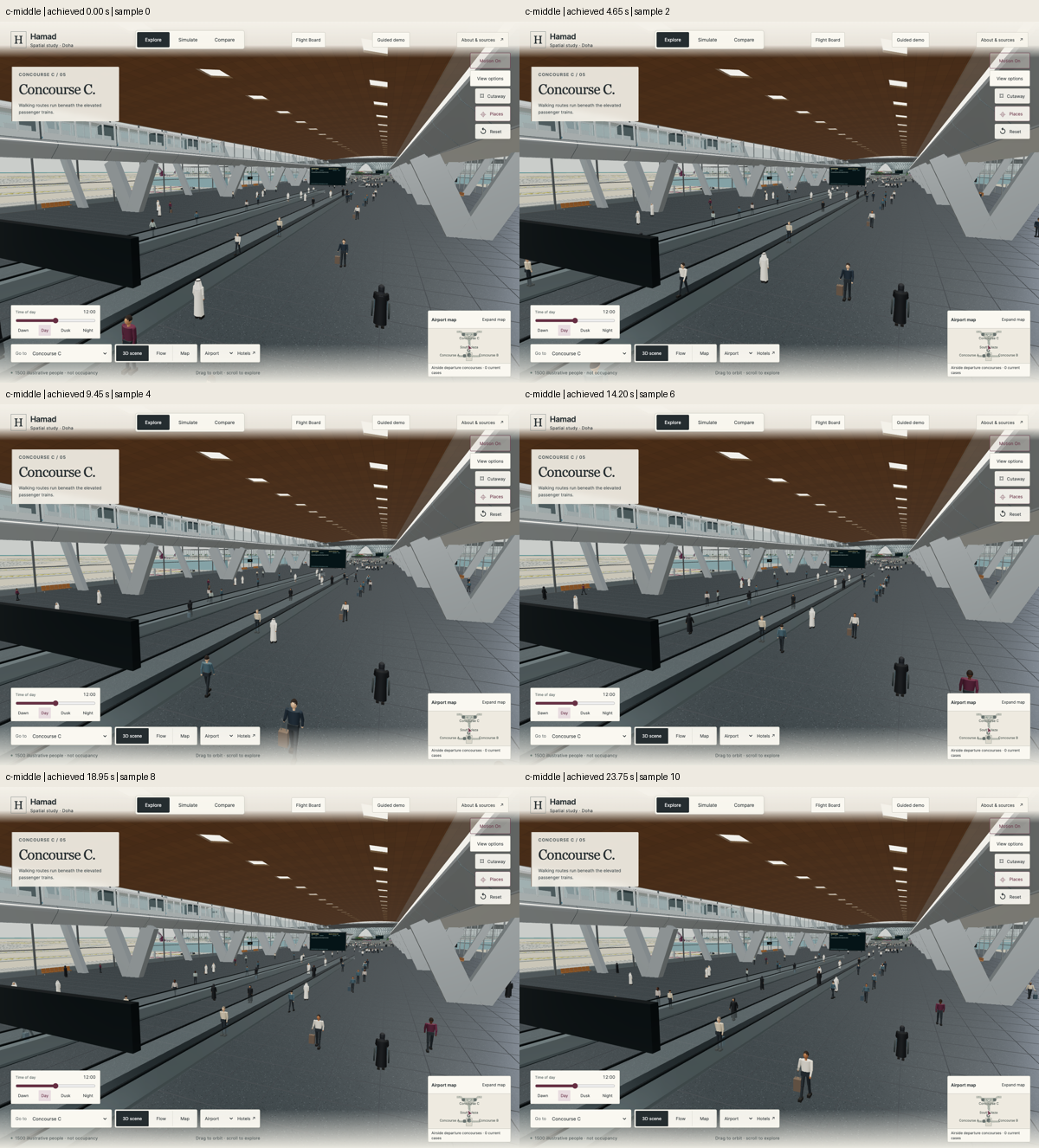
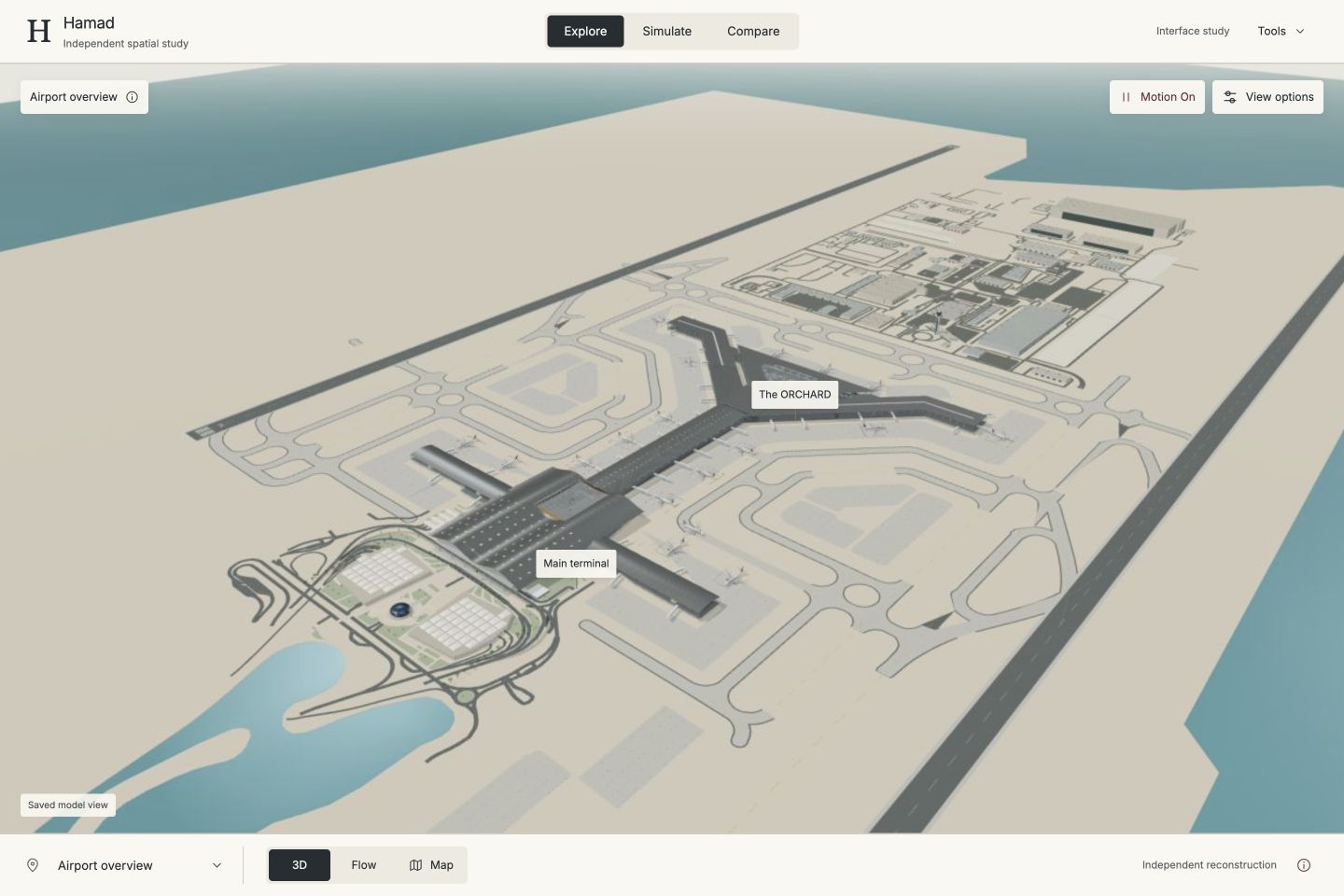
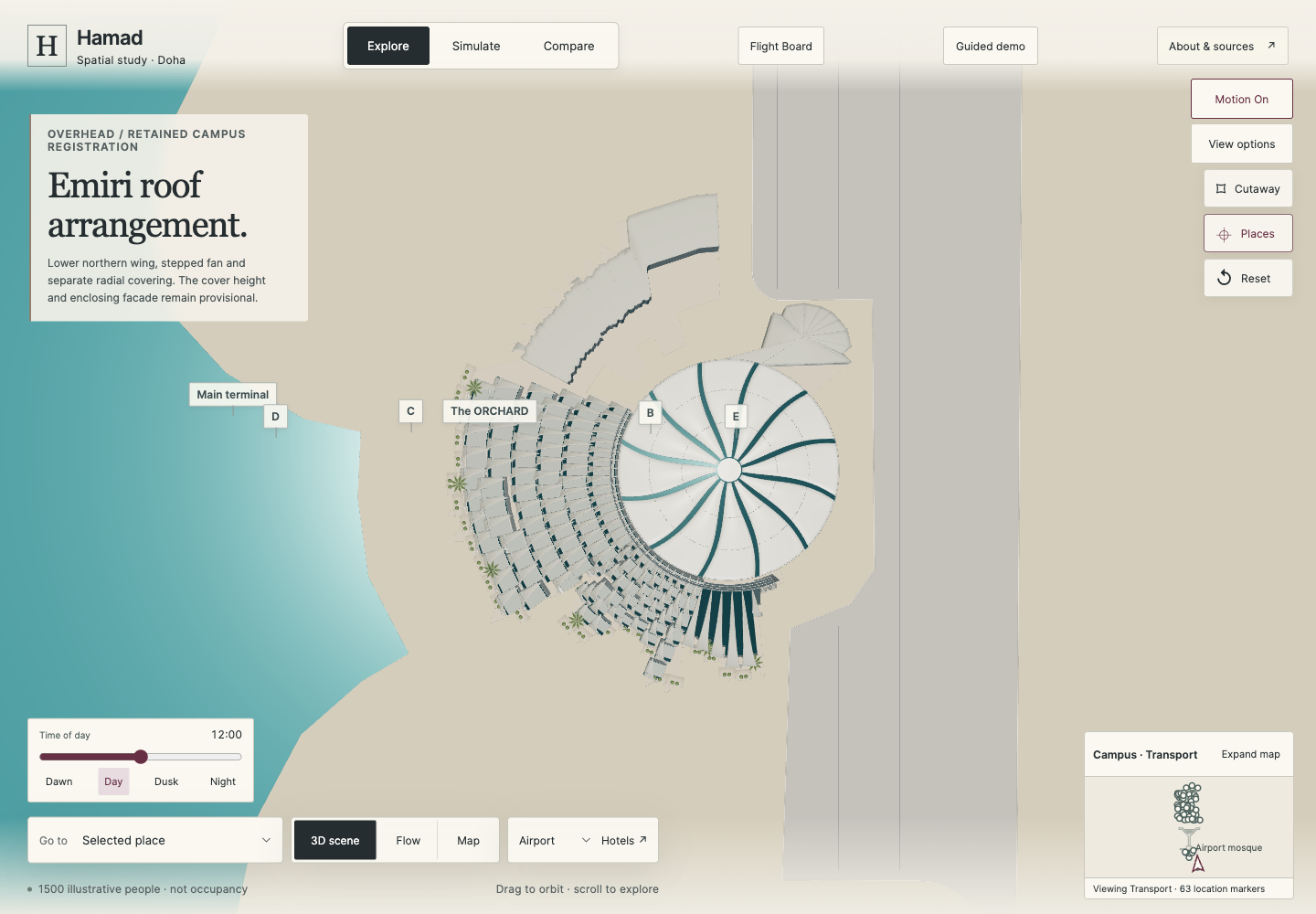
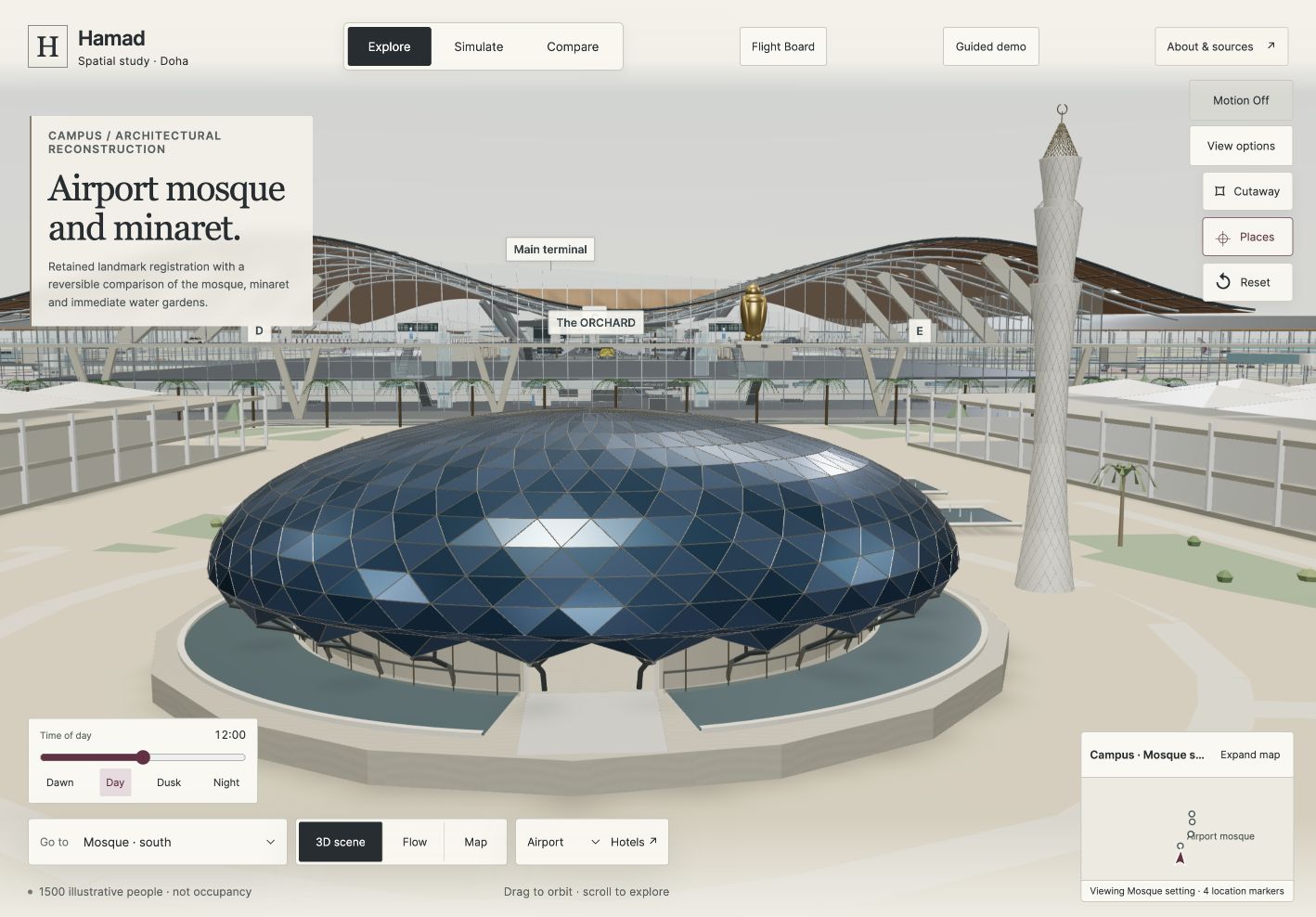
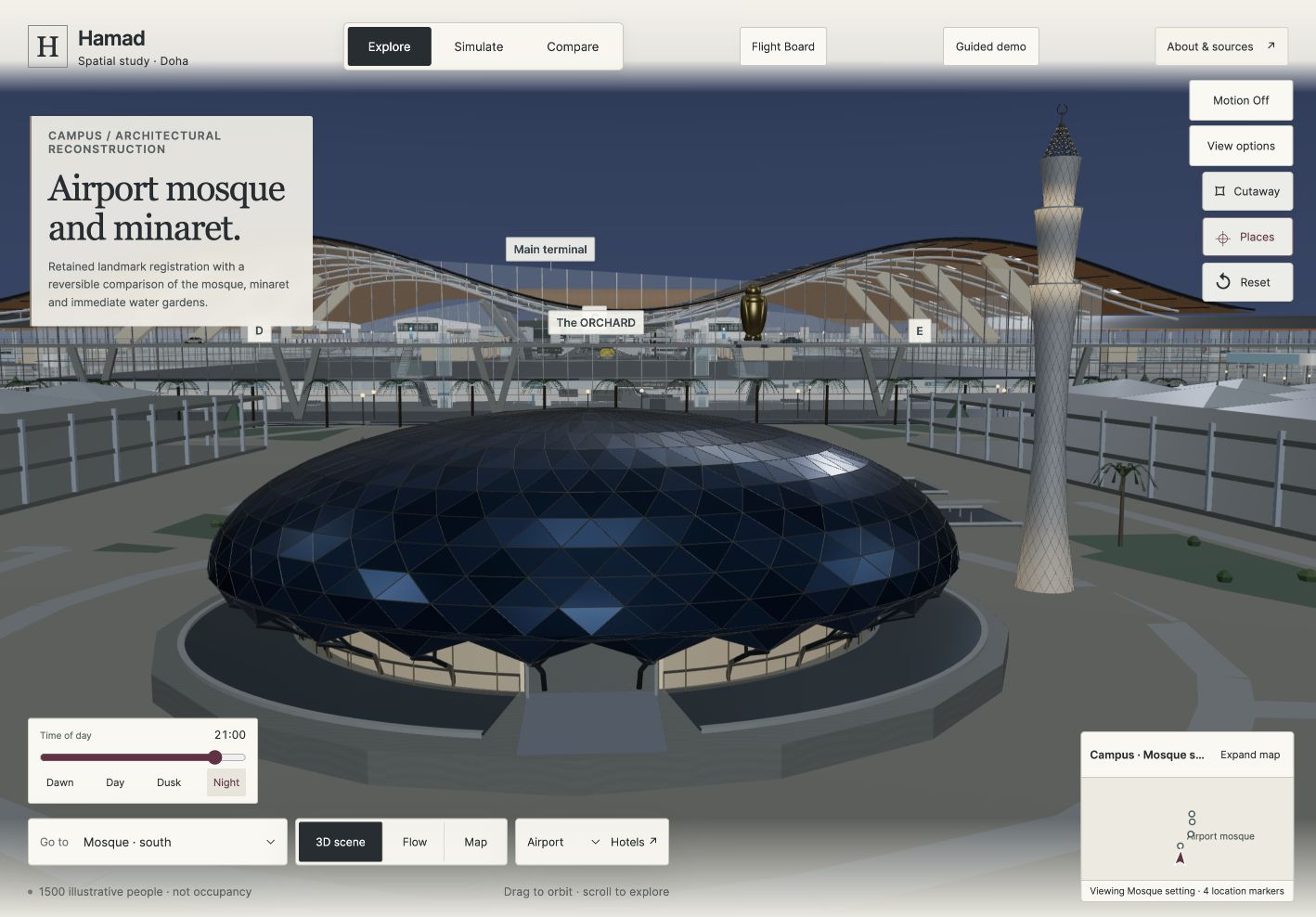
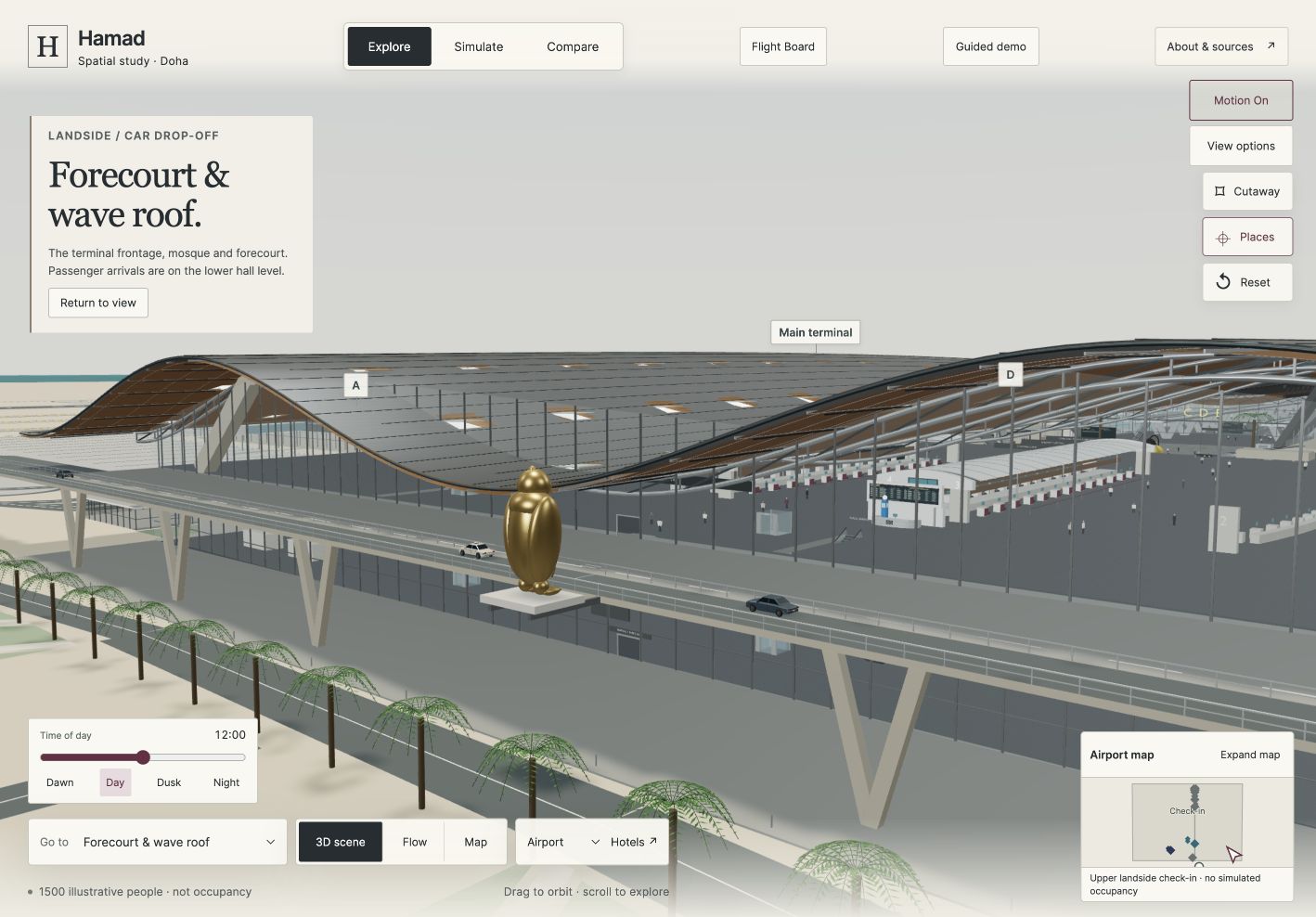
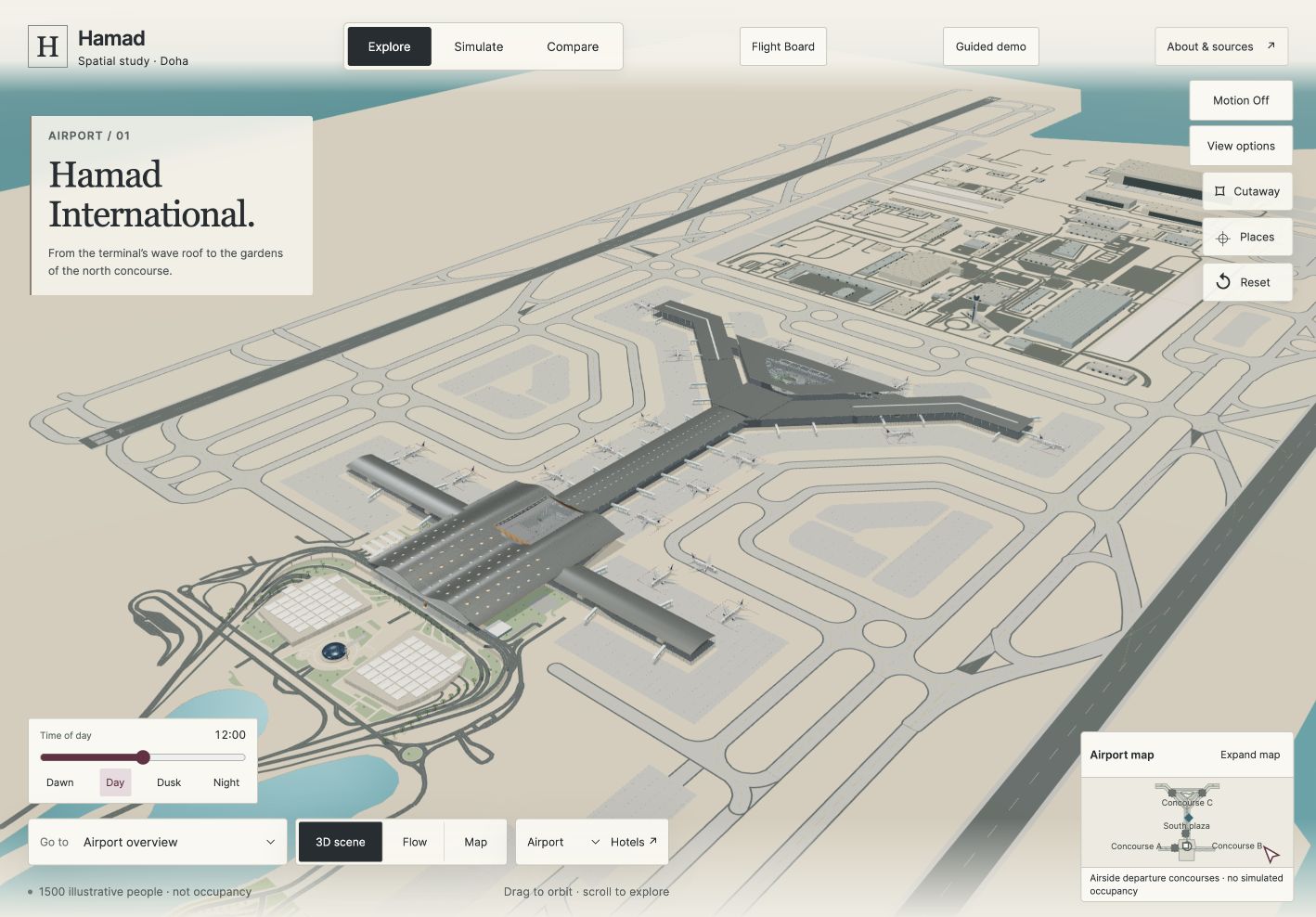
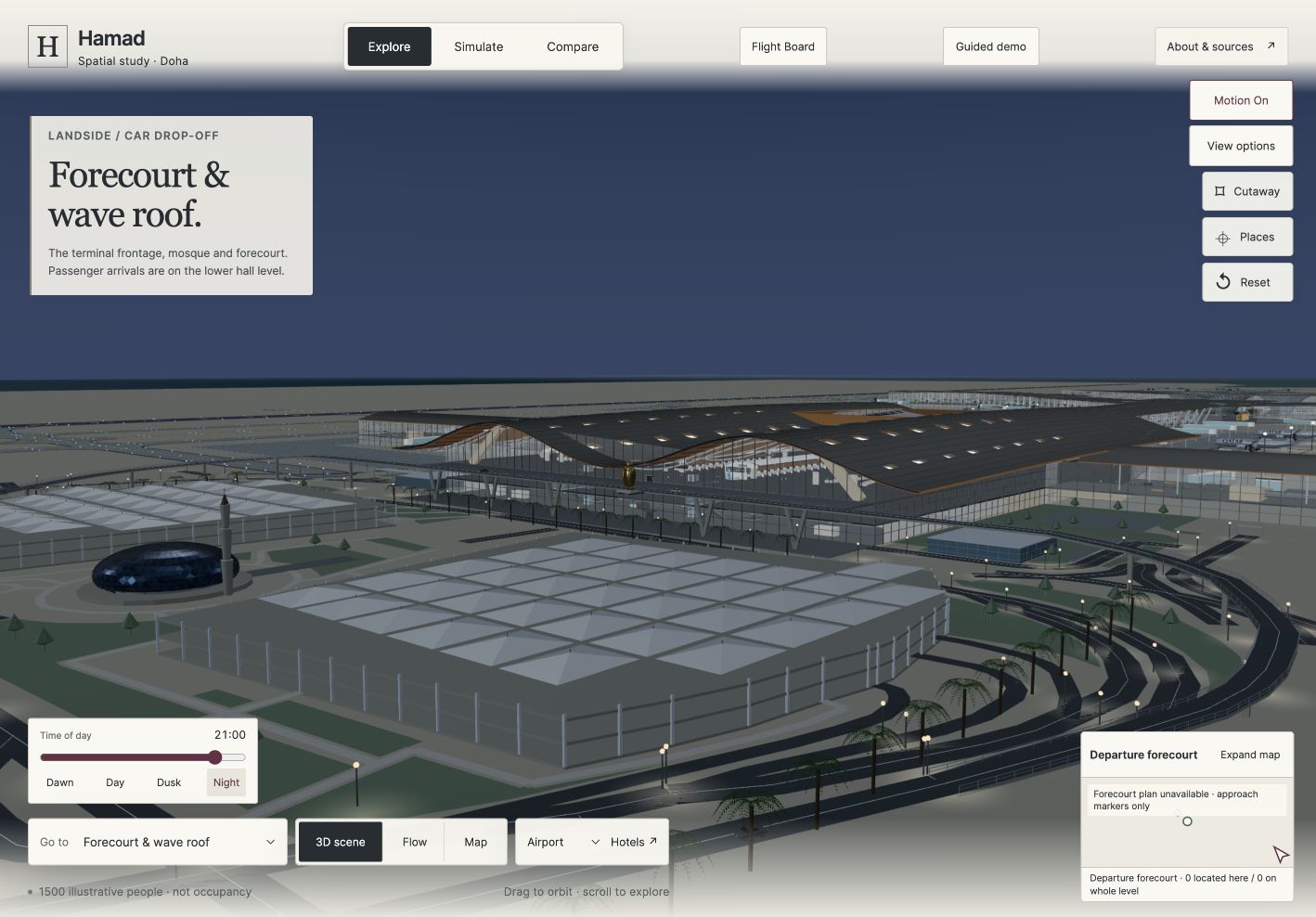
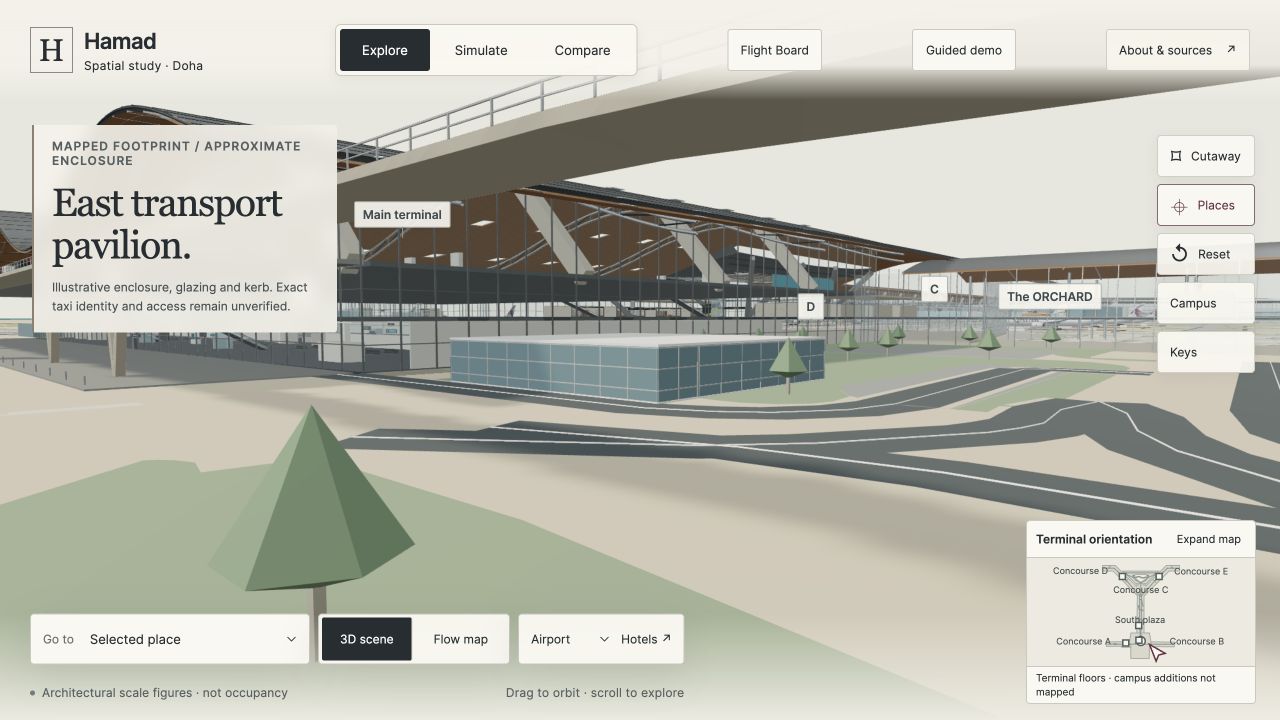
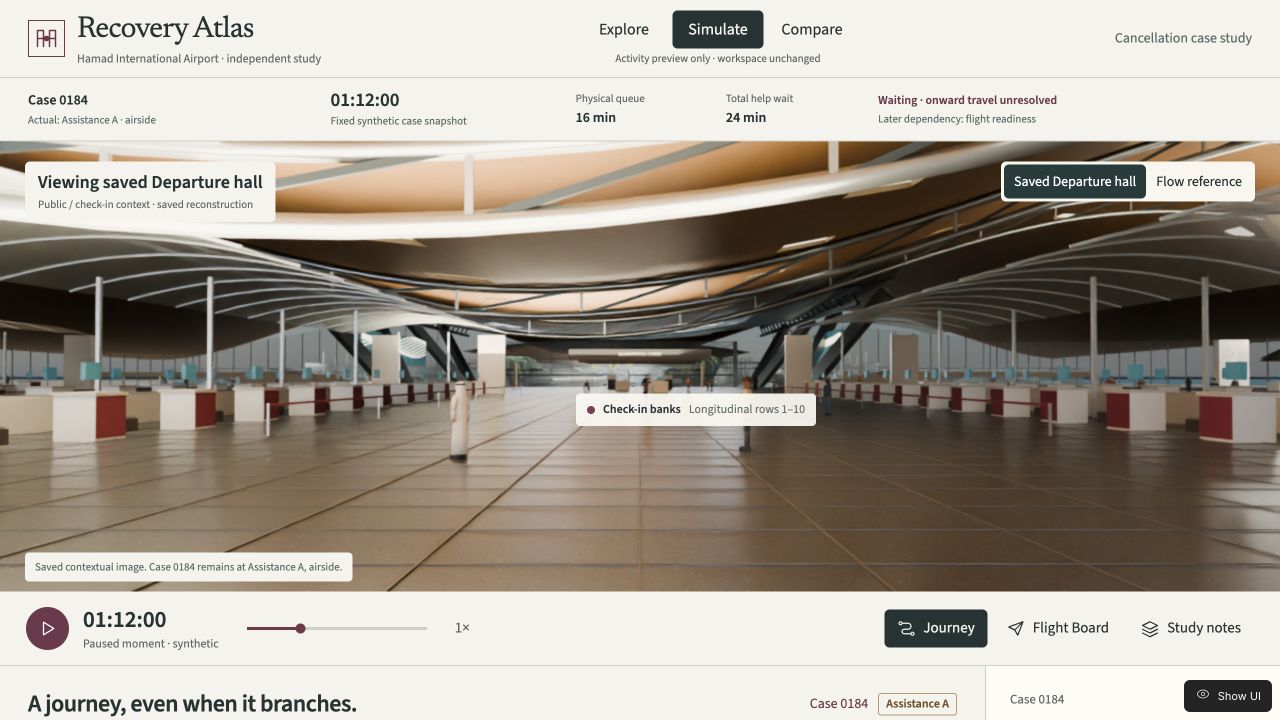
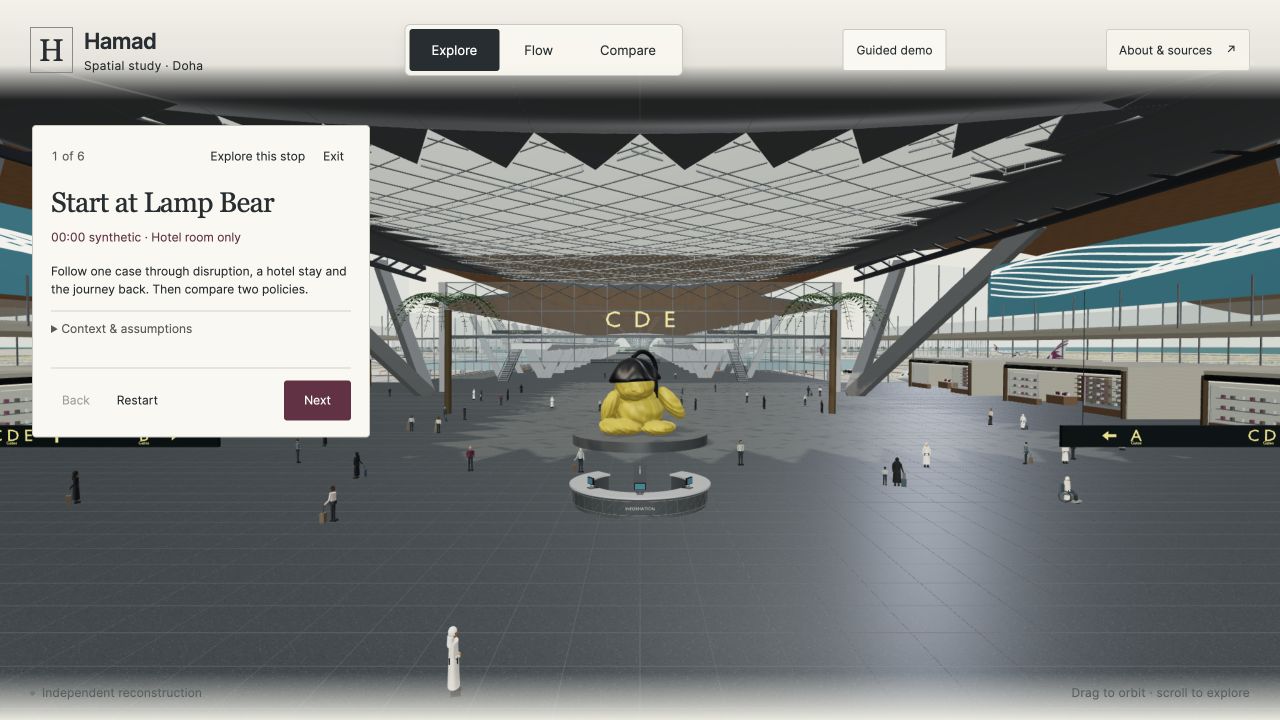
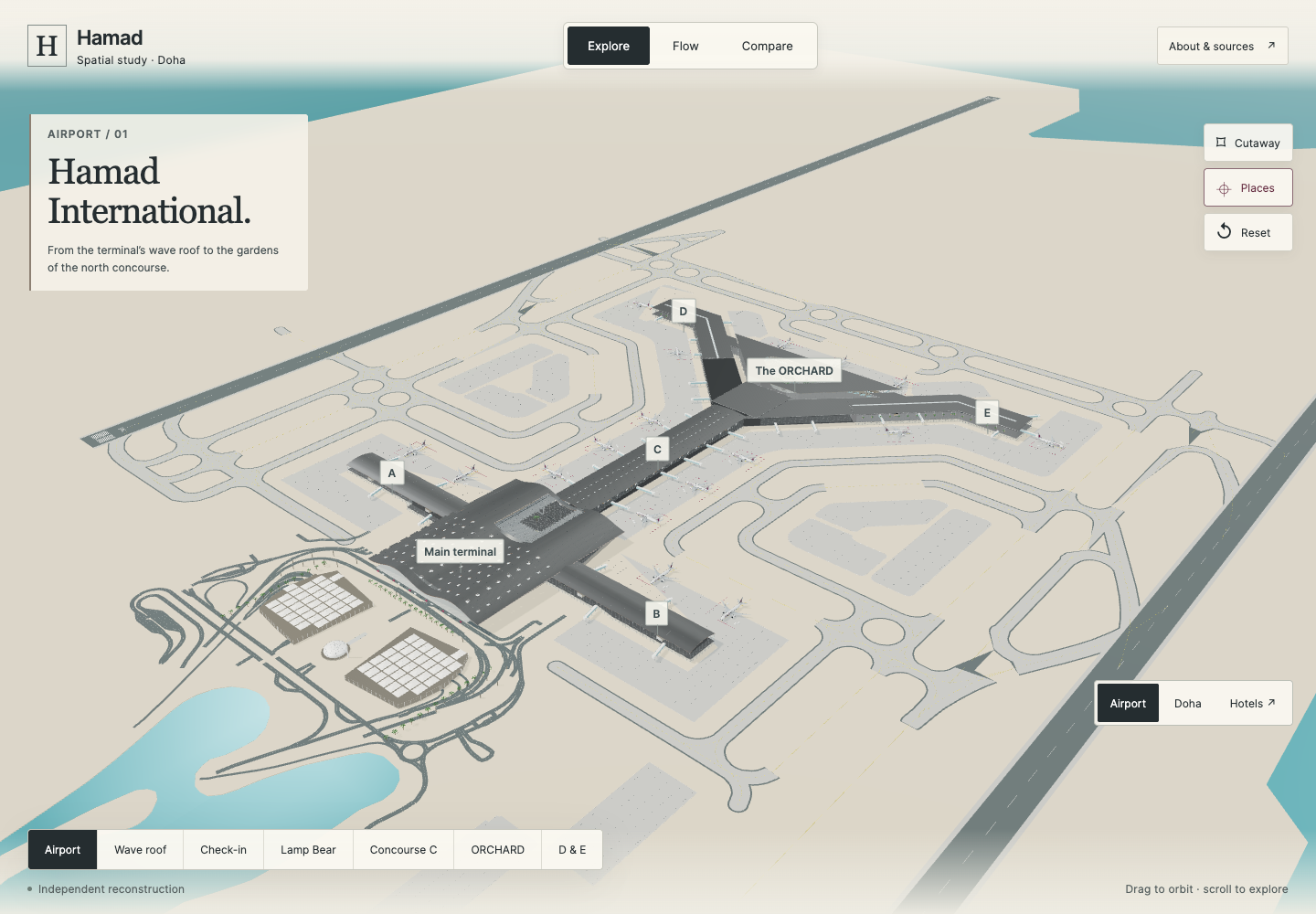
The original physical model joins terminal/concourse A–E topology, wave roof and check-in structures, Lamp Bear hall, elevated rail context and ORCHARD. Built photographs, architects’ design plans, physical models and concept renderings remain distinct evidence classes.
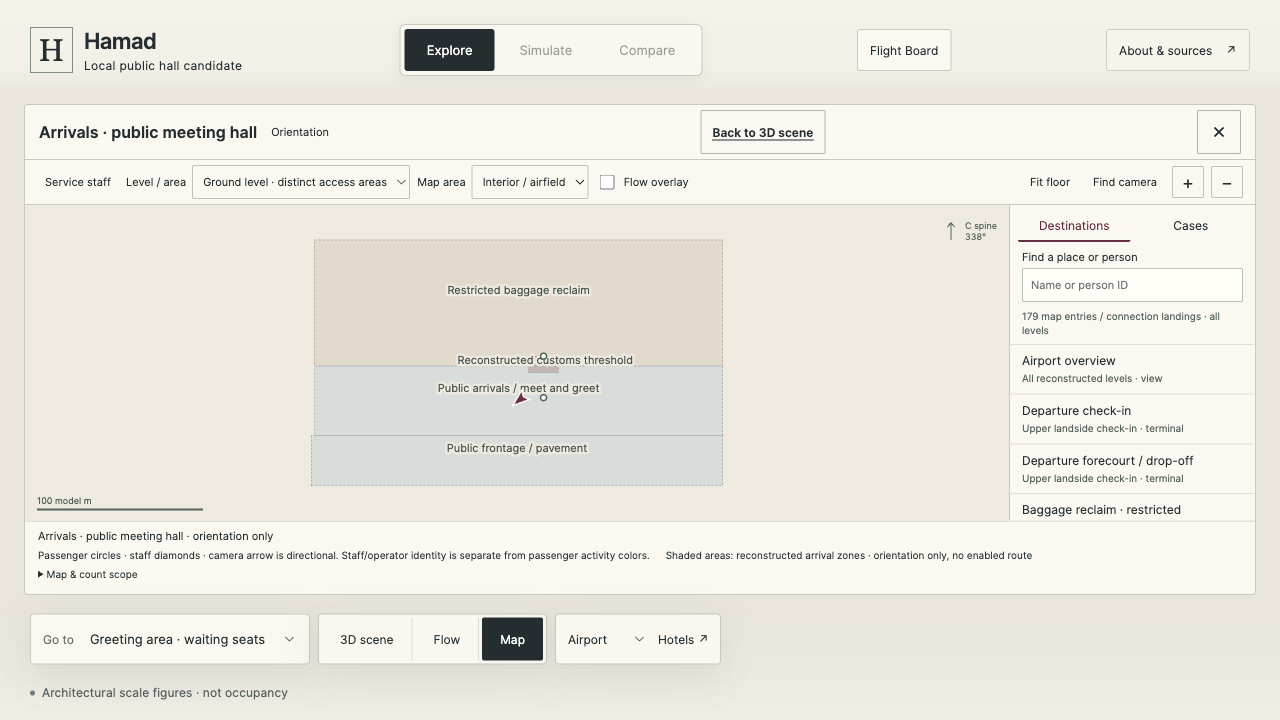
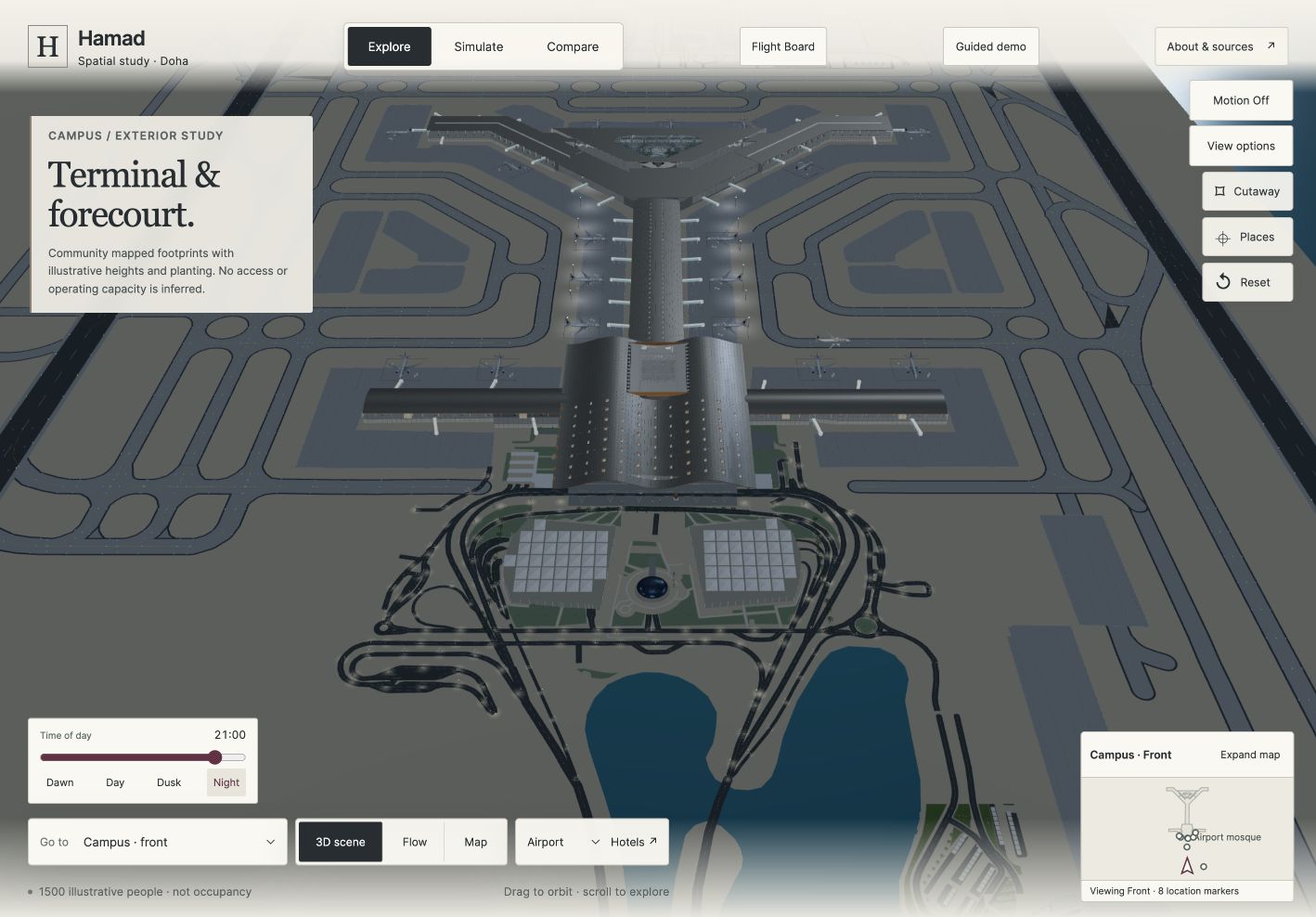
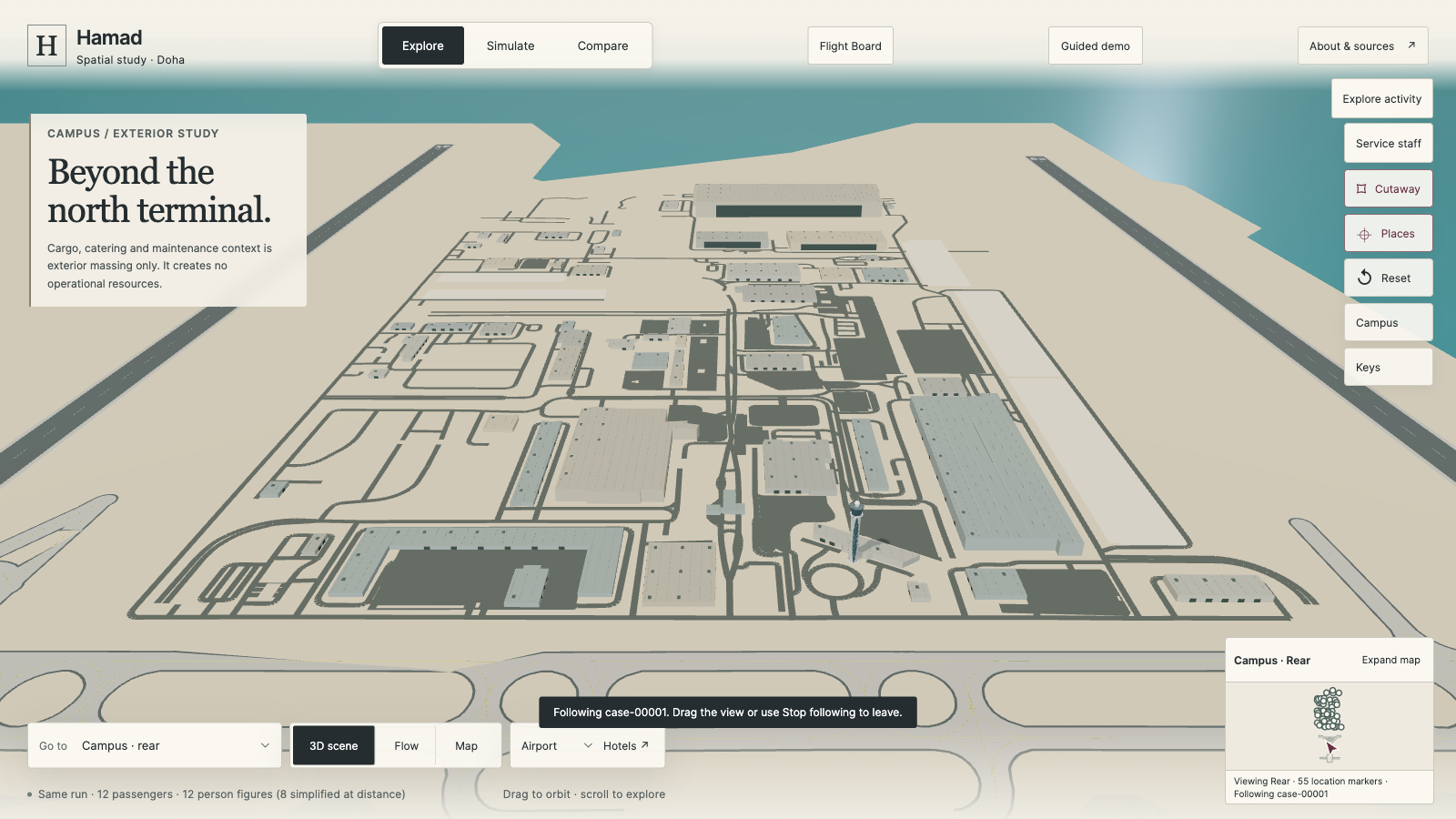
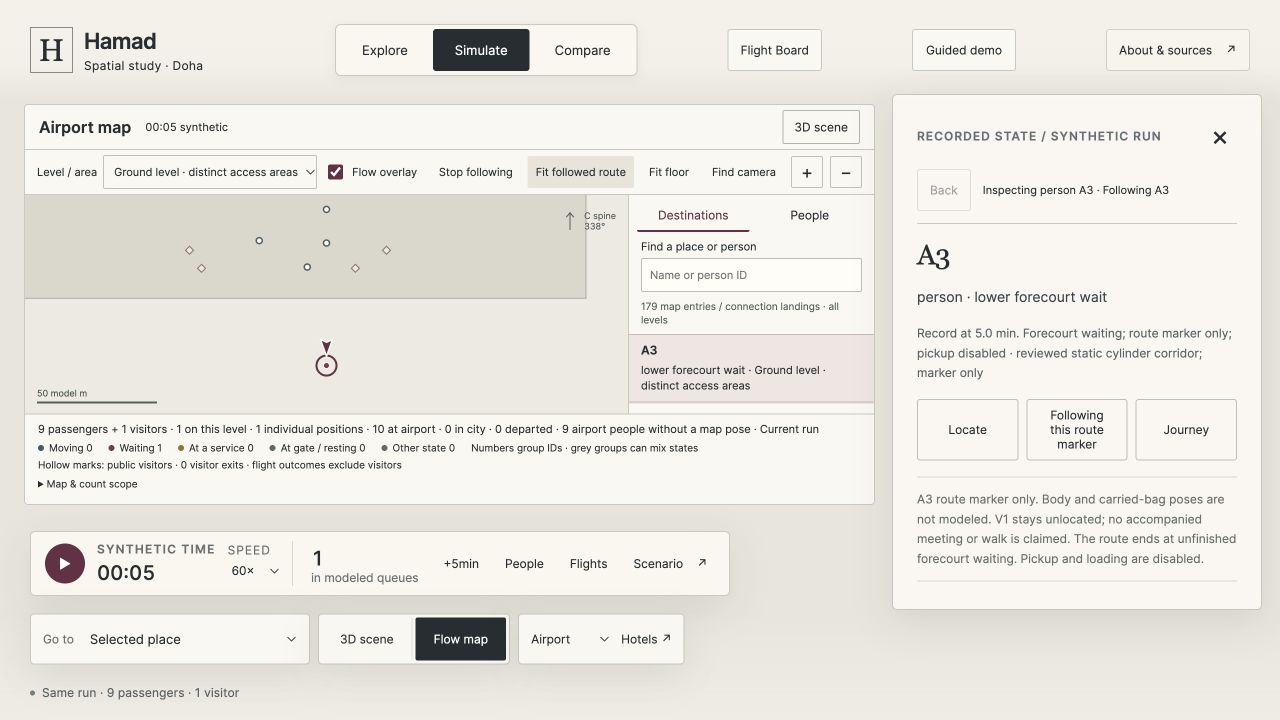
The original spatial evidence supplies exterior footprints,589 context features and131 gate/art/lounge/rail points in a documented Lamp Bear-centred frame. OSM identifiers, source dates, rotated axes and explicit approximation limits are preserved.
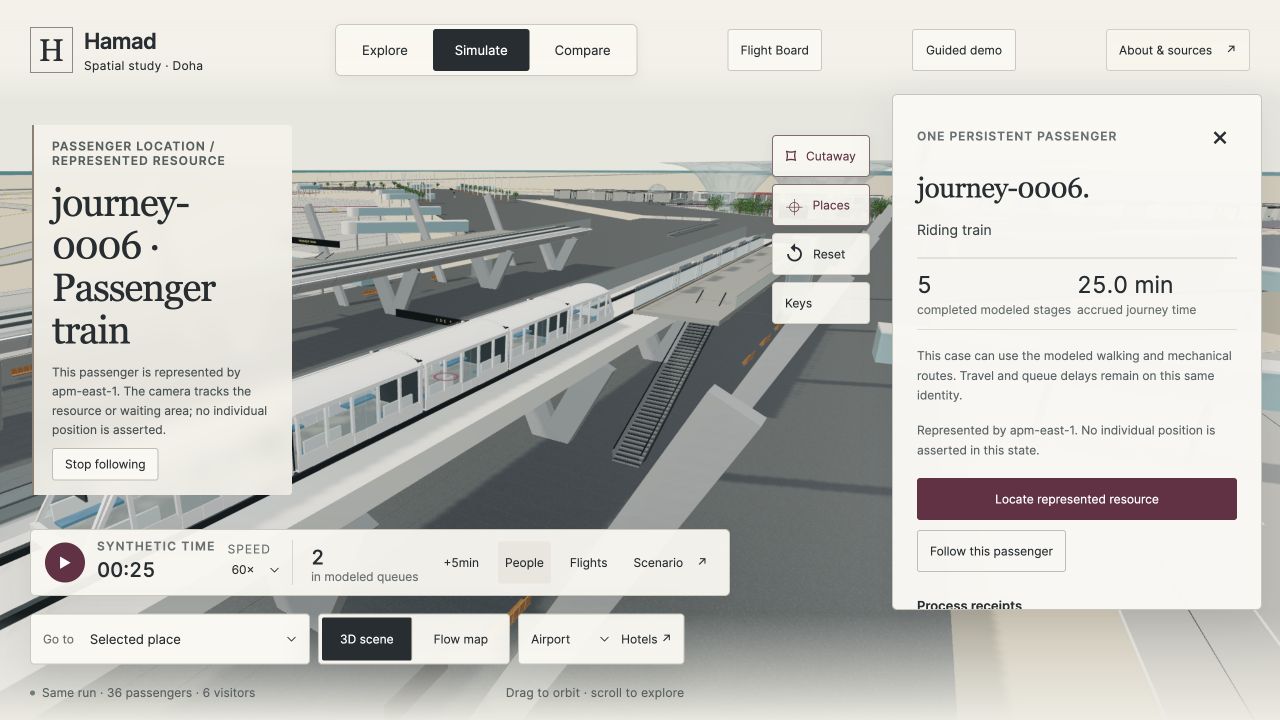
The modelling strategy prioritizes recognizable physical space and stable semantic nodes, levels and access classes, with simulation state independent of meshes. Shared native geometry remains under one integration owner.
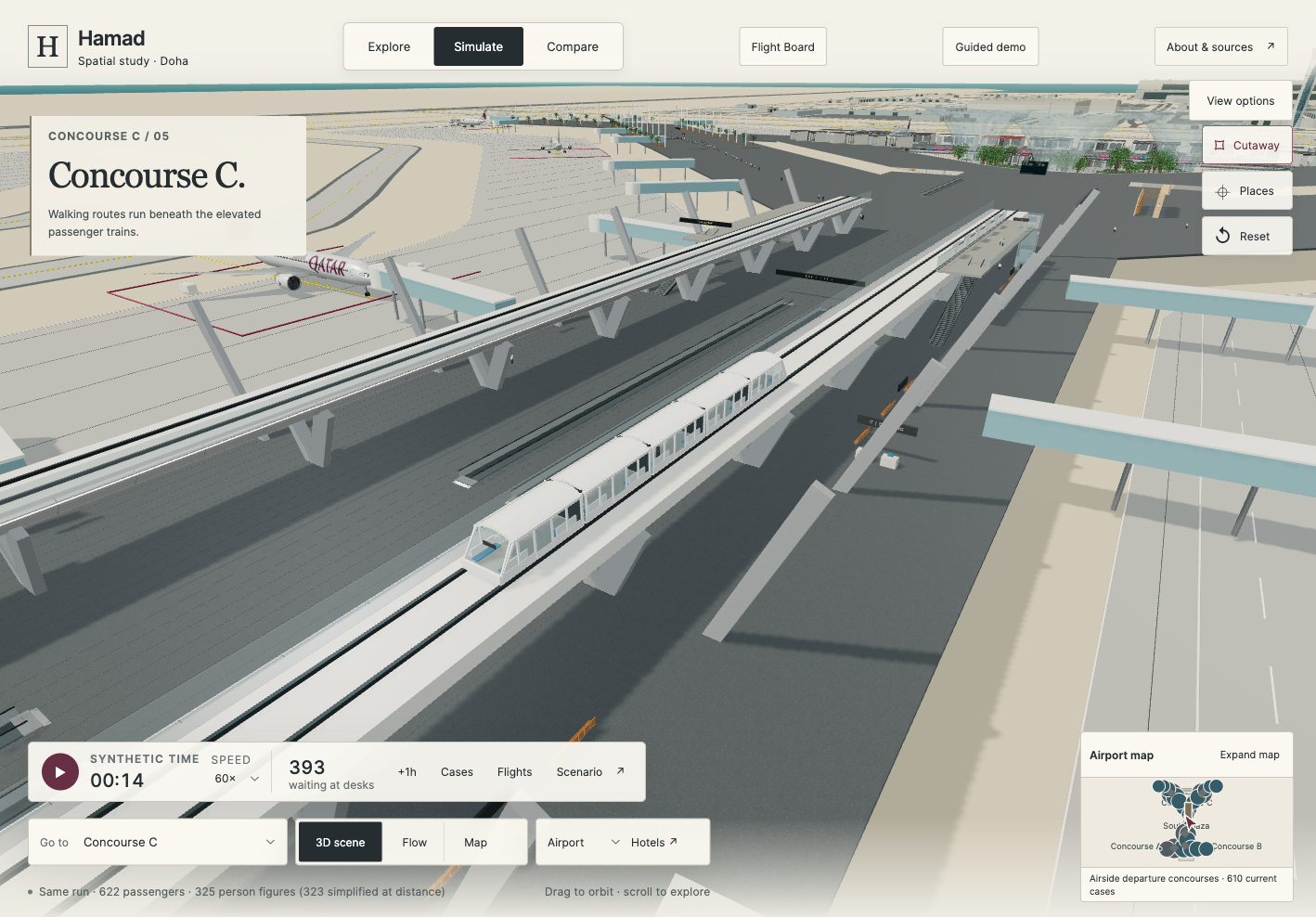
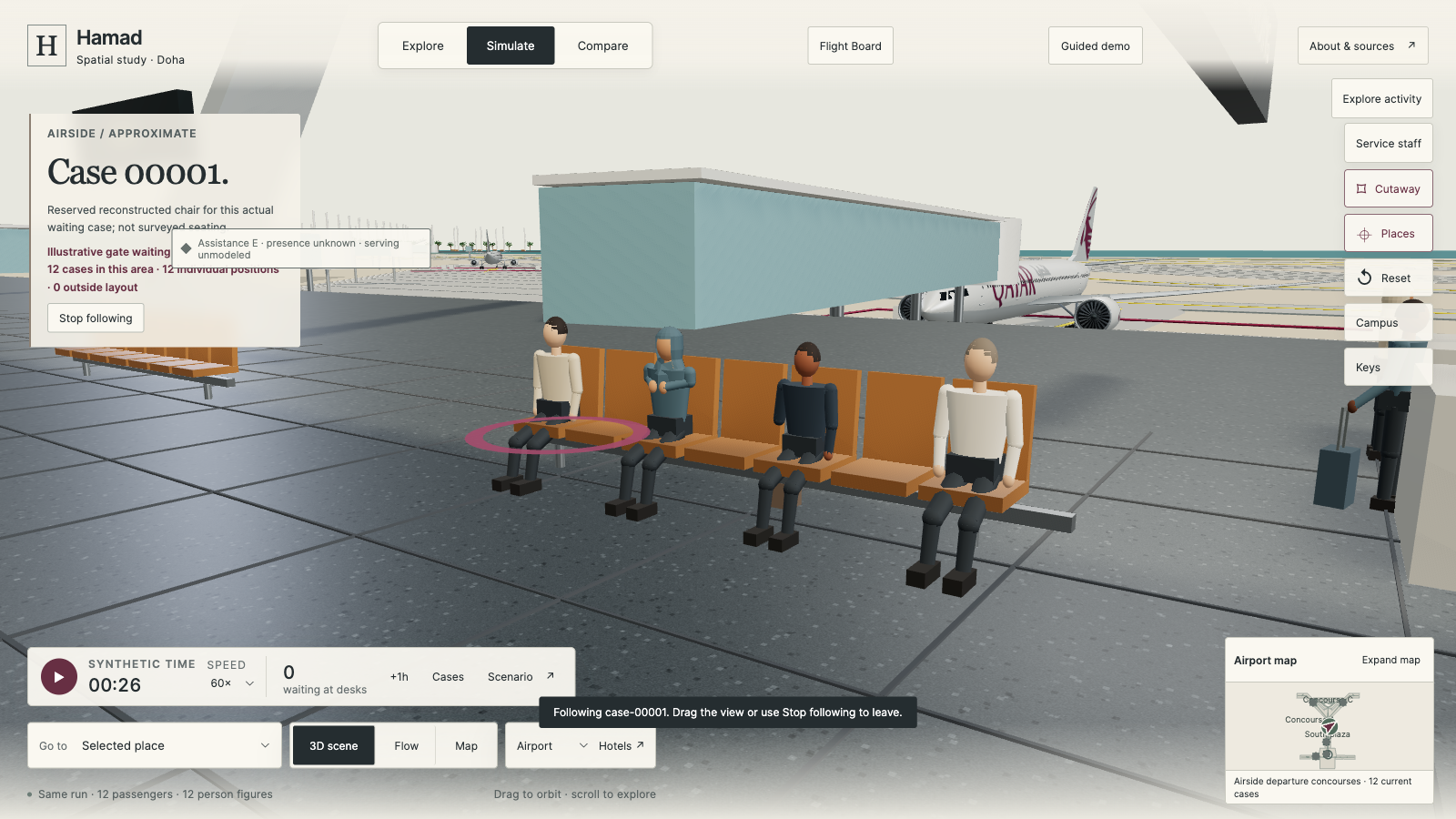
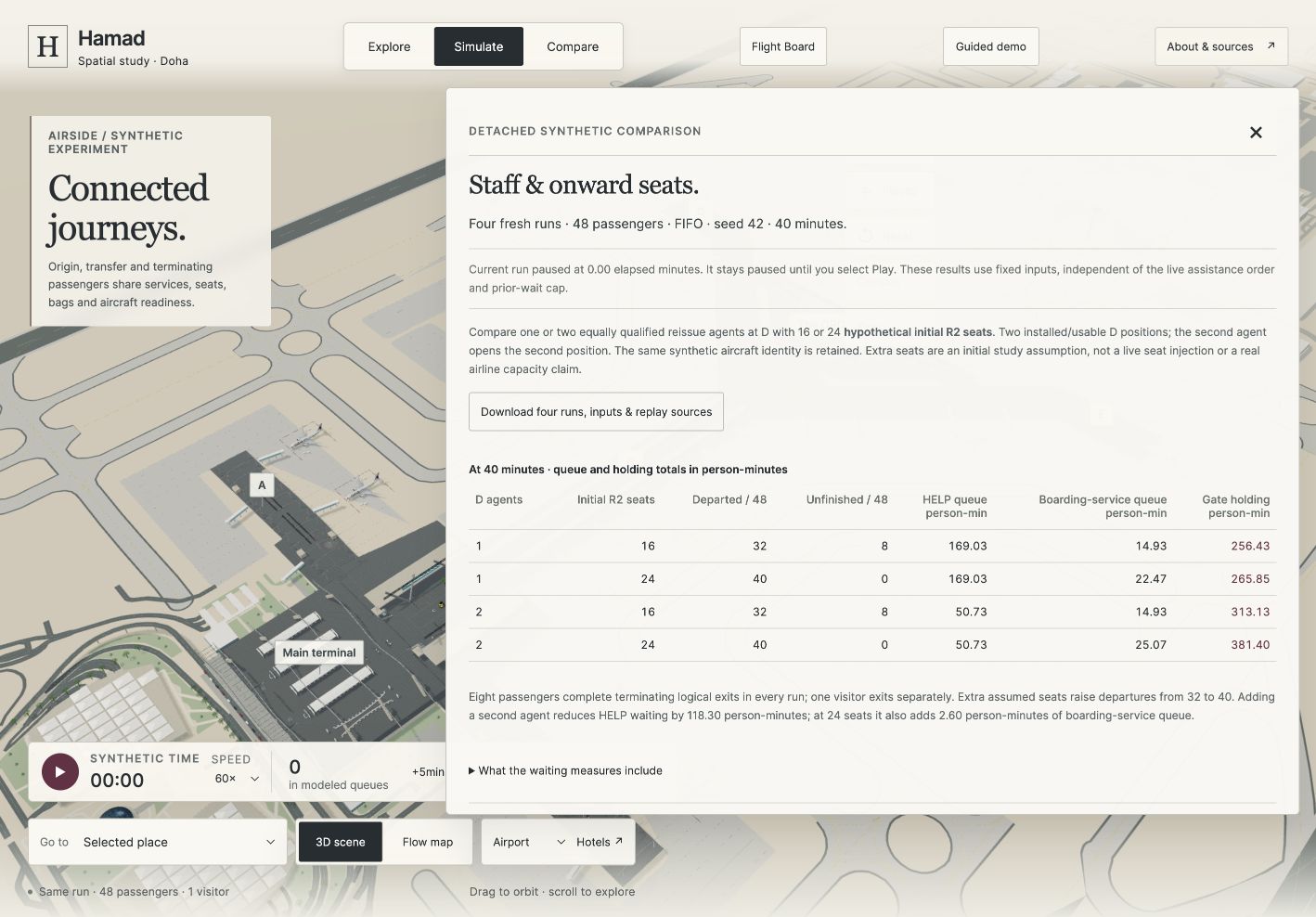
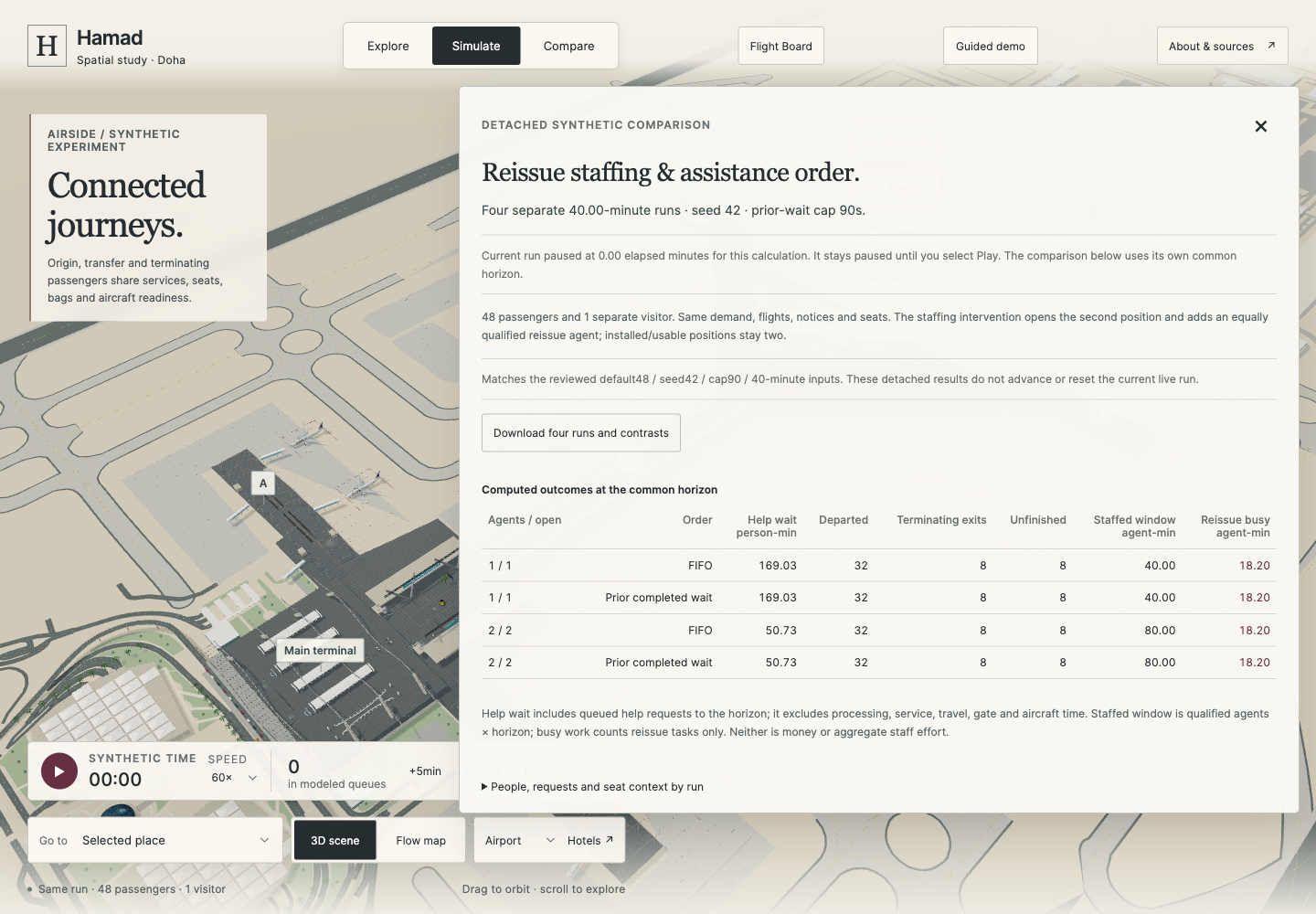
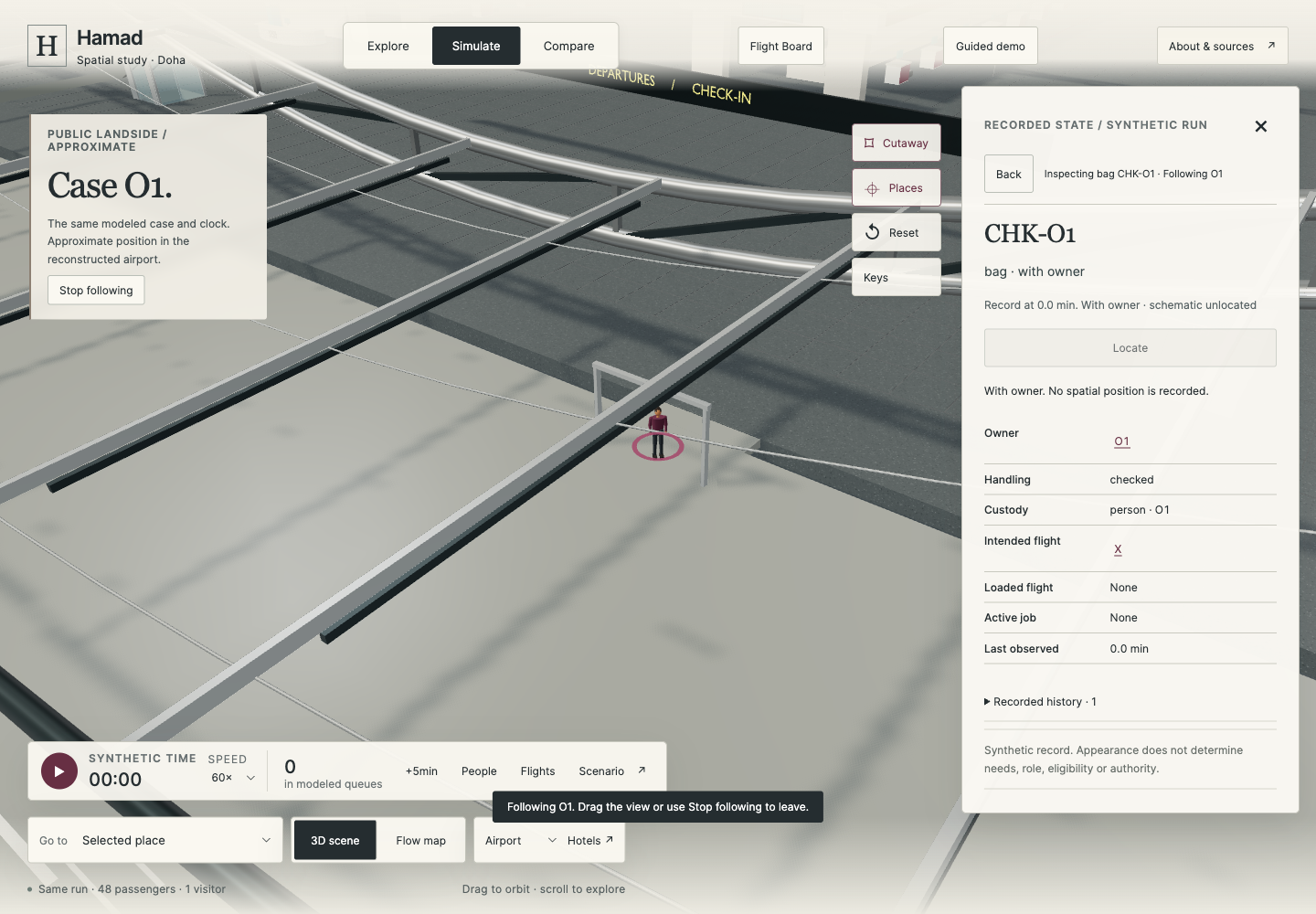
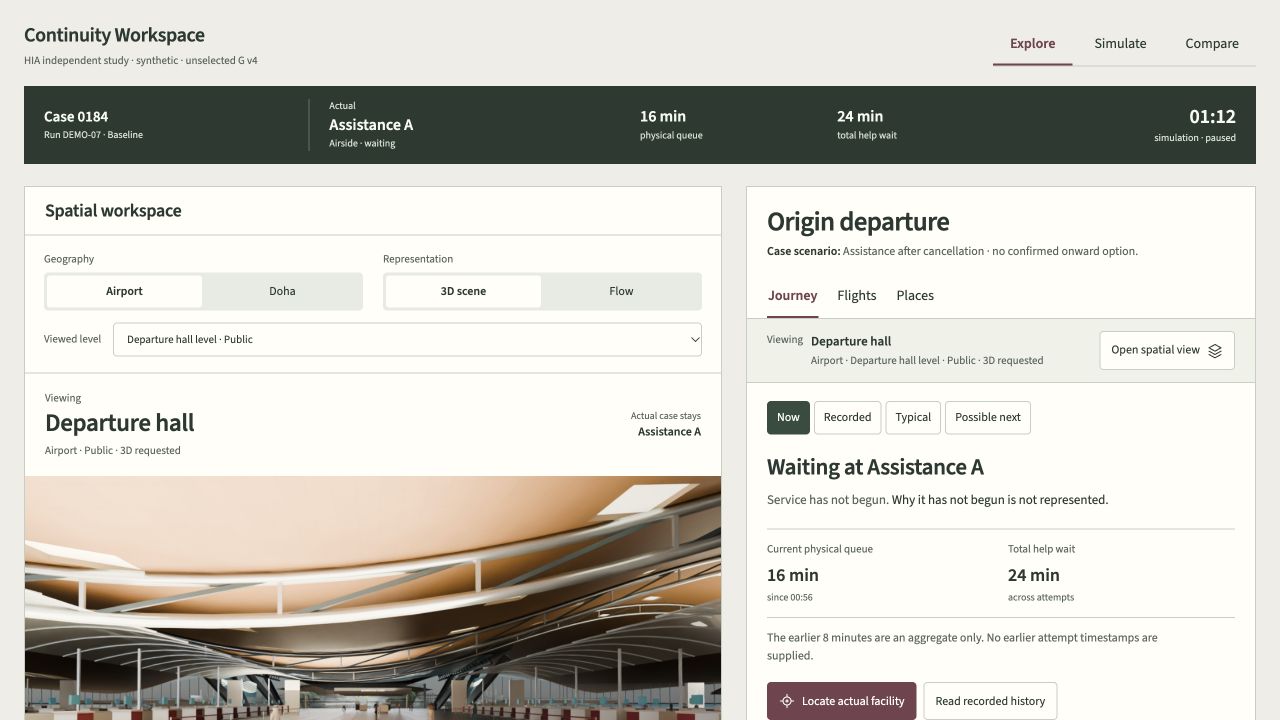
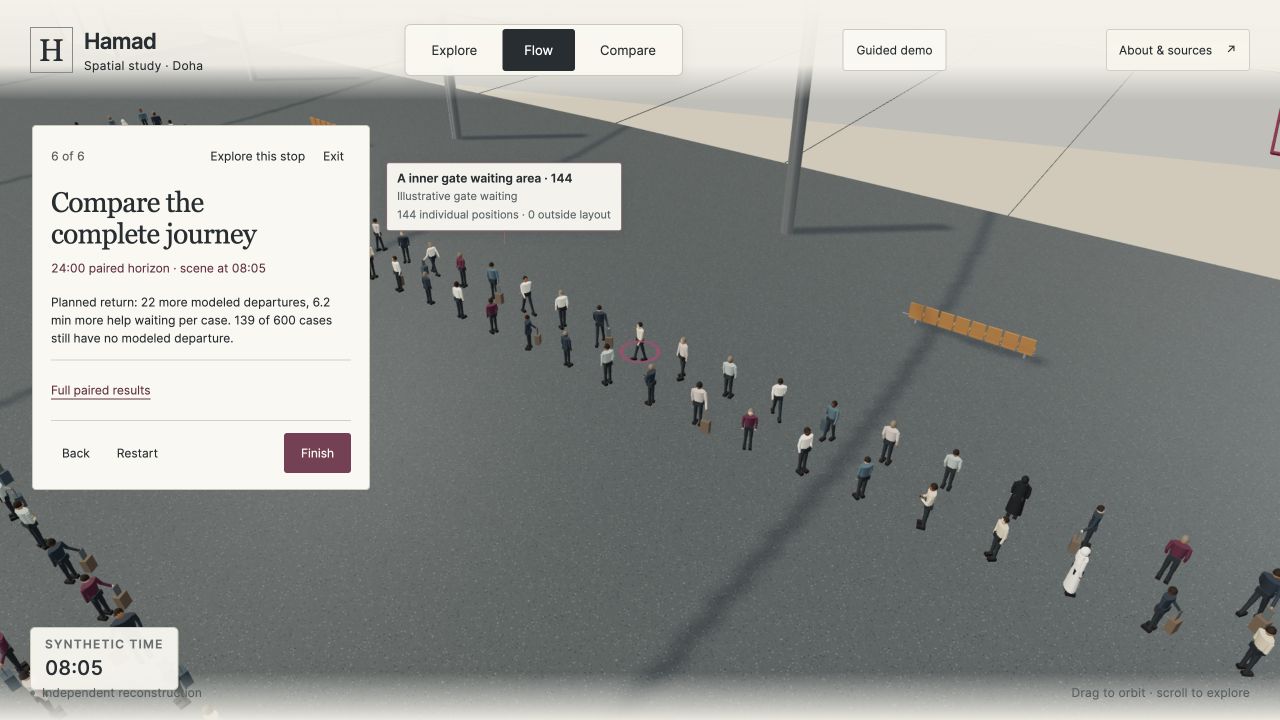
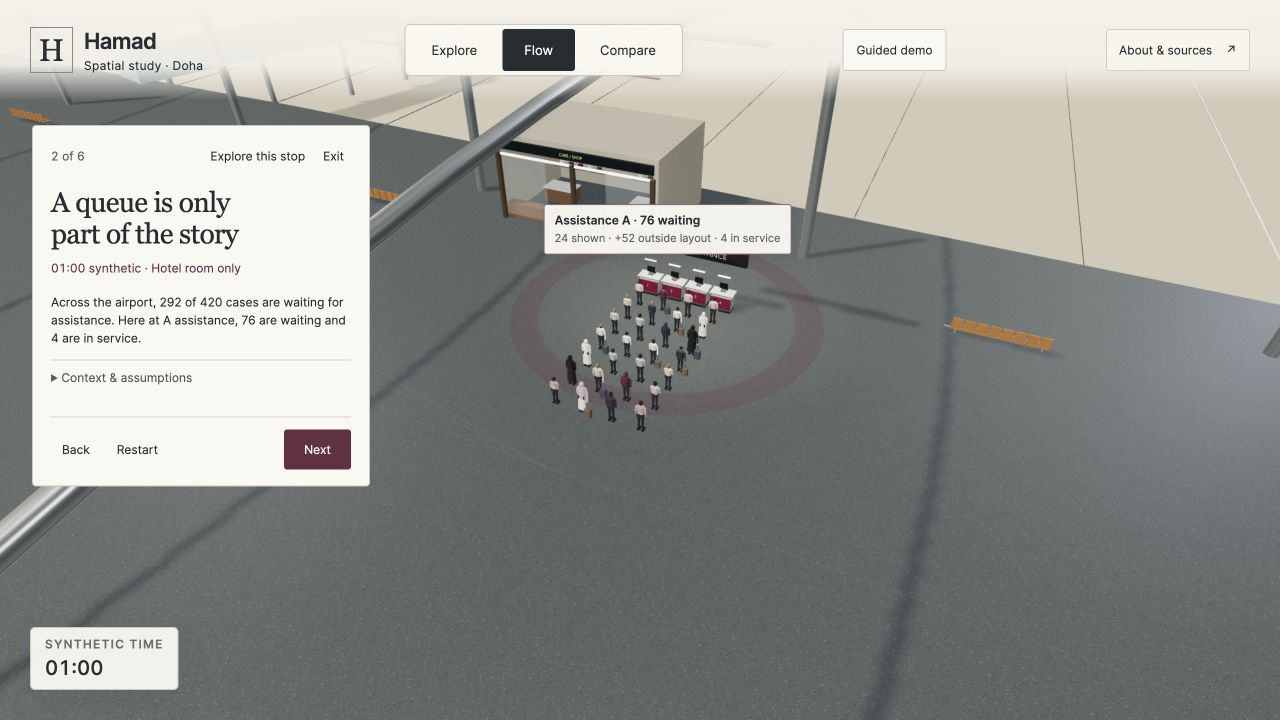
Recovery keeps case identity across repeated help encounters and distinguishes FIFO, capped prior queue credit and optional work-conserving callbacks. Physical queue, assistance queue, total help waiting and time since case creation are separate clocks.
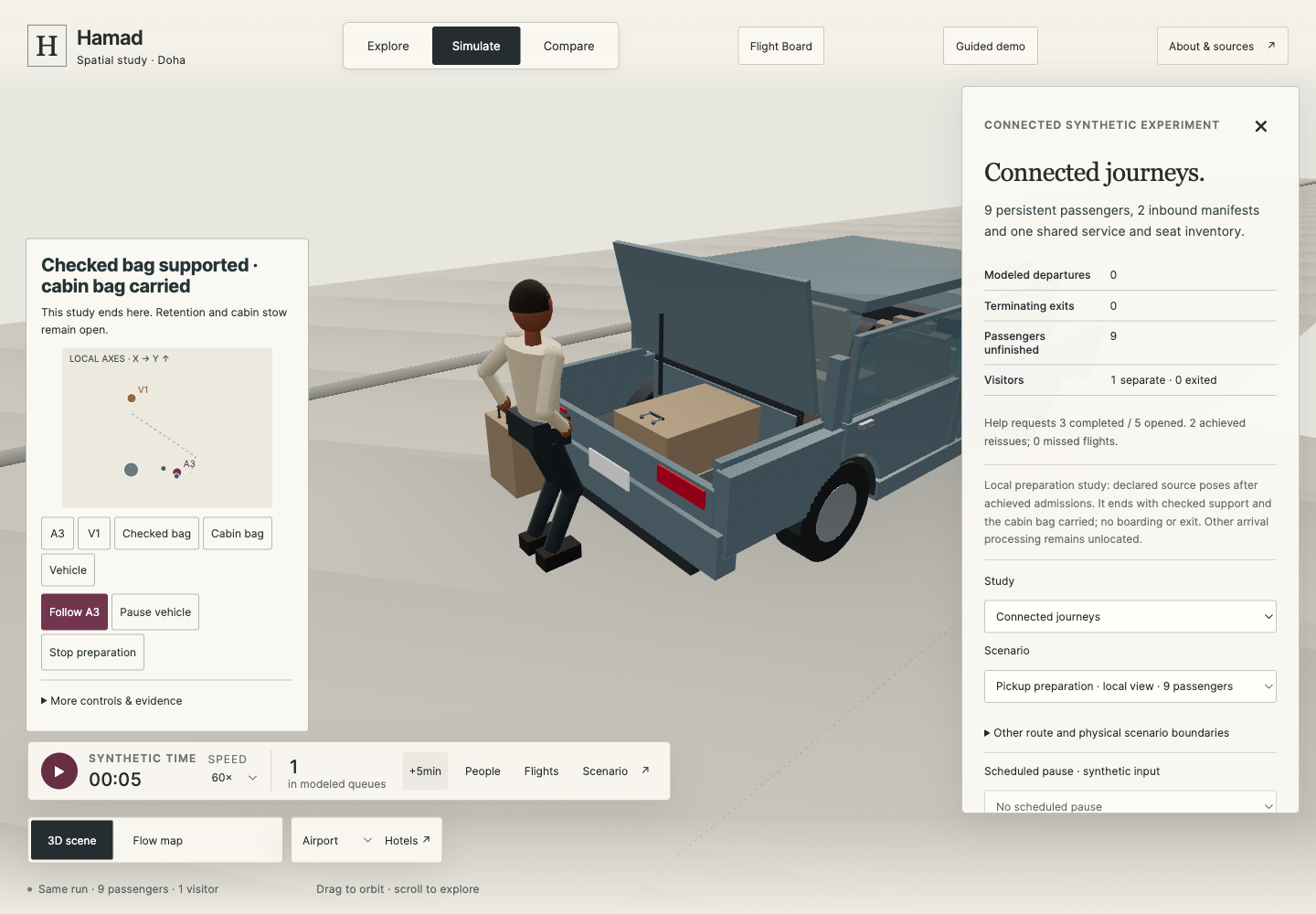
The finite-world extension adds explicit seat, crew, aircraft, gate, ramp, catering, room, vehicle, callback and return-security dependencies. A completed help encounter is not a ticket or flight departure; only the separate modeled readiness gate can record synthetic departure.
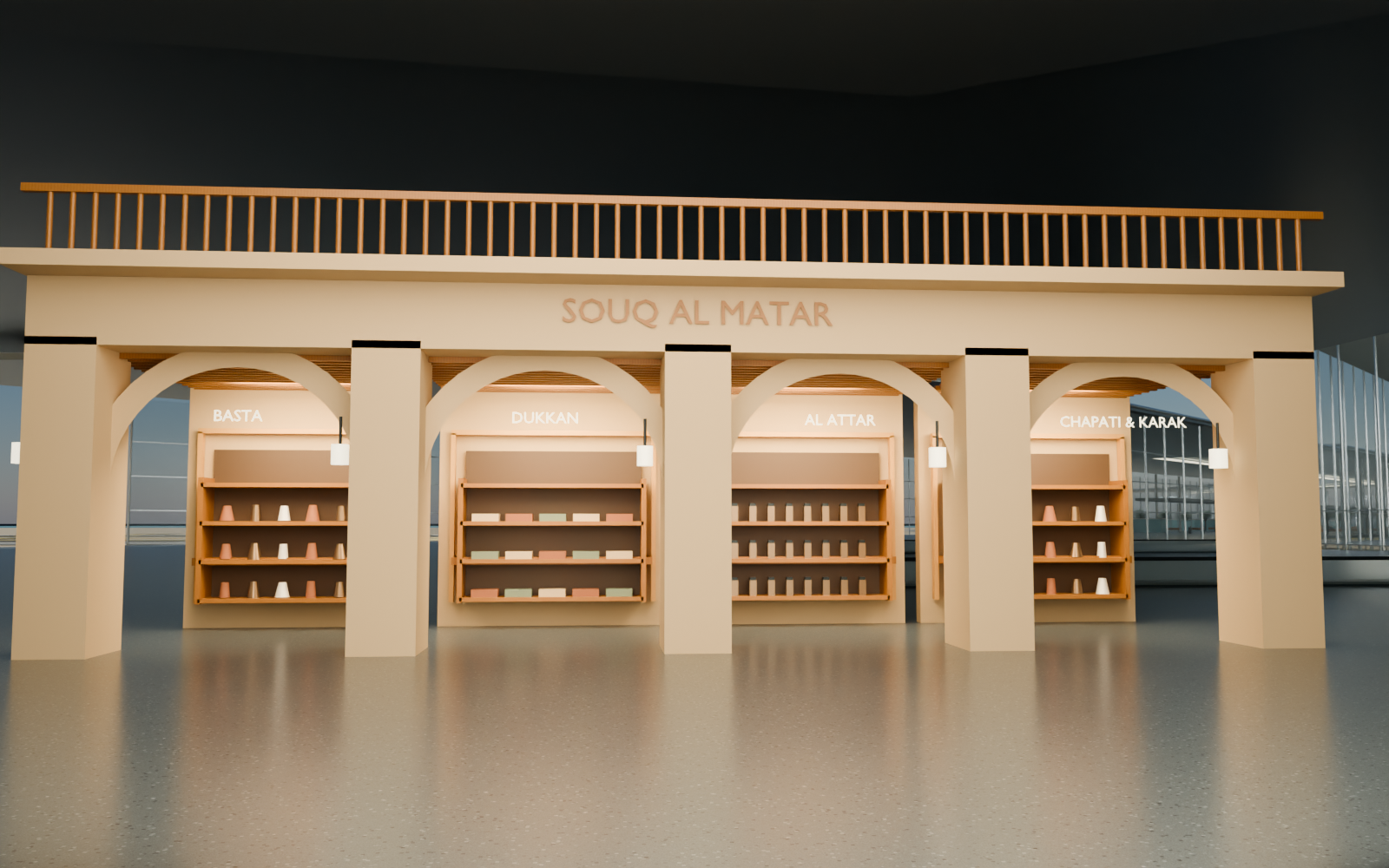
Selected Oreo, Last Call and Souq fit-outs have original geometry and brand-supported reference provenance. Their stills precede a final seat/column correction; they do not establish exact tenancy, stock or surveyed interiors.
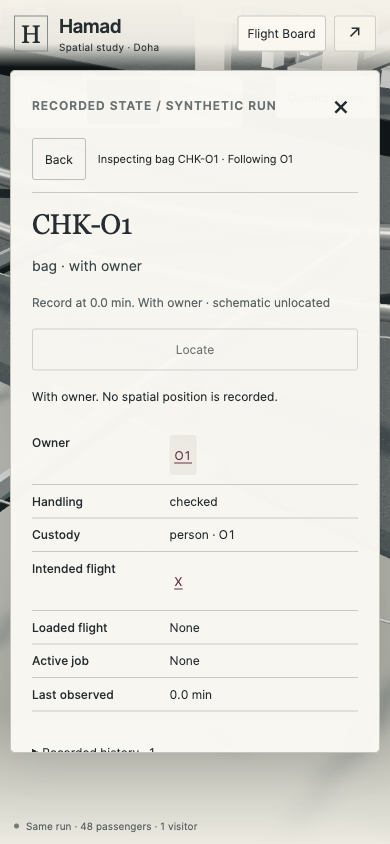
Optional relief profiles model declared communication/mobility needs and finite facility visits; party-world policies keep joint seat/room/vehicle allocations while retaining each case. Appearance never supplies eligibility or needs. These are separate synthetic study layers, not validated airport welfare or accessibility services.
All changes
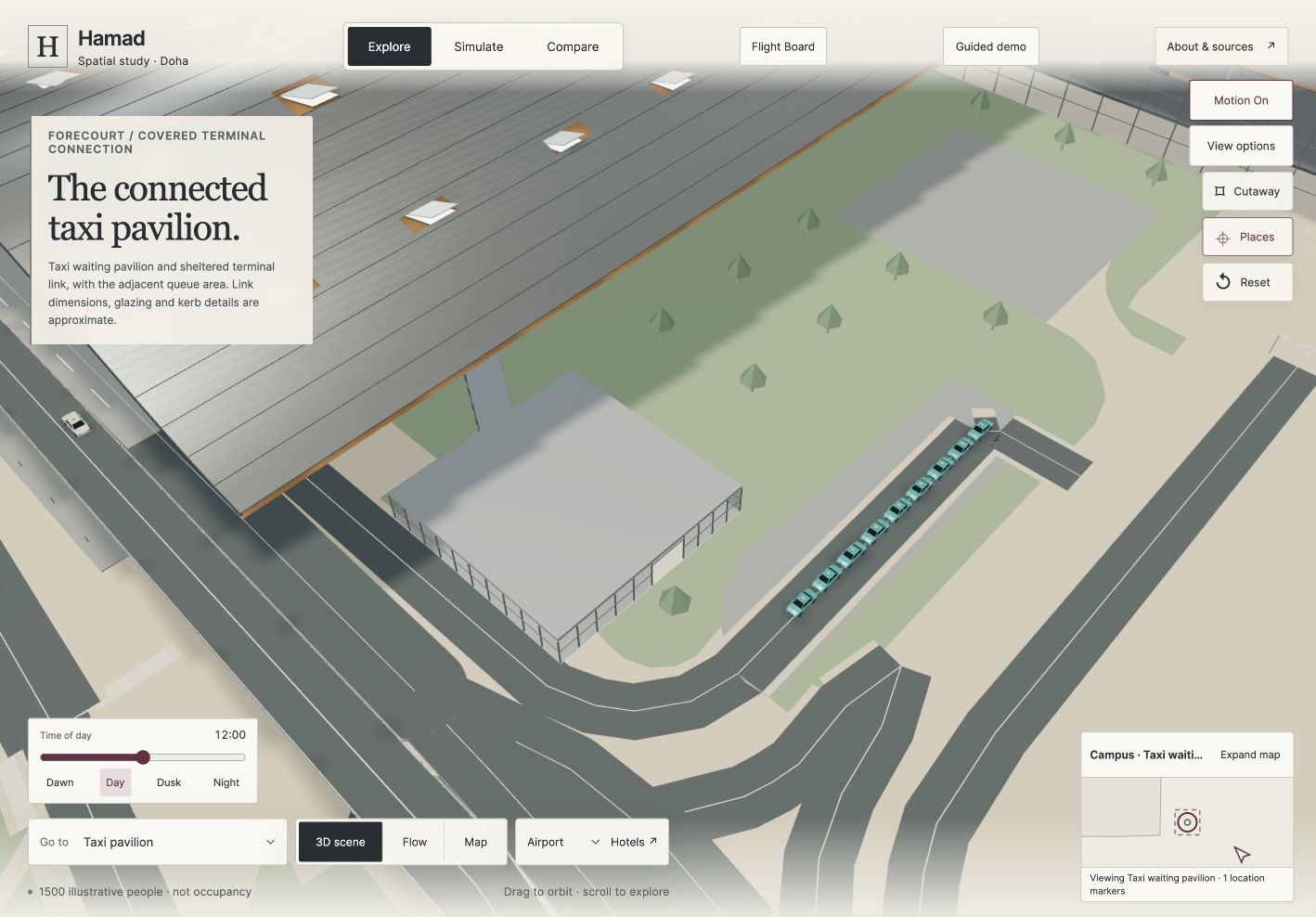
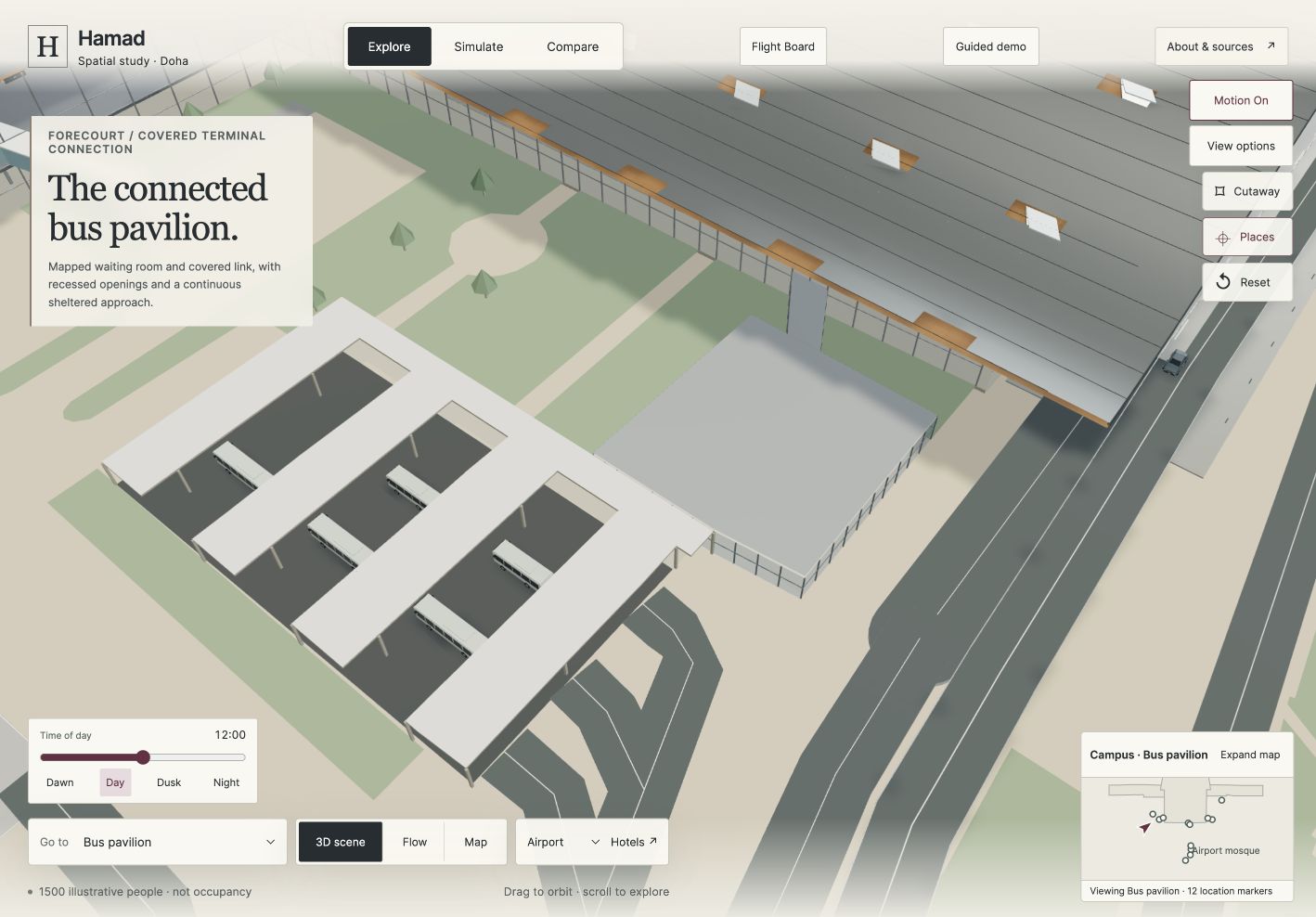
- Editable model and browser derivative cover the terminal, concourses A–E, Lamp Bear hall, ORCHARD, roads, coast and airfield.
- Eight bounded studies expose different passenger, desk and recovery questions.
- Public-map and architecture provenance stays available beside reconstruction limits.
Known limits
- Footprints, elevations and sampled interiors are reconstructed; this is not a surveyed airport model.
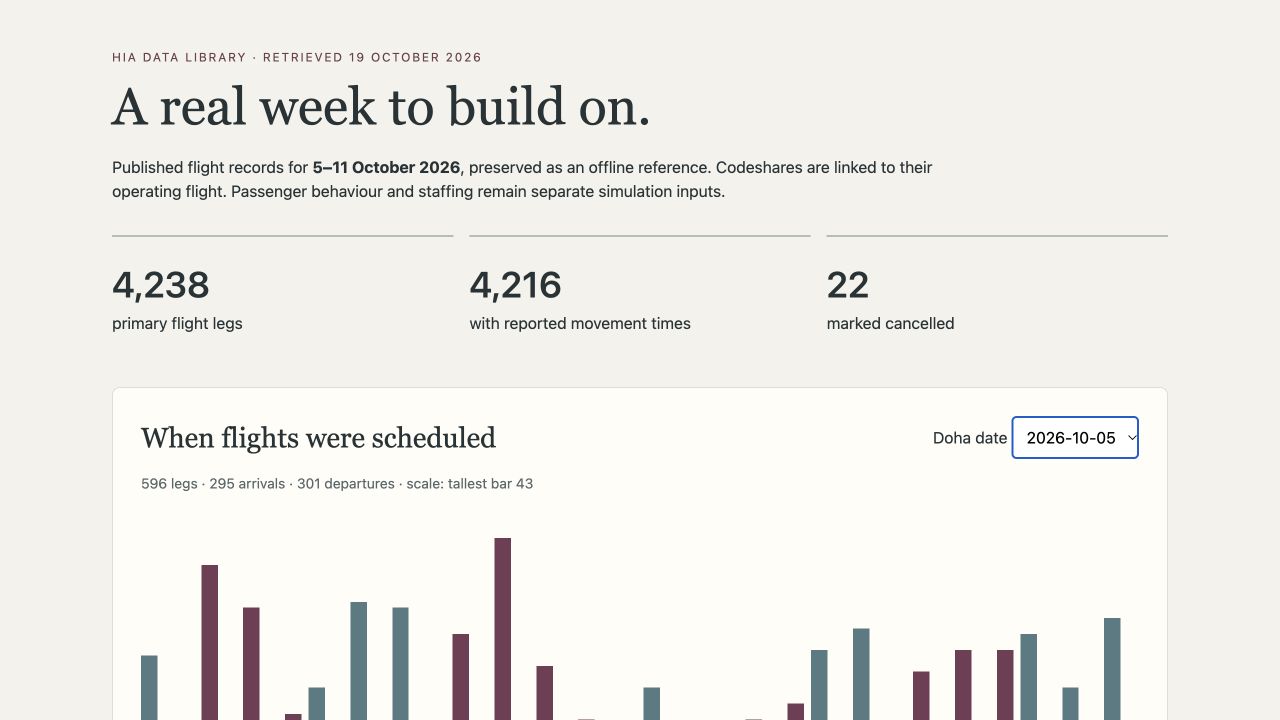
- Operating parameters are synthetic and uncalibrated. Historical software/browser checks are retained evidence, not newly rerun checks.
- Manufacturer dimensions do not establish certified aircraft geometry or a particular dated airframe. Third-party branding is not an unrestricted asset pack.
- These studies have separate populations and scopes. Their timings, staffing and policies are uncalibrated assumptions, not actual HIA procedures.
- Public architecture is reconstructed, not as-built CAD or survey. Research photographs are not redistributed as unrestricted textures.
- Decimal coordinates do not imply survey accuracy; gate/level labels can be stale and point counts are not contact-stand counts.
- A procedural original reconstruction does not establish exact tenancy, metric geometry or airport capacity.
- The 600-case recovery, origin journey and later connected study are separate owners/populations. Parameters are hypothetical; crew windows do not prove duty compliance.
Availability & trying it
This entry describes a dated release receipt. Present hosted version and availability have not been freshly verified.
No version-matched launch action is registered for this entry on this host.